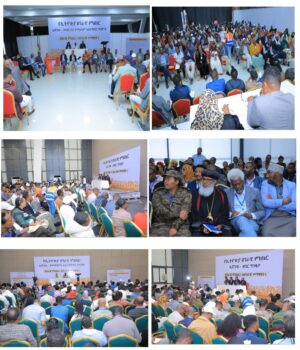
𝐃𝐚𝐲 𝟏𝟐- 𝐓𝐮𝐞𝐬𝐝𝐚𝐲, 𝐉𝐮𝐥𝐲 𝟐𝟖, 𝟐𝟎𝟐𝟔
Today’s proceedings at the Ethiopian National Dialogue Conference reflected the seriousness, discipline, and promise of a nation striving to build a common future through reasoned engagement.
Elected and designated delegates came together to harmonize divergent perspectives, clarify areas of agreement, and identify points of disagreement on the eight agenda items.
𝐓𝐡𝐢𝐬 𝐡𝐚𝐫𝐦𝐨𝐧𝐢𝐳𝐚𝐭𝐢𝐨𝐧 𝐬𝐭𝐚𝐠𝐞 𝐨𝐟 𝐭𝐡𝐞 𝐩𝐫𝐨𝐜𝐞𝐬𝐬 𝐢𝐬 𝐞𝐬𝐩𝐞𝐜𝐢𝐚𝐥𝐥𝐲 𝐢𝐦𝐩𝐨𝐫𝐭𝐚𝐧𝐭 𝐛𝐞𝐜𝐚𝐮𝐬𝐞 𝐢𝐭 𝐭𝐫𝐚𝐧𝐬𝐟𝐨𝐫𝐦𝐬 𝐫𝐚𝐰 𝐝𝐢𝐬𝐜𝐮𝐬𝐬𝐢𝐨𝐧 𝐢𝐧𝐭𝐨 𝐬𝐭𝐫𝐮𝐜𝐭𝐮𝐫𝐞𝐝 𝐮𝐧𝐝𝐞𝐫𝐬𝐭𝐚𝐧𝐝𝐢𝐧𝐠, 𝐚𝐧𝐝 𝐬𝐜𝐚𝐭𝐭𝐞𝐫𝐞𝐝 𝐯𝐢𝐞𝐰𝐩𝐨𝐢𝐧𝐭𝐬 𝐢𝐧𝐭𝐨 𝐚𝐧 𝐨𝐫𝐠𝐚𝐧𝐢𝐳𝐞𝐝 𝐧𝐚𝐭𝐢𝐨𝐧𝐚𝐥 𝐜𝐨𝐧𝐯𝐞𝐫𝐬𝐚𝐭𝐢𝐨𝐧. 𝐈𝐭 𝐬𝐡𝐨𝐰𝐬 𝐭𝐡𝐚𝐭 𝐝𝐢𝐚𝐥𝐨𝐠𝐮𝐞 𝐢𝐬 𝐧𝐨𝐭 𝐬𝐢𝐦𝐩𝐥𝐲 𝐚𝐛𝐨𝐮𝐭 𝐬𝐩𝐞𝐚𝐤𝐢𝐧𝐠; 𝐢𝐭 𝐢𝐬 𝐚𝐛𝐨𝐮𝐭 𝐥𝐢𝐬𝐭𝐞𝐧𝐢𝐧𝐠 𝐜𝐚𝐫𝐞𝐟𝐮𝐥𝐥𝐲, 𝐜𝐨𝐦𝐩𝐚𝐫𝐢𝐧𝐠 𝐢𝐝𝐞𝐚𝐬 𝐡𝐨𝐧𝐞𝐬𝐭𝐥𝐲, 𝐚𝐧𝐝 𝐰𝐨𝐫𝐤𝐢𝐧𝐠 𝐭𝐨𝐰𝐚𝐫𝐝 𝐚 𝐬𝐡𝐚𝐫𝐞𝐝 𝐧𝐚𝐭𝐢𝐨𝐧𝐚𝐥 𝐝𝐢𝐫𝐞𝐜𝐭𝐢𝐨𝐧.
Harmonization can lead to convergence because it turns many separate claims into a shared structure of meaning. When delegates harmonize issues, they do not erase differences; they compare them, clarify them, and organize them in ways that reveal common ground and manageable disagreement.
That process makes convergence possible because people are much more likely to agree on what they can understand, see in relation to one another, and trust as fairly represented.
The 250-member groups serve as a vital bridge in this process. They function as a broader convergence stage where proposals from the smaller 50-member units are received, reviewed, and synthesized before being passed to the full assembly.
This layered structure is one of the Conference’s greatest strengths. It ensures that ideas are not lost as they move upward through the process, and that the insights generated in smaller groups are preserved, refined, and given wider consideration.
Designated harmonizing group members play a crucial role in this stage by bringing the specific ideas, issues, concerns and conclusions of the smaller groups into the larger forum for further discussion, debate and resolution.
This phased approach reflects thoughtful design and a deep commitment to inclusivity. The process began with small groups of ten, where delegates were able to brainstorm freely, express their concerns, and test ideas in a more intimate setting. From there, the discussions moved to groups of fifty, where the ideas were debated, documented, and shaped into more coherent positions.
That was followed by a further consolidation into 250-member groups, where broader deliberation will occur and delegates will have an opportunity to evaluate different viewpoints and build wider agreement. Each step in this sequence has added depth, legitimacy, and structure to the dialogue process. Rather than rushing toward superficial conclusions, the Conference has chosen the more difficult and time-consuming but more durable path of careful consensus-building.
For me, what makes this process especially admirable is its rigor. The harmonization work is neither quick nor easy. Delegates entrusted with this responsibility spend considerable time sifting through all views, positions, and formulations in order to ensure that the final wording is accurate and representative.
“Harmonizers” do not merely adjust language on a page; they work to capture the spirit, tone, and intensity of the statements expressed by the delegates. That requires patience, judgment, and a strong sense of responsibility. It is a demanding task, but it is also one of the most important tasks in the entire dialogue process, because the integrity of the final outcome depends on the quality of this synthesis.
The significance of this work goes beyond procedure. In a country as diverse and historically complex as Ethiopia, the ability to harmonize different perspectives is itself a national achievement. It demonstrates that disagreement does not have to produce division, and that differences can be transformed into dialogue, understanding, and shared purpose.
By identifying both convergence and divergence openly, the conference creates space for truth without hostility, and compromise without erasing identity. That balance is essential for building trust and for laying the foundation of a durable political settlement.
The harmonizing group deserves special appreciation and sincere thanks. Their work is behind the scenes, but it is central to the success of the Conference. They serve as the careful custodians of collective memory and shared language. Through their diligence, the conference is able to move from many voices toward one national conversation, and from many positions toward a more coherent vision for Ethiopia’s future. Their contribution is not merely technical; it is profoundly nation-building.
At its best, the Ethiopian National Dialogue Conference is showing that unity does not require uniformity. It requires a willingness to engage one another with honesty, respect, and patience, and to build something larger than individual preference.
The harmonization of diverse agenda items is therefore not just an administrative step. It is a powerful act of national reconstruction. It embodies the hope of millions that Ethiopia can turn complexity into coherence, disagreement into deliberation, and deliberation into a shared national vision which can lead Ethiopia to the promised land of peace, progress and prosperity.
𝐌𝐲 𝐡𝐢𝐠𝐡𝐞𝐬𝐭 𝐫𝐞𝐬𝐩𝐞𝐜𝐭 𝐚𝐧𝐝 𝐚𝐩𝐩𝐫𝐞𝐜𝐢𝐚𝐭𝐢𝐨𝐧 𝐭𝐨 𝐚𝐥𝐥 𝐭𝐡𝐞 𝐝𝐞𝐥𝐞𝐠𝐚𝐭𝐞𝐬 𝐚𝐭 𝐭𝐡𝐞 𝐄𝐭𝐡𝐢𝐨𝐩𝐢𝐚𝐧 𝐍𝐚𝐭𝐢𝐨𝐧𝐚𝐥 𝐃𝐢𝐚𝐥𝐨𝐠𝐮𝐞 𝐂𝐨𝐧𝐟𝐞𝐫𝐞𝐧𝐜𝐞.
𝐒𝐔𝐏𝐏𝐎𝐑𝐓 𝐓𝐇𝐄 𝐄𝐓𝐇𝐈𝐎𝐏𝐈𝐀𝐍 𝐍𝐀𝐓𝐈𝐎𝐍𝐀𝐋 𝐃𝐈𝐀𝐋𝐎𝐆𝐔𝐄 𝐂𝐎𝐍𝐅𝐄𝐑𝐄𝐍𝐂𝐄 𝐀𝐍𝐃 𝐌𝐀𝐊𝐄 𝐄𝐓𝐇𝐈𝐎𝐏𝐈𝐀 𝐆𝐑𝐄𝐀𝐓!
Originally appeared on X (Twitter)
https://x.com/AlMariam1/status/2082309393564012746


𝐃𝐚𝐲 𝟏𝟐- 𝐓𝐮𝐞𝐬𝐝𝐚𝐲, 𝐉𝐮𝐥𝐲 𝟐𝟖, 𝟐𝟎𝟐𝟔
Today’s proceedings at the Ethiopian National Dialogue Conference reflected the seriousness, discipline, and promise of a nation striving to build a common future through reasoned engagement.
Elected and designated delegates came together to harmonize divergent perspectives, clarify areas of agreement, and identify points of disagreement on the eight agenda items.
𝐓𝐡𝐢𝐬 𝐡𝐚𝐫𝐦𝐨𝐧𝐢𝐳𝐚𝐭𝐢𝐨𝐧 𝐬𝐭𝐚𝐠𝐞 𝐨𝐟 𝐭𝐡𝐞 𝐩𝐫𝐨𝐜𝐞𝐬𝐬 𝐢𝐬 𝐞𝐬𝐩𝐞𝐜𝐢𝐚𝐥𝐥𝐲 𝐢𝐦𝐩𝐨𝐫𝐭𝐚𝐧𝐭 𝐛𝐞𝐜𝐚𝐮𝐬𝐞 𝐢𝐭 𝐭𝐫𝐚𝐧𝐬𝐟𝐨𝐫𝐦𝐬 𝐫𝐚𝐰 𝐝𝐢𝐬𝐜𝐮𝐬𝐬𝐢𝐨𝐧 𝐢𝐧𝐭𝐨 𝐬𝐭𝐫𝐮𝐜𝐭𝐮𝐫𝐞𝐝 𝐮𝐧𝐝𝐞𝐫𝐬𝐭𝐚𝐧𝐝𝐢𝐧𝐠, 𝐚𝐧𝐝 𝐬𝐜𝐚𝐭𝐭𝐞𝐫𝐞𝐝 𝐯𝐢𝐞𝐰𝐩𝐨𝐢𝐧𝐭𝐬 𝐢𝐧𝐭𝐨 𝐚𝐧 𝐨𝐫𝐠𝐚𝐧𝐢𝐳𝐞𝐝 𝐧𝐚𝐭𝐢𝐨𝐧𝐚𝐥 𝐜𝐨𝐧𝐯𝐞𝐫𝐬𝐚𝐭𝐢𝐨𝐧. 𝐈𝐭 𝐬𝐡𝐨𝐰𝐬 𝐭𝐡𝐚𝐭 𝐝𝐢𝐚𝐥𝐨𝐠𝐮𝐞 𝐢𝐬 𝐧𝐨𝐭 𝐬𝐢𝐦𝐩𝐥𝐲 𝐚𝐛𝐨𝐮𝐭 𝐬𝐩𝐞𝐚𝐤𝐢𝐧𝐠; 𝐢𝐭 𝐢𝐬 𝐚𝐛𝐨𝐮𝐭 𝐥𝐢𝐬𝐭𝐞𝐧𝐢𝐧𝐠 𝐜𝐚𝐫𝐞𝐟𝐮𝐥𝐥𝐲, 𝐜𝐨𝐦𝐩𝐚𝐫𝐢𝐧𝐠 𝐢𝐝𝐞𝐚𝐬 𝐡𝐨𝐧𝐞𝐬𝐭𝐥𝐲, 𝐚𝐧𝐝 𝐰𝐨𝐫𝐤𝐢𝐧𝐠 𝐭𝐨𝐰𝐚𝐫𝐝 𝐚 𝐬𝐡𝐚𝐫𝐞𝐝 𝐧𝐚𝐭𝐢𝐨𝐧𝐚𝐥 𝐝𝐢𝐫𝐞𝐜𝐭𝐢𝐨𝐧.
Harmonization can lead to convergence because it turns many separate claims into a shared structure of meaning. When delegates harmonize issues, they do not erase differences; they compare them, clarify them, and organize them in ways that reveal common ground and manageable disagreement.
That process makes convergence possible because people are much more likely to agree on what they can understand, see in relation to one another, and trust as fairly represented.
The 250-member groups serve as a vital bridge in this process. They function as a broader convergence stage where proposals from the smaller 50-member units are received, reviewed, and synthesized before being passed to the full assembly.
This layered structure is one of the Conference’s greatest strengths. It ensures that ideas are not lost as they move upward through the process, and that the insights generated in smaller groups are preserved, refined, and given wider consideration.
Designated harmonizing group members play a crucial role in this stage by bringing the specific ideas, issues, concerns and conclusions of the smaller groups into the larger forum for further discussion, debate and resolution.
This phased approach reflects thoughtful design and a deep commitment to inclusivity. The process began with small groups of ten, where delegates were able to brainstorm freely, express their concerns, and test ideas in a more intimate setting. From there, the discussions moved to groups of fifty, where the ideas were debated, documented, and shaped into more coherent positions.
That was followed by a further consolidation into 250-member groups, where broader deliberation will occur and delegates will have an opportunity to evaluate different viewpoints and build wider agreement. Each step in this sequence has added depth, legitimacy, and structure to the dialogue process. Rather than rushing toward superficial conclusions, the Conference has chosen the more difficult and time-consuming but more durable path of careful consensus-building.
For me, what makes this process especially admirable is its rigor. The harmonization work is neither quick nor easy. Delegates entrusted with this responsibility spend considerable time sifting through all views, positions, and formulations in order to ensure that the final wording is accurate and representative.
“Harmonizers” do not merely adjust language on a page; they work to capture the spirit, tone, and intensity of the statements expressed by the delegates. That requires patience, judgment, and a strong sense of responsibility. It is a demanding task, but it is also one of the most important tasks in the entire dialogue process, because the integrity of the final outcome depends on the quality of this synthesis.
The significance of this work goes beyond procedure. In a country as diverse and historically complex as Ethiopia, the ability to harmonize different perspectives is itself a national achievement. It demonstrates that disagreement does not have to produce division, and that differences can be transformed into dialogue, understanding, and shared purpose.
By identifying both convergence and divergence openly, the conference creates space for truth without hostility, and compromise without erasing identity. That balance is essential for building trust and for laying the foundation of a durable political settlement.
The harmonizing group deserves special appreciation and sincere thanks. Their work is behind the scenes, but it is central to the success of the Conference. They serve as the careful custodians of collective memory and shared language. Through their diligence, the conference is able to move from many voices toward one national conversation, and from many positions toward a more coherent vision for Ethiopia’s future. Their contribution is not merely technical; it is profoundly nation-building.
At its best, the Ethiopian National Dialogue Conference is showing that unity does not require uniformity. It requires a willingness to engage one another with honesty, respect, and patience, and to build something larger than individual preference.
The harmonization of diverse agenda items is therefore not just an administrative step. It is a powerful act of national reconstruction. It embodies the hope of millions that Ethiopia can turn complexity into coherence, disagreement into deliberation, and deliberation into a shared national vision which can lead Ethiopia to the promised land of peace, progress and prosperity.
𝐌𝐲 𝐡𝐢𝐠𝐡𝐞𝐬𝐭 𝐫𝐞𝐬𝐩𝐞𝐜𝐭 𝐚𝐧𝐝 𝐚𝐩𝐩𝐫𝐞𝐜𝐢𝐚𝐭𝐢𝐨𝐧 𝐭𝐨 𝐚𝐥𝐥 𝐭𝐡𝐞 𝐝𝐞𝐥𝐞𝐠𝐚𝐭𝐞𝐬 𝐚𝐭 𝐭𝐡𝐞 𝐄𝐭𝐡𝐢𝐨𝐩𝐢𝐚𝐧 𝐍𝐚𝐭𝐢𝐨𝐧𝐚𝐥 𝐃𝐢𝐚𝐥𝐨𝐠𝐮𝐞 𝐂𝐨𝐧𝐟𝐞𝐫𝐞𝐧𝐜𝐞.
𝐒𝐔𝐏𝐏𝐎𝐑𝐓 𝐓𝐇𝐄 𝐄𝐓𝐇𝐈𝐎𝐏𝐈𝐀𝐍 𝐍𝐀𝐓𝐈𝐎𝐍𝐀𝐋 𝐃𝐈𝐀𝐋𝐎𝐆𝐔𝐄 𝐂𝐎𝐍𝐅𝐄𝐑𝐄𝐍𝐂𝐄 𝐀𝐍𝐃 𝐌𝐀𝐊𝐄 𝐄𝐓𝐇𝐈𝐎𝐏𝐈𝐀 𝐆𝐑𝐄𝐀𝐓!
Originally appeared on X (Twitter)
https://x.com/AlMariam1/status/2082309393564012746
Share this: