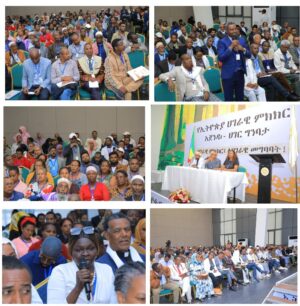
𝐃𝐚𝐲 𝟏𝟑 — 𝐖𝐞𝐝𝐧𝐞𝐬𝐝𝐚𝐲, 𝐉𝐮𝐥𝐲 𝟐𝟗, 𝟐𝟎𝟐𝟔
The Ethiopian National Dialogue Conference continued to demonstrate the quiet strength of patient, principled, and inclusive engagement. What began in smaller circles of deliberation (4,000/10) has now advanced into a more mature and meaningful phase: the careful shaping of diverse perspectives into a coherent national vision.
The strategic harmonizing group — 25 delegates drawn from the broader 250-member tier, itself emerging from the earlier 50-member discussions — worked tirelessly into the night to bring together the rich and varied ideas expressed in the larger gathering. Their mission went far beyond summarizing discussion. They sought to transform individual concerns into collective national priorities, local challenges into shared national questions, and open debate into the possibility of lasting consensus.
The Conference has now clearly entered the consensus-development stage. In the Ethiopian National Dialogue Conference, consensus development is the process through which multiple viewpoints are thoughtfully refined into a shared national position through structured listening, careful drafting, and repeated improvement. It is not about rushing to agreement; it is about producing outcomes that are inclusive, legitimate, and durable enough to support long-term stability and national cohesion.
At this stage, delegates are no longer treating ideas as isolated positions. Instead, they are comparing, connecting, and harmonizing them in relation to one another. This matters because the national dialogue is designed to help address long-standing conflicts, strengthen social trust, and produce nationally owned solutions to Ethiopia’s major political and social challenges. The Ethiopian National Dialogue Commission has rightly framed the process as one aimed at building consensus on foundational issues through inclusive and structured consultation.
𝐓𝐡𝐞 𝐄𝐭𝐡𝐢𝐨𝐩𝐢𝐚𝐧 𝐦𝐨𝐝𝐞𝐥 𝐫𝐞𝐟𝐥𝐞𝐜𝐭𝐬 𝐚 𝐥𝐚𝐲𝐞𝐫𝐞𝐝 𝐚𝐧𝐝 𝐝𝐢𝐬𝐜𝐢𝐩𝐥𝐢𝐧𝐞𝐝 𝐚𝐩𝐩𝐫𝐨𝐚𝐜𝐡: 𝐬𝐦𝐚𝐥𝐥 𝐠𝐫𝐨𝐮𝐩𝐬 𝐠𝐞𝐧𝐞𝐫𝐚𝐭𝐞 𝐢𝐝𝐞𝐚𝐬, 𝐦𝐢𝐝-𝐬𝐢𝐳𝐞𝐝 𝐠𝐫𝐨𝐮𝐩𝐬 𝐜𝐨𝐧𝐬𝐨𝐥𝐢𝐝𝐚𝐭𝐞 𝐭𝐡𝐞𝐦, 𝐚𝐧𝐝 𝐥𝐚𝐫𝐠𝐞𝐫 𝐠𝐫𝐨𝐮𝐩𝐬 𝐫𝐞𝐟𝐢𝐧𝐞 𝐭𝐡𝐞𝐦 𝐟𝐨𝐫 𝐟𝐢𝐧𝐚𝐥 𝐩𝐫𝐞𝐬𝐞𝐧𝐭𝐚𝐭𝐢𝐨𝐧. 𝐓𝐡𝐢𝐬 𝐬𝐭𝐞𝐩-𝐛𝐲-𝐬𝐭𝐞𝐩 𝐦𝐞𝐭𝐡𝐨𝐝 𝐞𝐧𝐬𝐮𝐫𝐞𝐬 𝐭𝐡𝐚𝐭 𝐧𝐨 𝐬𝐢𝐧𝐠𝐥𝐞 𝐯𝐨𝐢𝐜𝐞 𝐝𝐨𝐦𝐢𝐧𝐚𝐭𝐞𝐬 𝐭𝐡𝐞 𝐩𝐫𝐨𝐜𝐞𝐬𝐬 𝐚𝐧𝐝 𝐭𝐡𝐚𝐭 𝐦𝐢𝐧𝐨𝐫𝐢𝐭𝐲 𝐩𝐞𝐫𝐬𝐩𝐞𝐜𝐭𝐢𝐯𝐞𝐬 𝐚𝐫𝐞 𝐫𝐞𝐬𝐩𝐞𝐜𝐭𝐞𝐝 𝐞𝐯𝐞𝐧 𝐚𝐬 𝐭𝐡𝐞 𝐝𝐢𝐬𝐜𝐮𝐬𝐬𝐢𝐨𝐧 𝐦𝐨𝐯𝐞𝐬 𝐭𝐨𝐰𝐚𝐫𝐝 𝐜𝐨𝐦𝐦𝐨𝐧 𝐠𝐫𝐨𝐮𝐧𝐝. 𝐈𝐭 𝐢𝐬 𝐚 𝐩𝐫𝐚𝐜𝐭𝐢𝐜𝐚𝐥 𝐞𝐱𝐩𝐫𝐞𝐬𝐬𝐢𝐨𝐧 𝐨𝐟 𝐚 𝐝𝐞𝐞𝐩𝐞𝐫 𝐝𝐞𝐦𝐨𝐜𝐫𝐚𝐭𝐢𝐜 𝐩𝐫𝐢𝐧𝐜𝐢𝐩𝐥𝐞: 𝐛𝐫𝐨𝐚𝐝 𝐩𝐚𝐫𝐭𝐢𝐜𝐢𝐩𝐚𝐭𝐢𝐨𝐧 𝐚𝐧𝐝 𝐭𝐫𝐚𝐧𝐬𝐩𝐚𝐫𝐞𝐧𝐭 𝐩𝐫𝐨𝐜𝐞𝐬𝐬 𝐝𝐞𝐬𝐢𝐠𝐧 𝐚𝐫𝐞 𝐞𝐬𝐬𝐞𝐧𝐭𝐢𝐚𝐥 𝐭𝐨 𝐥𝐞𝐠𝐢𝐭𝐢𝐦𝐚𝐜𝐲 𝐚𝐧𝐝 𝐞𝐟𝐟𝐞𝐜𝐭𝐢𝐯𝐞𝐧𝐞𝐬𝐬.
A key strength of the model is its iterative harmonization. Draft proposals are reviewed, improved, and returned for clarification, allowing the process to capture not only the words spoken, but also the intent behind them. This is what makes consensus meaningful. It becomes strongest when participants feel their views were heard fairly and when the final document reflects both agreement and principled difference.
At this stage, the emphasis is no longer simply on hearing views, but on building collective, durable, and inclusive solutions that can withstand scrutiny and command broad legitimacy. The harmonizing group examined the proposals with care, weighing both their substance and their broader implications for the national conversation. Their work produced a consensus draft — a unified document reflecting the thoughtful judgment and shared understanding of the 25-member harmonizing team.
𝐓𝐡𝐚𝐭 𝐮𝐧𝐢𝐟𝐢𝐞𝐝 𝐫𝐞𝐩𝐨𝐫𝐭 𝐰𝐚𝐬 𝐭𝐡𝐞𝐧 𝐩𝐫𝐞𝐬𝐞𝐧𝐭𝐞𝐝 𝐭𝐨 𝐭𝐡𝐞 𝟐𝟓𝟎-𝐦𝐞𝐦𝐛𝐞𝐫 𝐠𝐫𝐨𝐮𝐩 𝐰𝐢𝐭𝐡 𝐠𝐫𝐞𝐚𝐭 𝐜𝐚𝐫𝐞 𝐚𝐧𝐝 𝐜𝐥𝐚𝐫𝐢𝐭𝐲. 𝐄𝐚𝐜𝐡 𝐚𝐠𝐞𝐧𝐝𝐚 𝐢𝐭𝐞𝐦, 𝐚𝐥𝐨𝐧𝐠 𝐰𝐢𝐭𝐡 𝐢𝐭𝐬 𝐬𝐮𝐛𝐭𝐨𝐩𝐢𝐜𝐬 𝐚𝐧𝐝 𝐝𝐞𝐭𝐚𝐢𝐥𝐞𝐝 𝐪𝐮𝐞𝐬𝐭𝐢𝐨𝐧𝐬, 𝐰𝐚𝐬 𝐩𝐫𝐞𝐬𝐞𝐧𝐭𝐞𝐝 𝐭𝐡𝐫𝐨𝐮𝐠𝐡 𝐚 𝐒𝐖𝐎𝐓 𝐚𝐧𝐚𝐥𝐲𝐬𝐢𝐬, 𝐞𝐧𝐚𝐛𝐥𝐢𝐧𝐠 𝐝𝐞𝐥𝐞𝐠𝐚𝐭𝐞𝐬 𝐭𝐨 𝐚𝐬𝐬𝐞𝐬𝐬 𝐭𝐡𝐞 𝐬𝐭𝐫𝐞𝐧𝐠𝐭𝐡𝐬, 𝐰𝐞𝐚𝐤𝐧𝐞𝐬𝐬𝐞𝐬, 𝐨𝐩𝐩𝐨𝐫𝐭𝐮𝐧𝐢𝐭𝐢𝐞𝐬, 𝐚𝐧𝐝 𝐭𝐡𝐫𝐞𝐚𝐭𝐬 𝐚𝐬𝐬𝐨𝐜𝐢𝐚𝐭𝐞𝐝 𝐰𝐢𝐭𝐡 𝐞𝐚𝐜𝐡 𝐨𝐩𝐭𝐢𝐨𝐧. 𝐓𝐡𝐢𝐬 𝐬𝐭𝐫𝐮𝐜𝐭𝐮𝐫𝐞𝐝 𝐚𝐩𝐩𝐫𝐨𝐚𝐜𝐡 𝐞𝐧𝐫𝐢𝐜𝐡𝐞𝐝 𝐭𝐡𝐞 𝐝𝐢𝐬𝐜𝐮𝐬𝐬𝐢𝐨𝐧 𝐛𝐲 𝐦𝐚𝐤𝐢𝐧𝐠 𝐞𝐚𝐜𝐡 𝐚𝐫𝐠𝐮𝐦𝐞𝐧𝐭 𝐜𝐥𝐞𝐚𝐫, 𝐛𝐚𝐥𝐚𝐧𝐜𝐞𝐝, 𝐚𝐧𝐝 𝐚𝐜𝐜𝐞𝐬𝐬𝐢𝐛𝐥𝐞.
All major positions — both supportive and critical — were documented and video recorded for posterity. This preserves not only the content of the conference, but also the seriousness, openness, and integrity of the process for future generations. Such documentation also strengthens the credibility of the final outcome, because when majority and minority views are recorded, and when the reasoning behind them is preserved, consensus is more likely to be accepted as genuine, thoughtful, and nationally grounded.
The presentations clearly reflected both majority and minority views, even without exact numerical counting, and were detailed enough to sustain several hours of serious deliberation.
What followed was equally significant. After the presentations, delegates engaged in extensive discussion and question-and-answer sessions to clarify issues, identify omissions, and refine the language for greater clarity and coherence.
Each delegate who wanted to ask questions or comment was given up to four minutes to comment or ask questions, and many took the opportunity to contribute. Some offered precise amendments and practical suggestions; others shared broader reflections on tone, meaning, and completeness.
The participation was wide, active, and deeply constructive. Rather than defensive reactions, the atmosphere reflected mutual respect, healthy challenge, and collaborative refinement.
At the end of the Q&A, the 25-member harmonizing group returned to its task of producing a further integrated consensus document based on the feedback received. This iterative process is one of the Conference’s greatest strengths. It shows that consensus is not achieved by speed or force, but by patience, refinement, and disciplined attention to what people have actually said. In that sense, the conference is not merely recording opinions; it is building a national record of reasoned agreement.
What stands out most is the seriousness with which delegates have embraced their responsibility. The conference is not functioning as a symbolic gathering, but as a genuine platform for national problem-solving. Delegates are not simply stating positions; they are participating in a demanding process of translation — between perspectives, between levels of representation, and between disagreement and convergence. This requires endurance, good faith, intellectual honesty, and the willingness to keep improving the text until it truly reflects the breadth and depth of the conversation.
The harmonization stage is especially meaningful because it allows the conference to move from plurality to synthesis without suppressing difference. In a country as diverse and complex as Ethiopia, the ability to produce a document that reflects many viewpoints while preserving a coherent national direction is a major achievement. It shows that the conference is not seeking artificial unanimity, but genuine understanding. It is creating space for disagreement to be acknowledged, refined, and transformed into a foundation for common purpose.
The work of the harmonizing group deserves special recognition. Their contribution is both technical and deeply civic. They are the bridge between many voices and one report, between raw debate and structured consensus, between expression and formulation. They labor to ensure that what emerges from the conference is not merely a compromise of convenience, but a thoughtful expression of shared national will. For this, they deserve sincere appreciation and gratitude.
The day’s proceedings showed that Ethiopia’s national dialogue is steadily moving from consultation to convergence. The process is rigorous, time-consuming, and demanding, but it is precisely this seriousness that gives it credibility. If sustained with integrity and patience, this method offers Ethiopia one of its best opportunities to turn deep diversity into durable agreement and to transform a difficult national moment into a foundation for peace, coherence, and renewed national purpose.
𝐔𝐥𝐭𝐢𝐦𝐚𝐭𝐞𝐥𝐲, 𝐭𝐡𝐞 𝐄𝐭𝐡𝐢𝐨𝐩𝐢𝐚𝐧 𝐍𝐚𝐭𝐢𝐨𝐧𝐚𝐥 𝐃𝐢𝐚𝐥𝐨𝐠𝐮𝐞 𝐂𝐨𝐧𝐟𝐞𝐫𝐞𝐧𝐜𝐞 𝐢𝐬 𝐡𝐞𝐥𝐩𝐢𝐧𝐠 𝐭𝐫𝐚𝐧𝐬𝐟𝐨𝐫𝐦 𝐚 𝐝𝐞𝐬𝐭𝐫𝐮𝐜𝐭𝐢𝐯𝐞 𝐡𝐢𝐬𝐭𝐨𝐫𝐲 𝐨𝐟 𝐳𝐞𝐫𝐨-𝐬𝐮𝐦 𝐩𝐨𝐥𝐢𝐭𝐢𝐜𝐬 𝐢𝐧𝐭𝐨 𝐚 𝐜𝐨𝐥𝐥𝐞𝐜𝐭𝐢𝐯𝐞 𝐞𝐱𝐞𝐫𝐜𝐢𝐬𝐞 𝐢𝐧 𝐧𝐚𝐭𝐢𝐨𝐧𝐚𝐥 𝐩𝐫𝐨𝐛𝐥𝐞𝐦-𝐬𝐨𝐥𝐯𝐢𝐧𝐠. 𝐈𝐭 𝐡𝐚𝐬 𝐜𝐫𝐞𝐚𝐭𝐞𝐝 𝐚 𝐩𝐥𝐚𝐭𝐟𝐨𝐫𝐦 𝐰𝐡𝐞𝐫𝐞 𝐜𝐢𝐭𝐢𝐳𝐞𝐧-𝐝𝐞𝐥𝐞𝐠𝐚𝐭𝐞𝐬 𝐚𝐧𝐝 𝐬𝐭𝐚𝐤𝐞𝐡𝐨𝐥𝐝𝐞𝐫𝐬 𝐜𝐚𝐧 𝐨𝐩𝐞𝐧𝐥𝐲 𝐝𝐢𝐬𝐜𝐮𝐬𝐬 𝐧𝐚𝐭𝐢𝐨𝐧𝐚𝐥 𝐢𝐬𝐬𝐮𝐞𝐬, 𝐬𝐮𝐫𝐟𝐚𝐜𝐞 𝐡𝐢𝐬𝐭𝐨𝐫𝐢𝐜𝐚𝐥 𝐠𝐫𝐢𝐞𝐯𝐚𝐧𝐜𝐞𝐬, 𝐚𝐧𝐝 𝐧𝐞𝐠𝐨𝐭𝐢𝐚𝐭𝐞 𝐚 𝐬𝐡𝐚𝐫𝐞𝐝 𝐟𝐮𝐭𝐮𝐫𝐞 𝐫𝐚𝐭𝐡𝐞𝐫 𝐭𝐡𝐚𝐧 𝐥𝐞𝐚𝐯𝐢𝐧𝐠 𝐝𝐞𝐜𝐢𝐬𝐢𝐨𝐧𝐬 𝐭𝐨 𝐚 𝐧𝐚𝐫𝐫𝐨𝐰 𝐞𝐥𝐢𝐭𝐞.
𝐌𝐲 𝐡𝐢𝐠𝐡𝐞𝐬𝐭 𝐫𝐞𝐬𝐩𝐞𝐜𝐭 𝐚𝐧𝐝 𝐚𝐩𝐩𝐫𝐞𝐜𝐢𝐚𝐭𝐢𝐨𝐧 𝐭𝐨 𝐚𝐥𝐥 𝐭𝐡𝐞 𝐝𝐞𝐥𝐞𝐠𝐚𝐭𝐞𝐬 𝐚𝐭 𝐭𝐡𝐞 𝐄𝐭𝐡𝐢𝐨𝐩𝐢𝐚𝐧 𝐍𝐚𝐭𝐢𝐨𝐧𝐚𝐥 𝐃𝐢𝐚𝐥𝐨𝐠𝐮𝐞 𝐂𝐨𝐧𝐟𝐞𝐫𝐞𝐧𝐜𝐞.
𝐒𝐮𝐩𝐩𝐨𝐫𝐭 𝐭𝐡𝐞 𝐄𝐭𝐡𝐢𝐨𝐩𝐢𝐚𝐧 𝐍𝐚𝐭𝐢𝐨𝐧𝐚𝐥 𝐃𝐢𝐚𝐥𝐨𝐠𝐮𝐞 𝐂𝐨𝐧𝐟𝐞𝐫𝐞𝐧𝐜𝐞 𝐚𝐧𝐝 𝐌𝐀𝐊𝐄 𝐄𝐓𝐇𝐈𝐎𝐏𝐈𝐀 𝐆𝐑𝐄𝐀𝐓 𝐀𝐆𝐀𝐈𝐍!
Originally appeared on X (Twitter)
https://x.com/AlMariam1/status/2082679179921743984


𝐃𝐚𝐲 𝟏𝟑 — 𝐖𝐞𝐝𝐧𝐞𝐬𝐝𝐚𝐲, 𝐉𝐮𝐥𝐲 𝟐𝟗, 𝟐𝟎𝟐𝟔
The Ethiopian National Dialogue Conference continued to demonstrate the quiet strength of patient, principled, and inclusive engagement. What began in smaller circles of deliberation (4,000/10) has now advanced into a more mature and meaningful phase: the careful shaping of diverse perspectives into a coherent national vision.
The strategic harmonizing group — 25 delegates drawn from the broader 250-member tier, itself emerging from the earlier 50-member discussions — worked tirelessly into the night to bring together the rich and varied ideas expressed in the larger gathering. Their mission went far beyond summarizing discussion. They sought to transform individual concerns into collective national priorities, local challenges into shared national questions, and open debate into the possibility of lasting consensus.
The Conference has now clearly entered the consensus-development stage. In the Ethiopian National Dialogue Conference, consensus development is the process through which multiple viewpoints are thoughtfully refined into a shared national position through structured listening, careful drafting, and repeated improvement. It is not about rushing to agreement; it is about producing outcomes that are inclusive, legitimate, and durable enough to support long-term stability and national cohesion.
At this stage, delegates are no longer treating ideas as isolated positions. Instead, they are comparing, connecting, and harmonizing them in relation to one another. This matters because the national dialogue is designed to help address long-standing conflicts, strengthen social trust, and produce nationally owned solutions to Ethiopia’s major political and social challenges. The Ethiopian National Dialogue Commission has rightly framed the process as one aimed at building consensus on foundational issues through inclusive and structured consultation.
𝐓𝐡𝐞 𝐄𝐭𝐡𝐢𝐨𝐩𝐢𝐚𝐧 𝐦𝐨𝐝𝐞𝐥 𝐫𝐞𝐟𝐥𝐞𝐜𝐭𝐬 𝐚 𝐥𝐚𝐲𝐞𝐫𝐞𝐝 𝐚𝐧𝐝 𝐝𝐢𝐬𝐜𝐢𝐩𝐥𝐢𝐧𝐞𝐝 𝐚𝐩𝐩𝐫𝐨𝐚𝐜𝐡: 𝐬𝐦𝐚𝐥𝐥 𝐠𝐫𝐨𝐮𝐩𝐬 𝐠𝐞𝐧𝐞𝐫𝐚𝐭𝐞 𝐢𝐝𝐞𝐚𝐬, 𝐦𝐢𝐝-𝐬𝐢𝐳𝐞𝐝 𝐠𝐫𝐨𝐮𝐩𝐬 𝐜𝐨𝐧𝐬𝐨𝐥𝐢𝐝𝐚𝐭𝐞 𝐭𝐡𝐞𝐦, 𝐚𝐧𝐝 𝐥𝐚𝐫𝐠𝐞𝐫 𝐠𝐫𝐨𝐮𝐩𝐬 𝐫𝐞𝐟𝐢𝐧𝐞 𝐭𝐡𝐞𝐦 𝐟𝐨𝐫 𝐟𝐢𝐧𝐚𝐥 𝐩𝐫𝐞𝐬𝐞𝐧𝐭𝐚𝐭𝐢𝐨𝐧. 𝐓𝐡𝐢𝐬 𝐬𝐭𝐞𝐩-𝐛𝐲-𝐬𝐭𝐞𝐩 𝐦𝐞𝐭𝐡𝐨𝐝 𝐞𝐧𝐬𝐮𝐫𝐞𝐬 𝐭𝐡𝐚𝐭 𝐧𝐨 𝐬𝐢𝐧𝐠𝐥𝐞 𝐯𝐨𝐢𝐜𝐞 𝐝𝐨𝐦𝐢𝐧𝐚𝐭𝐞𝐬 𝐭𝐡𝐞 𝐩𝐫𝐨𝐜𝐞𝐬𝐬 𝐚𝐧𝐝 𝐭𝐡𝐚𝐭 𝐦𝐢𝐧𝐨𝐫𝐢𝐭𝐲 𝐩𝐞𝐫𝐬𝐩𝐞𝐜𝐭𝐢𝐯𝐞𝐬 𝐚𝐫𝐞 𝐫𝐞𝐬𝐩𝐞𝐜𝐭𝐞𝐝 𝐞𝐯𝐞𝐧 𝐚𝐬 𝐭𝐡𝐞 𝐝𝐢𝐬𝐜𝐮𝐬𝐬𝐢𝐨𝐧 𝐦𝐨𝐯𝐞𝐬 𝐭𝐨𝐰𝐚𝐫𝐝 𝐜𝐨𝐦𝐦𝐨𝐧 𝐠𝐫𝐨𝐮𝐧𝐝. 𝐈𝐭 𝐢𝐬 𝐚 𝐩𝐫𝐚𝐜𝐭𝐢𝐜𝐚𝐥 𝐞𝐱𝐩𝐫𝐞𝐬𝐬𝐢𝐨𝐧 𝐨𝐟 𝐚 𝐝𝐞𝐞𝐩𝐞𝐫 𝐝𝐞𝐦𝐨𝐜𝐫𝐚𝐭𝐢𝐜 𝐩𝐫𝐢𝐧𝐜𝐢𝐩𝐥𝐞: 𝐛𝐫𝐨𝐚𝐝 𝐩𝐚𝐫𝐭𝐢𝐜𝐢𝐩𝐚𝐭𝐢𝐨𝐧 𝐚𝐧𝐝 𝐭𝐫𝐚𝐧𝐬𝐩𝐚𝐫𝐞𝐧𝐭 𝐩𝐫𝐨𝐜𝐞𝐬𝐬 𝐝𝐞𝐬𝐢𝐠𝐧 𝐚𝐫𝐞 𝐞𝐬𝐬𝐞𝐧𝐭𝐢𝐚𝐥 𝐭𝐨 𝐥𝐞𝐠𝐢𝐭𝐢𝐦𝐚𝐜𝐲 𝐚𝐧𝐝 𝐞𝐟𝐟𝐞𝐜𝐭𝐢𝐯𝐞𝐧𝐞𝐬𝐬.
A key strength of the model is its iterative harmonization. Draft proposals are reviewed, improved, and returned for clarification, allowing the process to capture not only the words spoken, but also the intent behind them. This is what makes consensus meaningful. It becomes strongest when participants feel their views were heard fairly and when the final document reflects both agreement and principled difference.
At this stage, the emphasis is no longer simply on hearing views, but on building collective, durable, and inclusive solutions that can withstand scrutiny and command broad legitimacy. The harmonizing group examined the proposals with care, weighing both their substance and their broader implications for the national conversation. Their work produced a consensus draft — a unified document reflecting the thoughtful judgment and shared understanding of the 25-member harmonizing team.
𝐓𝐡𝐚𝐭 𝐮𝐧𝐢𝐟𝐢𝐞𝐝 𝐫𝐞𝐩𝐨𝐫𝐭 𝐰𝐚𝐬 𝐭𝐡𝐞𝐧 𝐩𝐫𝐞𝐬𝐞𝐧𝐭𝐞𝐝 𝐭𝐨 𝐭𝐡𝐞 𝟐𝟓𝟎-𝐦𝐞𝐦𝐛𝐞𝐫 𝐠𝐫𝐨𝐮𝐩 𝐰𝐢𝐭𝐡 𝐠𝐫𝐞𝐚𝐭 𝐜𝐚𝐫𝐞 𝐚𝐧𝐝 𝐜𝐥𝐚𝐫𝐢𝐭𝐲. 𝐄𝐚𝐜𝐡 𝐚𝐠𝐞𝐧𝐝𝐚 𝐢𝐭𝐞𝐦, 𝐚𝐥𝐨𝐧𝐠 𝐰𝐢𝐭𝐡 𝐢𝐭𝐬 𝐬𝐮𝐛𝐭𝐨𝐩𝐢𝐜𝐬 𝐚𝐧𝐝 𝐝𝐞𝐭𝐚𝐢𝐥𝐞𝐝 𝐪𝐮𝐞𝐬𝐭𝐢𝐨𝐧𝐬, 𝐰𝐚𝐬 𝐩𝐫𝐞𝐬𝐞𝐧𝐭𝐞𝐝 𝐭𝐡𝐫𝐨𝐮𝐠𝐡 𝐚 𝐒𝐖𝐎𝐓 𝐚𝐧𝐚𝐥𝐲𝐬𝐢𝐬, 𝐞𝐧𝐚𝐛𝐥𝐢𝐧𝐠 𝐝𝐞𝐥𝐞𝐠𝐚𝐭𝐞𝐬 𝐭𝐨 𝐚𝐬𝐬𝐞𝐬𝐬 𝐭𝐡𝐞 𝐬𝐭𝐫𝐞𝐧𝐠𝐭𝐡𝐬, 𝐰𝐞𝐚𝐤𝐧𝐞𝐬𝐬𝐞𝐬, 𝐨𝐩𝐩𝐨𝐫𝐭𝐮𝐧𝐢𝐭𝐢𝐞𝐬, 𝐚𝐧𝐝 𝐭𝐡𝐫𝐞𝐚𝐭𝐬 𝐚𝐬𝐬𝐨𝐜𝐢𝐚𝐭𝐞𝐝 𝐰𝐢𝐭𝐡 𝐞𝐚𝐜𝐡 𝐨𝐩𝐭𝐢𝐨𝐧. 𝐓𝐡𝐢𝐬 𝐬𝐭𝐫𝐮𝐜𝐭𝐮𝐫𝐞𝐝 𝐚𝐩𝐩𝐫𝐨𝐚𝐜𝐡 𝐞𝐧𝐫𝐢𝐜𝐡𝐞𝐝 𝐭𝐡𝐞 𝐝𝐢𝐬𝐜𝐮𝐬𝐬𝐢𝐨𝐧 𝐛𝐲 𝐦𝐚𝐤𝐢𝐧𝐠 𝐞𝐚𝐜𝐡 𝐚𝐫𝐠𝐮𝐦𝐞𝐧𝐭 𝐜𝐥𝐞𝐚𝐫, 𝐛𝐚𝐥𝐚𝐧𝐜𝐞𝐝, 𝐚𝐧𝐝 𝐚𝐜𝐜𝐞𝐬𝐬𝐢𝐛𝐥𝐞.
All major positions — both supportive and critical — were documented and video recorded for posterity. This preserves not only the content of the conference, but also the seriousness, openness, and integrity of the process for future generations. Such documentation also strengthens the credibility of the final outcome, because when majority and minority views are recorded, and when the reasoning behind them is preserved, consensus is more likely to be accepted as genuine, thoughtful, and nationally grounded.
The presentations clearly reflected both majority and minority views, even without exact numerical counting, and were detailed enough to sustain several hours of serious deliberation.
What followed was equally significant. After the presentations, delegates engaged in extensive discussion and question-and-answer sessions to clarify issues, identify omissions, and refine the language for greater clarity and coherence.
Each delegate who wanted to ask questions or comment was given up to four minutes to comment or ask questions, and many took the opportunity to contribute. Some offered precise amendments and practical suggestions; others shared broader reflections on tone, meaning, and completeness.
The participation was wide, active, and deeply constructive. Rather than defensive reactions, the atmosphere reflected mutual respect, healthy challenge, and collaborative refinement.
At the end of the Q&A, the 25-member harmonizing group returned to its task of producing a further integrated consensus document based on the feedback received. This iterative process is one of the Conference’s greatest strengths. It shows that consensus is not achieved by speed or force, but by patience, refinement, and disciplined attention to what people have actually said. In that sense, the conference is not merely recording opinions; it is building a national record of reasoned agreement.
What stands out most is the seriousness with which delegates have embraced their responsibility. The conference is not functioning as a symbolic gathering, but as a genuine platform for national problem-solving. Delegates are not simply stating positions; they are participating in a demanding process of translation — between perspectives, between levels of representation, and between disagreement and convergence. This requires endurance, good faith, intellectual honesty, and the willingness to keep improving the text until it truly reflects the breadth and depth of the conversation.
The harmonization stage is especially meaningful because it allows the conference to move from plurality to synthesis without suppressing difference. In a country as diverse and complex as Ethiopia, the ability to produce a document that reflects many viewpoints while preserving a coherent national direction is a major achievement. It shows that the conference is not seeking artificial unanimity, but genuine understanding. It is creating space for disagreement to be acknowledged, refined, and transformed into a foundation for common purpose.
The work of the harmonizing group deserves special recognition. Their contribution is both technical and deeply civic. They are the bridge between many voices and one report, between raw debate and structured consensus, between expression and formulation. They labor to ensure that what emerges from the conference is not merely a compromise of convenience, but a thoughtful expression of shared national will. For this, they deserve sincere appreciation and gratitude.
The day’s proceedings showed that Ethiopia’s national dialogue is steadily moving from consultation to convergence. The process is rigorous, time-consuming, and demanding, but it is precisely this seriousness that gives it credibility. If sustained with integrity and patience, this method offers Ethiopia one of its best opportunities to turn deep diversity into durable agreement and to transform a difficult national moment into a foundation for peace, coherence, and renewed national purpose.
𝐔𝐥𝐭𝐢𝐦𝐚𝐭𝐞𝐥𝐲, 𝐭𝐡𝐞 𝐄𝐭𝐡𝐢𝐨𝐩𝐢𝐚𝐧 𝐍𝐚𝐭𝐢𝐨𝐧𝐚𝐥 𝐃𝐢𝐚𝐥𝐨𝐠𝐮𝐞 𝐂𝐨𝐧𝐟𝐞𝐫𝐞𝐧𝐜𝐞 𝐢𝐬 𝐡𝐞𝐥𝐩𝐢𝐧𝐠 𝐭𝐫𝐚𝐧𝐬𝐟𝐨𝐫𝐦 𝐚 𝐝𝐞𝐬𝐭𝐫𝐮𝐜𝐭𝐢𝐯𝐞 𝐡𝐢𝐬𝐭𝐨𝐫𝐲 𝐨𝐟 𝐳𝐞𝐫𝐨-𝐬𝐮𝐦 𝐩𝐨𝐥𝐢𝐭𝐢𝐜𝐬 𝐢𝐧𝐭𝐨 𝐚 𝐜𝐨𝐥𝐥𝐞𝐜𝐭𝐢𝐯𝐞 𝐞𝐱𝐞𝐫𝐜𝐢𝐬𝐞 𝐢𝐧 𝐧𝐚𝐭𝐢𝐨𝐧𝐚𝐥 𝐩𝐫𝐨𝐛𝐥𝐞𝐦-𝐬𝐨𝐥𝐯𝐢𝐧𝐠. 𝐈𝐭 𝐡𝐚𝐬 𝐜𝐫𝐞𝐚𝐭𝐞𝐝 𝐚 𝐩𝐥𝐚𝐭𝐟𝐨𝐫𝐦 𝐰𝐡𝐞𝐫𝐞 𝐜𝐢𝐭𝐢𝐳𝐞𝐧-𝐝𝐞𝐥𝐞𝐠𝐚𝐭𝐞𝐬 𝐚𝐧𝐝 𝐬𝐭𝐚𝐤𝐞𝐡𝐨𝐥𝐝𝐞𝐫𝐬 𝐜𝐚𝐧 𝐨𝐩𝐞𝐧𝐥𝐲 𝐝𝐢𝐬𝐜𝐮𝐬𝐬 𝐧𝐚𝐭𝐢𝐨𝐧𝐚𝐥 𝐢𝐬𝐬𝐮𝐞𝐬, 𝐬𝐮𝐫𝐟𝐚𝐜𝐞 𝐡𝐢𝐬𝐭𝐨𝐫𝐢𝐜𝐚𝐥 𝐠𝐫𝐢𝐞𝐯𝐚𝐧𝐜𝐞𝐬, 𝐚𝐧𝐝 𝐧𝐞𝐠𝐨𝐭𝐢𝐚𝐭𝐞 𝐚 𝐬𝐡𝐚𝐫𝐞𝐝 𝐟𝐮𝐭𝐮𝐫𝐞 𝐫𝐚𝐭𝐡𝐞𝐫 𝐭𝐡𝐚𝐧 𝐥𝐞𝐚𝐯𝐢𝐧𝐠 𝐝𝐞𝐜𝐢𝐬𝐢𝐨𝐧𝐬 𝐭𝐨 𝐚 𝐧𝐚𝐫𝐫𝐨𝐰 𝐞𝐥𝐢𝐭𝐞.
𝐌𝐲 𝐡𝐢𝐠𝐡𝐞𝐬𝐭 𝐫𝐞𝐬𝐩𝐞𝐜𝐭 𝐚𝐧𝐝 𝐚𝐩𝐩𝐫𝐞𝐜𝐢𝐚𝐭𝐢𝐨𝐧 𝐭𝐨 𝐚𝐥𝐥 𝐭𝐡𝐞 𝐝𝐞𝐥𝐞𝐠𝐚𝐭𝐞𝐬 𝐚𝐭 𝐭𝐡𝐞 𝐄𝐭𝐡𝐢𝐨𝐩𝐢𝐚𝐧 𝐍𝐚𝐭𝐢𝐨𝐧𝐚𝐥 𝐃𝐢𝐚𝐥𝐨𝐠𝐮𝐞 𝐂𝐨𝐧𝐟𝐞𝐫𝐞𝐧𝐜𝐞.
𝐒𝐮𝐩𝐩𝐨𝐫𝐭 𝐭𝐡𝐞 𝐄𝐭𝐡𝐢𝐨𝐩𝐢𝐚𝐧 𝐍𝐚𝐭𝐢𝐨𝐧𝐚𝐥 𝐃𝐢𝐚𝐥𝐨𝐠𝐮𝐞 𝐂𝐨𝐧𝐟𝐞𝐫𝐞𝐧𝐜𝐞 𝐚𝐧𝐝 𝐌𝐀𝐊𝐄 𝐄𝐓𝐇𝐈𝐎𝐏𝐈𝐀 𝐆𝐑𝐄𝐀𝐓 𝐀𝐆𝐀𝐈𝐍!
Originally appeared on X (Twitter)
https://x.com/AlMariam1/status/2082679179921743984
Share this: