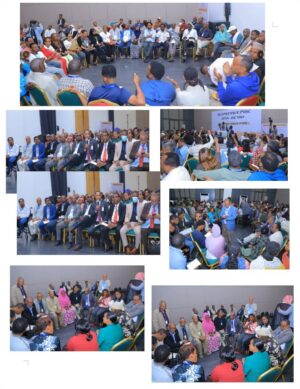
𝐃𝐚𝐲 𝟏𝟒 — 𝐅𝐫𝐢𝐝𝐚𝐲, 𝐉𝐮𝐥𝐲 𝟑𝟏, 𝟐𝟎𝟐𝟔
𝐍𝐚𝐭𝐢𝐨𝐧𝐬 𝐚𝐫𝐞 𝐧𝐨𝐭 𝐬𝐚𝐯𝐞𝐝 𝐛𝐲 𝐬𝐥𝐨𝐠𝐚𝐧𝐬. 𝐓𝐡𝐞𝐲 𝐚𝐫𝐞 𝐬𝐚𝐯𝐞𝐝 𝐛𝐲 𝐰𝐨𝐫𝐝𝐬 𝐭𝐡𝐚𝐭 𝐚𝐫𝐞 𝐩𝐫𝐞𝐜𝐢𝐬𝐞 𝐞𝐧𝐨𝐮𝐠𝐡 𝐭𝐨 𝐛𝐞 𝐚𝐜𝐭𝐞𝐝 𝐮𝐩𝐨𝐧. 𝐓𝐰𝐨 𝐬𝐮𝐜𝐡 𝐰𝐨𝐫𝐝𝐬 𝐚𝐫𝐞 𝐧𝐨𝐰 𝐝𝐨𝐢𝐧𝐠 𝐪𝐮𝐢𝐞𝐭, 𝐞𝐬𝐬𝐞𝐧𝐭𝐢𝐚𝐥 𝐰𝐨𝐫𝐤 𝐚𝐭 𝐭𝐡𝐞 𝐄𝐭𝐡𝐢𝐨𝐩𝐢𝐚𝐧 𝐍𝐚𝐭𝐢𝐨𝐧𝐚𝐥 𝐃𝐢𝐚𝐥𝐨𝐠𝐮𝐞 𝐂𝐨𝐧𝐟𝐞𝐫𝐞𝐧𝐜𝐞.
Consensus means a genuine meeting of minds — people coming to share, at some depth, the same understanding of a problem and the same core values about how to solve it.
Concurrence asks less, but asks something real: it is the discipline of consenting to a shared path forward even when it is not any single person’s ideal outcome, because the greater interest — a peaceful, prosperous and progressive Ethiopia — far outweighs the loss of getting everything one wanted.
𝐀 𝐩𝐞𝐨𝐩𝐥𝐞 𝐰𝐡𝐨 𝐜𝐚𝐧 𝐨𝐧𝐥𝐲 𝐚𝐠𝐫𝐞𝐞 𝐰𝐡𝐞𝐧 𝐭𝐡𝐞𝐲 𝐚𝐠𝐫𝐞𝐞 𝐜𝐨𝐦𝐩𝐥𝐞𝐭𝐞𝐥𝐲 𝐰𝐢𝐥𝐥 𝐧𝐞𝐯𝐞𝐫 𝐠𝐨𝐯𝐞𝐫𝐧 𝐭𝐡𝐞𝐦𝐬𝐞𝐥𝐯𝐞𝐬. 𝐀 𝐩𝐞𝐨𝐩𝐥𝐞 𝐰𝐡𝐨 𝐜𝐚𝐧 𝐜𝐨𝐧𝐜𝐮𝐫 — 𝐰𝐡𝐨 𝐜𝐚𝐧 𝐚𝐜𝐜𝐞𝐩𝐭 𝐚 𝐰𝐨𝐫𝐤𝐚𝐛𝐥𝐞 𝐜𝐨𝐦𝐩𝐫𝐨𝐦𝐢𝐬𝐞 𝐢𝐧 𝐠𝐨𝐨𝐝 𝐟𝐚𝐢𝐭𝐡 — 𝐜𝐚𝐧 𝐛𝐮𝐢𝐥𝐝 𝐚 𝐜𝐨𝐮𝐧𝐭𝐫𝐲 𝐭𝐨𝐠𝐞𝐭𝐡𝐞𝐫 𝐞𝐯𝐞𝐧 𝐰𝐡𝐢𝐥𝐞 𝐝𝐢𝐬𝐚𝐠𝐫𝐞𝐞𝐢𝐧𝐠 𝐚𝐛𝐨𝐮𝐭 𝐚 𝐠𝐫𝐞𝐚𝐭 𝐝𝐞𝐚𝐥.
𝐓𝐡𝐢𝐬 𝐢𝐬 𝐧𝐨𝐭 𝐚𝐧 𝐚𝐛𝐬𝐭𝐫𝐚𝐜𝐭 𝐝𝐢𝐬𝐭𝐢𝐧𝐜𝐭𝐢𝐨𝐧. 𝐈𝐭 𝐢𝐬 𝐭𝐡𝐞 𝐨𝐩𝐞𝐫𝐚𝐭𝐢𝐧𝐠 𝐥𝐨𝐠𝐢𝐜 𝐨𝐟 𝐭𝐡𝐞 𝐄𝐭𝐡𝐢𝐨𝐩𝐢𝐚𝐧 𝐍𝐚𝐭𝐢𝐨𝐧𝐚𝐥 𝐃𝐢𝐚𝐥𝐨𝐠𝐮𝐞 𝐂𝐨𝐧𝐟𝐞𝐫𝐞𝐧𝐜𝐞, 𝐚𝐧𝐝 𝐢𝐭 𝐢𝐬 𝐭𝐡𝐞 𝐫𝐞𝐚𝐬𝐨𝐧 𝐭𝐡𝐞 𝐩𝐫𝐨𝐜𝐞𝐬𝐬 — 𝐡𝐨𝐰𝐞𝐯𝐞𝐫 𝐢𝐦𝐩𝐞𝐫𝐟𝐞𝐜𝐭, 𝐦𝐚𝐥𝐢𝐠𝐧𝐞𝐝 𝐚𝐧𝐝 𝐜𝐨𝐧𝐭𝐞𝐬𝐭𝐞𝐝 — 𝐝𝐞𝐬𝐞𝐫𝐯𝐞𝐬 𝐭𝐨 𝐛𝐞 𝐮𝐧𝐝𝐞𝐫𝐬𝐭𝐨𝐨𝐝 𝐨𝐧 𝐢𝐭𝐬 𝐨𝐰𝐧 𝐭𝐞𝐫𝐦𝐬 𝐛𝐞𝐟𝐨𝐫𝐞 𝐢𝐭 𝐢𝐬 𝐣𝐮𝐝𝐠𝐞𝐝.
Ethiopia’s National Dialogue Conference formally opened on July 15, 2026, bringing together 4,000 delegates drawn from every regional state, from civil society, religious institutions, traditional leadership, women’s and youth associations, political parties, government institutions, persons with disabilities, and the Ethiopian diaspora. The Conference is supported by thousands more operational and technical staff.
The Ethiopian National Dialogue Commission (ENDC), the independent body Parliament established in 2021 to design and run this process, built the conference on the foundation of four years of prior work: agenda-gathering consultations in nearly 1,300 districts throughout the country and with hundreds of thousands of citizens nationwide, which the Commission distilled into eight official agenda pillars unveiled that June. The Commissions, despite extraordinary efforts, was unable to engage citizens at the grassroots levels in certain areas because of security concerns.
Those eight pillars distilled by the Commission are not vague aspirations. They are a genuine inventory of Ethiopia’s hardest questions.
They are about nation-building (identity, shared national values, language, and the preservation of culture and heritage); state structure and governance (the form of the federation itself, the right to self-determination, term limits, fiscal federalism, and the electoral and multi-party system); federal cities (the unresolved status of Addis Ababa and Dire Dawa, their relationship to Oromia and Somali regional states, and questions of jurisdiction, boundaries, and language); religious affairs and historical grievances (religious freedom, minority protection, and reconciliation for historical marginalization); institution-building, rule of law, and human rights (including the rights of internally
displaced persons, independence of courts, security services, and media); socio-economic issues, farmers, and pastoralists (land tenure, resource-sharing, labor rights, and the long-neglected demands of pastoralist communities); corruption and good governance (building real anti-corruption systems and merit-based public service); peacebuilding (root causes of conflict, the status of armed actors, transitional justice, ceasefires, and — critically — the formal integration of traditional conflict-resolution mechanisms into the modern legal system). Peacebuilidng deserves emphasis, because it is where Ethiopia’s dialogue becomes something more than an imported model of liberal proceduralism. More on that below.
Structurally, the Commission organized the 4,000 delegates into eight primary working groups of 500 — one per agenda pillar — which in turn break down into subgroups of 250, then 50, then micro-groups of 10, before findings are consolidated back up the chain for validation by the full 500-member assembly.
On this fourteenth day, the 250-delegate groups have reached broad consensus within their respective agenda areas, and all are expected to complete formal endorsement of a consensus document — capturing both the areas of agreement and the individual dissenting positions delegates wished to preserve — by Monday.
The delegates have also elected a “Kilil Representatives Group” of several hundred members, tasked specifically with resolving disputes that reach deadlock across three or more regional states, and with hearing grievances from numerically small ethnic, religious, or other groups who believe their existence or standing is threatened by a proposed outcome. That mechanism matters: it is a built-in safeguard against the “tyranny of the majority,” embedded in the architecture of the dialogue itself rather than left to goodwill after the fact.
𝐇𝐚𝐯𝐢𝐧𝐠 𝐬𝐚𝐭 𝐢𝐧𝐬𝐢𝐝𝐞 𝐭𝐡𝐞𝐬𝐞 𝐝𝐞𝐥𝐢𝐛𝐞𝐫𝐚𝐭𝐢𝐨𝐧𝐬 — 𝐚𝐬 𝐚 𝐩𝐚𝐫𝐭𝐢𝐜𝐢𝐩𝐚𝐧𝐭, 𝐚 𝐬𝐮𝐛𝐣𝐞𝐜𝐭-𝐦𝐚𝐭𝐭𝐞𝐫 𝐞𝐱𝐩𝐞𝐫𝐭, 𝐨𝐛𝐬𝐞𝐫𝐯𝐞𝐫 𝐰𝐢𝐭𝐡 𝐚𝐜𝐜𝐞𝐬𝐬 𝐚𝐜𝐫𝐨𝐬𝐬 𝐚𝐠𝐞𝐧𝐝𝐚 𝐠𝐫𝐨𝐮𝐩𝐬, 𝐚𝐧𝐝 𝐚 𝐥𝐨𝐧𝐠𝐭𝐢𝐦𝐞 𝐦𝐞𝐝𝐢𝐚 𝐜𝐨𝐦𝐦𝐞𝐧𝐭𝐚𝐭𝐨𝐫 𝐨𝐧 𝐄𝐭𝐡𝐢𝐨𝐩𝐢𝐚𝐧 𝐚𝐟𝐟𝐚𝐢𝐫𝐬 — 𝐈 𝐜𝐚𝐧 𝐫𝐞𝐩𝐨𝐫𝐭 𝐰𝐡𝐚𝐭 𝐈 𝐰𝐢𝐭𝐧𝐞𝐬𝐬𝐞𝐝 𝐟𝐢𝐫𝐬𝐭𝐡𝐚𝐧𝐝: 𝐚 𝐰𝐨𝐫𝐤𝐢𝐧𝐠 𝐦𝐨𝐝𝐞𝐥 𝐨𝐟 𝐜𝐨𝐧𝐬𝐞𝐧𝐬𝐮𝐬-𝐛𝐮𝐢𝐥𝐝𝐢𝐧𝐠 𝐭𝐡𝐚𝐭 𝐖𝐞𝐬𝐭𝐞𝐫𝐧 𝐩𝐨𝐥𝐢𝐭𝐢𝐜𝐚𝐥 𝐬𝐜𝐢𝐞𝐧𝐜𝐞 𝐝𝐞𝐬𝐜𝐫𝐢𝐛𝐞𝐬 𝐢𝐧 𝐭𝐡𝐞𝐨𝐫𝐲 𝐚𝐧𝐝 𝐭𝐡𝐚𝐭 𝐄𝐭𝐡𝐢𝐨𝐩𝐢𝐚𝐧𝐬 𝐚𝐫𝐞 𝐧𝐨𝐰 𝐩𝐫𝐚𝐜𝐭𝐢𝐜𝐢𝐧𝐠 𝐢𝐧 𝐚 𝐜𝐨𝐧𝐯𝐞𝐧𝐭𝐢𝐨𝐧 𝐡𝐚𝐥𝐥, 𝐠𝐫𝐨𝐮𝐩 𝐛𝐲 𝐠𝐫𝐨𝐮𝐩, 𝐜𝐥𝐚𝐮𝐬𝐞 𝐛𝐲 𝐜𝐥𝐚𝐮𝐬𝐞.
𝐓𝐰𝐨 𝐓𝐡𝐞𝐨𝐫𝐢𝐞𝐬 𝐨𝐟 𝐂𝐨𝐧𝐬𝐞𝐧𝐬𝐮𝐬: 𝐓𝐡𝐞 𝐈𝐦𝐩𝐨𝐫𝐭𝐞𝐝 𝐚𝐧𝐝 𝐭𝐡𝐞 𝐈𝐧𝐝𝐢𝐠𝐞𝐧𝐨𝐮𝐬 𝐄𝐭𝐡𝐢𝐨𝐩𝐢𝐚𝐧
Western social science offers a rich vocabulary for what is happening at the Ethiopian National Dialogue Conference.
Social contract theory frames legitimate governance as something built from the consent of the governed.
Consociationalism describes how deeply divided societies — Lebanon, Northern Ireland, Bosnia — have historically managed pluralism through power-sharing arrangements among their major communities.
Conflict transformation theory insists that lasting peace requires addressing root causes, not just symptoms, and rebuilding trust between adversaries rather than merely silencing them.
All three frameworks illuminate pieces of what Ethiopia’s dialogue is attempting.
𝐁𝐮𝐭 𝐰𝐡𝐚𝐭 𝐈 𝐡𝐚𝐯𝐞 𝐨𝐛𝐬𝐞𝐫𝐯𝐞𝐝 𝐨𝐧 𝐭𝐡𝐞 𝐠𝐫𝐨𝐮𝐧𝐝 𝐢𝐬 𝐭𝐡𝐚𝐭 𝐭𝐡𝐞 𝐥𝐚𝐧𝐠𝐮𝐚𝐠𝐞 𝐚𝐧𝐝 𝐟𝐫𝐚𝐦𝐞𝐰𝐨𝐫𝐤 𝐨𝐟 𝐭𝐡𝐢𝐬 𝐂𝐨𝐧𝐟𝐞𝐫𝐞𝐧𝐜𝐞 𝐢𝐬 𝐧𝐨𝐭 𝐩𝐫𝐢𝐦𝐚𝐫𝐢𝐥𝐲 𝐖𝐞𝐬𝐭𝐞𝐫𝐧. 𝐈𝐭 𝐢𝐬 𝐄𝐭𝐡𝐢𝐨𝐩𝐢𝐚𝐧. 𝐈𝐭 𝐝𝐫𝐚𝐰𝐬 𝐨𝐧 𝐚 𝐬𝐞𝐭 𝐨𝐟 𝐢𝐧𝐝𝐢𝐠𝐞𝐧𝐨𝐮𝐬 𝐜𝐨𝐧𝐟𝐥𝐢𝐜𝐭-𝐫𝐞𝐬𝐨𝐥𝐮𝐭𝐢𝐨𝐧 𝐢𝐧𝐬𝐭𝐢𝐭𝐮𝐭𝐢𝐨𝐧𝐬 𝐭𝐡𝐚𝐭 𝐡𝐚𝐯𝐞 𝐨𝐩𝐞𝐫𝐚𝐭𝐞𝐝 𝐟𝐨𝐫 𝐜𝐞𝐧𝐭𝐮𝐫𝐢𝐞𝐬, 𝐥𝐨𝐧𝐠 𝐛𝐞𝐟𝐨𝐫𝐞 𝐚𝐧𝐲 𝐢𝐧𝐭𝐞𝐫𝐧𝐚𝐭𝐢𝐨𝐧𝐚𝐥 𝐍𝐆𝐎 𝐰𝐫𝐨𝐭𝐞 𝐚 𝐩𝐞𝐚𝐜𝐞𝐛𝐮𝐢𝐥𝐝𝐢𝐧𝐠 𝐦𝐚𝐧𝐮𝐚𝐥, 𝐚𝐧𝐝 𝐭𝐡𝐚𝐭 𝐬𝐡𝐚𝐫𝐞 𝐚 𝐬𝐞𝐭 𝐨𝐟 𝐟𝐚𝐦𝐢𝐥𝐲 𝐫𝐞𝐬𝐞𝐦𝐛𝐥𝐚𝐧𝐜𝐞𝐬: 𝐞𝐥𝐝𝐞𝐫𝐬 𝐚𝐬 𝐭𝐫𝐮𝐬𝐭𝐞𝐝 𝐦𝐞𝐝𝐢𝐚𝐭𝐨𝐫𝐬, 𝐚𝐧 𝐞𝐦𝐩𝐡𝐚𝐬𝐢𝐬 𝐨𝐧 𝐫𝐞𝐬𝐭𝐨𝐫𝐚𝐭𝐢𝐨𝐧 𝐨𝐯𝐞𝐫 𝐩𝐮𝐧𝐢𝐬𝐡𝐦𝐞𝐧𝐭, 𝐚𝐧𝐝 𝐚 𝐛𝐞𝐥𝐢𝐞𝐟 𝐭𝐡𝐚𝐭 𝐫𝐞𝐜𝐨𝐧𝐜𝐢𝐥𝐢𝐚𝐭𝐢𝐨𝐧 𝐦𝐮𝐬𝐭 𝐫𝐞𝐩𝐚𝐢𝐫 𝐫𝐞𝐥𝐚𝐭𝐢𝐨𝐧𝐬𝐡𝐢𝐩𝐬, 𝐧𝐨𝐭 𝐦𝐞𝐫𝐞𝐥𝐲 𝐬𝐞𝐭𝐭𝐥𝐞 𝐬𝐜𝐨𝐫𝐞𝐬.
The Gadaa system of the Oromo people is a structured, generational system of self-governance and dispute prevention, within which the Siinqee institution empowers women — through a ritual stick carried as a symbol of moral authority — to intervene and halt violence, including violence against women themselves.
The Shimgilina tradition among the Amhara relies on respected elders to mediate disputes and guide parties toward reconciliation, often convened in a church compound or under a shade tree, spaces chosen precisely because they carry no institutional gravitas.
Among the Afar, Mekabon (judges) convene clan leaders to adjudicate serious inter-clan offenses.
Somali communities resolve pastoral disputes through the Gar/Haajo system, rooted in customary clan law.
These are not folkloric curiosities. They are functioning and effective conflict prevention and resolution Ethiopian institutions whose legitimacy comes from community consent rather than state coercion, and whose methods — truth-telling, emotional expression, restitution, and forward-looking reconciliation — create what might be called a “peace redundancy”: overlapping layers of social trust that hold even when one mechanism, or one round of talks, falls short.
𝐈𝐭 𝐢𝐬 𝐧𝐨 𝐚𝐜𝐜𝐢𝐝𝐞𝐧𝐭 𝐭𝐡𝐚𝐭 𝐀𝐠𝐞𝐧𝐝𝐚 𝐏𝐢𝐥𝐥𝐚𝐫 𝟖 𝐞𝐱𝐩𝐥𝐢𝐜𝐢𝐭𝐥𝐲 𝐜𝐚𝐥𝐥𝐬 𝐟𝐨𝐫 𝐭𝐡𝐞 𝐫𝐞𝐜𝐨𝐠𝐧𝐢𝐭𝐢𝐨𝐧, 𝐬𝐭𝐫𝐞𝐧𝐠𝐭𝐡𝐞𝐧𝐢𝐧𝐠, 𝐚𝐧𝐝 𝐟𝐨𝐫𝐦𝐚𝐥 𝐢𝐧𝐭𝐞𝐠𝐫𝐚𝐭𝐢𝐨𝐧 𝐨𝐟 𝐭𝐡𝐞𝐬𝐞 𝐭𝐫𝐚𝐝𝐢𝐭𝐢𝐨𝐧𝐚𝐥 𝐦𝐞𝐜𝐡𝐚𝐧𝐢𝐬𝐦𝐬 𝐰𝐢𝐭𝐡 𝐭𝐡𝐞 𝐦𝐨𝐝𝐞𝐫𝐧 𝐥𝐞𝐠𝐚𝐥 𝐬𝐲𝐬𝐭𝐞𝐦. 𝐓𝐡𝐚𝐭 𝐢𝐬 𝐧𝐨𝐭 𝐚 𝐬𝐲𝐦𝐛𝐨𝐥𝐢𝐜 𝐠𝐞𝐬𝐭𝐮𝐫𝐞. 𝐈𝐭 𝐢𝐬 𝐚𝐧 𝐚𝐜𝐤𝐧𝐨𝐰𝐥𝐞𝐝𝐠𝐦𝐞𝐧𝐭 𝐭𝐡𝐚𝐭 𝐄𝐭𝐡𝐢𝐨𝐩𝐢𝐚’𝐬 𝐩𝐚𝐭𝐡 𝐭𝐨 𝐩𝐞𝐚𝐜𝐞 𝐰𝐢𝐥𝐥 𝐧𝐨𝐭 𝐛𝐞 𝐩𝐮𝐫𝐞𝐥𝐲 𝐜𝐨𝐧𝐬𝐭𝐢𝐭𝐮𝐭𝐢𝐨𝐧𝐚𝐥; 𝐢𝐭 𝐰𝐢𝐥𝐥 𝐚𝐥𝐬𝐨 𝐛𝐞 𝐜𝐮𝐥𝐭𝐮𝐫𝐚𝐥.
𝐖𝐡𝐚𝐭 𝐭𝐡𝐞 𝐃𝐞𝐥𝐞𝐠𝐚𝐭𝐞𝐬 𝐀𝐫𝐞 𝐒𝐢𝐜𝐤 𝐚𝐧𝐝 𝐓𝐢𝐫𝐞𝐝 𝐎𝐟
I have spoken with hundreds of individual delegates across all eight agenda groups. What unites them is not naïveté about how hard the dialogue process is. It is exhaustion — a specific, describable exhaustion — with a politics that has cost Ethiopia dearly in life and property loss.
They are sick and tired of the politics of hate and division that manufactures fear for political advantage, that uses coded language to turn neighbor against neighbor along ethnic, religious, or ideological lines.
They are tired of leaders and movements that cultivate an “us versus them” logic, because that logic has a body count: internal displacement of millions of Ethiopians over the past three decades, a war in northern Ethiopia that has resulted in the deaths of hundreds of thousands and left deep wounds in the hearts and minds of millions of Ethiopians. Ongoing brigandage in Tigray, Amhara and Oromia regions continue to produce unspeakable displacement and grief.
The delegates at the Ethiopian National Dialogue Conference are sick and tired of a destructive politics whose primary commodity has been human suffering, despair, sorrow and heartbreak.
𝐄𝐭𝐡𝐢𝐨𝐩𝐢𝐚𝐧𝐬 𝐚𝐫𝐞 𝐬𝐢𝐜𝐤 𝐚𝐧𝐝 𝐭𝐢𝐫𝐞𝐝 𝐨𝐟 𝐰𝐚𝐫 𝐚𝐧𝐝 𝐯𝐢𝐨𝐥𝐞𝐧𝐜𝐞. 𝐈𝐟 𝐄𝐭𝐡𝐢𝐨𝐩𝐢𝐚𝐧𝐬 𝐚𝐫𝐞 𝐭𝐨 𝐝𝐞𝐜𝐥𝐚𝐫𝐞 𝐰𝐚𝐫 𝐨𝐧 𝐚𝐧𝐲𝐭𝐡𝐢𝐧𝐠, 𝐭𝐡𝐞 𝐝𝐞𝐥𝐞𝐠𝐚𝐭𝐞𝐬 𝐰𝐚𝐧𝐭 𝐢𝐭 𝐝𝐞𝐜𝐥𝐚𝐫𝐞𝐝 𝐨𝐧 𝐩𝐨𝐯𝐞𝐫𝐭𝐲, 𝐢𝐠𝐧𝐨𝐫𝐚𝐧𝐜𝐞, 𝐢𝐥𝐥𝐢𝐭𝐞𝐫𝐚𝐜𝐲, 𝐚𝐧𝐝 𝐝𝐢𝐬𝐞𝐚𝐬𝐞 — 𝐭𝐡𝐞 𝐪𝐮𝐢𝐞𝐭𝐞𝐫 𝐛𝐮𝐭 𝐞𝐪𝐮𝐚𝐥𝐥𝐲 𝐥𝐞𝐭𝐡𝐚𝐥 𝐟𝐨𝐫𝐜𝐞𝐬 𝐭𝐡𝐚𝐭 𝐡𝐚𝐯𝐞 𝐤𝐞𝐩𝐭 𝐠𝐞𝐧𝐞𝐫𝐚𝐭𝐢𝐨𝐧𝐬 𝐨𝐟 𝐄𝐭𝐡𝐢𝐨𝐩𝐢𝐚𝐧𝐬 𝐟𝐫𝐨𝐦 𝐭𝐡𝐞 𝐥𝐢𝐯𝐞𝐬 𝐭𝐡𝐞𝐲 𝐝𝐞𝐬𝐞𝐫𝐯𝐞.
𝐓𝐡𝐚𝐭 𝐢𝐬 𝐧𝐨𝐭 𝐚 𝐫𝐡𝐞𝐭𝐨𝐫𝐢𝐜𝐚𝐥 𝐟𝐥𝐨𝐮𝐫𝐢𝐬𝐡. 𝐈𝐭 𝐢𝐬 𝐚 𝐠𝐞𝐧𝐮𝐢𝐧𝐞 𝐫𝐞𝐨𝐫𝐝𝐞𝐫𝐢𝐧𝐠 𝐨𝐟 𝐧𝐚𝐭𝐢𝐨𝐧𝐚𝐥 𝐩𝐫𝐢𝐨𝐫𝐢𝐭𝐢𝐞𝐬, 𝐨𝐧𝐞 𝐛𝐞𝐢𝐧𝐠 𝐧𝐞𝐠𝐨𝐭𝐢𝐚𝐭𝐞𝐝, 𝐢𝐭𝐞𝐦 𝐛𝐲 𝐢𝐭𝐞𝐦, 𝐢𝐧𝐬𝐢𝐝𝐞 𝐀𝐠𝐞𝐧𝐝𝐚 𝐏𝐢𝐥𝐥𝐚𝐫 𝟔 𝐨𝐧 𝐬𝐨𝐜𝐢𝐨-𝐞𝐜𝐨𝐧𝐨𝐦𝐢𝐜 𝐢𝐬𝐬𝐮𝐞𝐬, 𝐟𝐚𝐫𝐦𝐞𝐫𝐬, 𝐚𝐧𝐝 𝐩𝐚𝐬𝐭𝐨𝐫𝐚𝐥𝐢𝐬𝐭𝐬, 𝐚𝐧𝐝 𝐏𝐢𝐥𝐥𝐚𝐫 𝟓 𝐨𝐧 𝐡𝐮𝐦𝐚𝐧 𝐫𝐢𝐠𝐡𝐭𝐬 𝐚𝐧𝐝 𝐫𝐮𝐥𝐞 𝐨𝐟 𝐥𝐚𝐰.
𝐇𝐨𝐰 𝐂𝐨𝐧𝐬𝐞𝐧𝐬𝐮𝐬 𝐀𝐜𝐭𝐮𝐚𝐥𝐥𝐲 𝐅𝐨𝐫𝐦𝐬 𝐢𝐧 𝐭𝐡𝐞 𝐄𝐭𝐡𝐢𝐨𝐩𝐢𝐚𝐧 𝐃𝐢𝐚𝐥𝐨𝐠𝐮𝐞 𝐂𝐨𝐧𝐟𝐞𝐫𝐞𝐧𝐜𝐞
A common misconception about dialogues like the Ethiopian Dialogue Conference is that consensus is manufactured live, in the room, through the sheer force of logic and argument.
What I have observed is truly fascinating: substantive consensus on complex issues typically pre-exists the formal session, built through long years (4 years) of quiet groundwork — problem identification, careful participant recruitment, and informal trust-building — and the formal dialogue process functions to test, refine, and formalize that pre-existing convergence rather than conjure it from nothing. Genuine negotiation is interest-based: delegates trade, concede, and prioritize, searching for outcomes that meet enough of each stakeholder’s core interest to be sustainable, rather than holding out for total victory.
None of this means 4,000 delegates agree on everything. They plainly do not — the eight agenda pillars listed above contain some of the most contested questions in Ethiopian political life, from the interpretation of the constitutional right to self-determination to the legal status of Addis Ababa and Dire Dawa.
𝐁𝐮𝐭 𝐛𝐫𝐨𝐚𝐝 𝐜𝐨𝐧𝐬𝐞𝐧𝐬𝐮𝐬 𝐨𝐧 𝐭𝐡𝐞 𝐥𝐚𝐫𝐠𝐞𝐬𝐭 𝐪𝐮𝐞𝐬𝐭𝐢𝐨𝐧𝐬 — 𝐭𝐡𝐚𝐭 𝐭𝐡𝐞 𝐜𝐮𝐫𝐫𝐞𝐧𝐭 𝐜𝐲𝐜𝐥𝐞 𝐨𝐟 𝐜𝐨𝐧𝐟𝐥𝐢𝐜𝐭 𝐦𝐮𝐬𝐭 𝐞𝐧𝐝, 𝐭𝐡𝐚𝐭 𝐭𝐡𝐞 𝐜𝐨𝐮𝐧𝐭𝐫𝐲 𝐧𝐞𝐞𝐝𝐬 𝐚 𝐬𝐡𝐚𝐫𝐞𝐝 𝐟𝐮𝐭𝐮𝐫𝐞, 𝐭𝐡𝐚𝐭 𝐝𝐢𝐚𝐥𝐨𝐠𝐮𝐞 𝐢𝐬 𝐩𝐫𝐞𝐟𝐞𝐫𝐚𝐛𝐥𝐞 𝐭𝐨 𝐭𝐡𝐞 𝐛𝐚𝐭𝐭𝐥𝐞𝐟𝐢𝐞𝐥𝐝 — 𝐢𝐬 𝐫𝐞𝐚𝐥, 𝐚𝐧𝐝 𝐢𝐭 𝐢𝐬 𝐝𝐮𝐫𝐚𝐛𝐥𝐞 𝐞𝐧𝐨𝐮𝐠𝐡 𝐭𝐨 𝐬𝐮𝐫𝐯𝐢𝐯𝐞 𝐝𝐢𝐬𝐚𝐠𝐫𝐞𝐞𝐦𝐞𝐧𝐭 𝐨𝐧 𝐭𝐡𝐞 𝐝𝐞𝐭𝐚𝐢𝐥𝐬. 𝐀 𝐩𝐞𝐫𝐬𝐮𝐚𝐬𝐢𝐯𝐞 𝐜𝐚𝐬𝐞 𝐢𝐬 𝐬𝐭𝐫𝐞𝐧𝐠𝐭𝐡𝐞𝐧𝐞𝐝, 𝐧𝐨𝐭 𝐰𝐞𝐚𝐤𝐞𝐧𝐞𝐝, 𝐛𝐲 𝐜𝐨𝐧𝐟𝐫𝐨𝐧𝐭𝐢𝐧𝐠 𝐢𝐭𝐬 𝐡𝐚𝐫𝐝𝐞𝐬𝐭 𝐨𝐛𝐣𝐞𝐜𝐭𝐢𝐨𝐧𝐬 𝐝𝐢𝐫𝐞𝐜𝐭𝐥𝐲.
The Dialogue’s critics and certain armed groups have declined to participate in the Conference (though there are a number of well-known former combatants that are participating), arguing the Commission is not independent. They claim a process that does not include armed actors driving the ongoing conflicts cannot succeed.
𝐓𝐡𝐞 𝐟𝐚𝐜𝐭 𝐨𝐟 𝐭𝐡𝐞 𝐦𝐚𝐭𝐭𝐞𝐫 𝐢𝐬 𝐭𝐡𝐚𝐭 𝐚 𝐧𝐚𝐭𝐢𝐨𝐧𝐚𝐥 𝐝𝐢𝐚𝐥𝐨𝐠𝐮𝐞 𝐝𝐨𝐞𝐬 𝐧𝐨𝐭 𝐧𝐞𝐞𝐝 𝐮𝐧𝐢𝐯𝐞𝐫𝐬𝐚𝐥 𝐩𝐚𝐫𝐭𝐢𝐜𝐢𝐩𝐚𝐭𝐢𝐨𝐧 𝐭𝐨 𝐛𝐞 𝐯𝐚𝐥𝐢𝐝, 𝐬𝐮𝐜𝐜𝐞𝐬𝐬𝐟𝐮𝐥 𝐨𝐫 𝐰𝐨𝐫𝐭𝐡𝐰𝐡𝐢𝐥𝐞. 𝐈𝐭 𝐧𝐞𝐞𝐝𝐬 𝐭𝐨 𝐛𝐞 𝐡𝐨𝐧𝐞𝐬𝐭 𝐚𝐛𝐨𝐮𝐭 𝐢𝐭𝐬 𝐥𝐢𝐦𝐢𝐭𝐬 𝐰𝐡𝐢𝐥𝐞 𝐬𝐭𝐢𝐥𝐥 𝐝𝐨𝐢𝐧𝐠 𝐭𝐡𝐞 𝐚𝐜𝐡𝐢𝐞𝐯𝐚𝐛𝐥𝐞 𝐠𝐨𝐨𝐝 𝐢𝐧 𝐟𝐫𝐨𝐧𝐭 𝐨𝐟 𝐢𝐭. 𝐄𝐯𝐞𝐫𝐲 𝐫𝐞𝐜𝐨𝐧𝐜𝐢𝐥𝐢𝐚𝐭𝐢𝐨𝐧 𝐩𝐫𝐨𝐜𝐞𝐬𝐬 𝐢𝐧 𝐡𝐢𝐬𝐭𝐨𝐫𝐲 𝐡𝐚𝐬 𝐛𝐞𝐠𝐮𝐧 𝐛𝐞𝐟𝐨𝐫𝐞 𝐞𝐯𝐞𝐫𝐲 𝐫𝐞𝐥𝐞𝐯𝐚𝐧𝐭 𝐩𝐚𝐫𝐭𝐲 𝐰𝐚𝐬 𝐚𝐭 𝐭𝐡𝐞 𝐭𝐚𝐛𝐥𝐞. 𝐓𝐡𝐞 𝐚𝐥𝐭𝐞𝐫𝐧𝐚𝐭𝐢𝐯𝐞 — 𝐰𝐚𝐢𝐭𝐢𝐧𝐠 𝐟𝐨𝐫 𝐩𝐞𝐫𝐟𝐞𝐜𝐭 𝐢𝐧𝐜𝐥𝐮𝐬𝐢𝐨𝐧 𝐛𝐞𝐟𝐨𝐫𝐞 𝐛𝐞𝐠𝐢𝐧𝐧𝐢𝐧𝐠 𝐚𝐧𝐲 𝐜𝐨𝐧𝐯𝐞𝐫𝐬𝐚𝐭𝐢𝐨𝐧 𝐚𝐭 𝐚𝐥𝐥 — 𝐢𝐬 𝐢𝐭𝐬𝐞𝐥𝐟 𝐚 𝐟𝐨𝐫𝐦𝐮𝐥𝐚 𝐟𝐨𝐫 𝐩𝐞𝐫𝐦𝐚𝐧𝐞𝐧𝐭 𝐬𝐭𝐚𝐥𝐞𝐦𝐚𝐭𝐞.
Precisely because armed actors remain outside the Conference halls, the delegates who are in the halls carry an added burden: to build a consensus document so credible, so evidently the product of good-faith trade-offs rather than a predetermined script, that it becomes difficult for those on the outside to dismiss and increasingly costly for them to keep refusing a seat. It is such a consensus document that is being crafted with meticulous care and foresight at the Conference.
Legitimacy, in other words, is not simply declared at the opening ceremony — it is earned, group by group, resolution by resolution, over the life of the process. The delegates in the room on Day 14 are earning it in real time.
I believe — and fourteen days of direct observation have only deepened this conviction — that the delegates came to this Conference believing they are engaged in something that resembles a rescue mission and a mission to MAKE ETHIOPIA GREAT AGAIN.
They came carrying the idea that they bear a personal, monumental responsibility to pull Ethiopia out of a generations-long cycle of violence, ethnic grievance, and war, and to hand the coming generation something better: a country that resembles what Dr. Martin Luther King Jr. called the “beloved community” — the biblical image of a “city upon a hill” — a society ordered around justice, equal opportunity, and the conviction that poverty, hunger, displacement, and strife are not facts of nature but failures to be corrected, and that conflict is resolved through nonviolent means rather than the barrel of the gun.
𝐓𝐡𝐚𝐭 𝐢𝐬 𝐭𝐡𝐞 𝐝𝐞𝐞𝐩𝐞𝐫 𝐚𝐫𝐠𝐮𝐦𝐞𝐧𝐭 𝐛𝐞𝐢𝐧𝐠 𝐦𝐚𝐝𝐞 𝐢𝐧𝐬𝐢𝐝𝐞 𝐭𝐡𝐞 𝐄𝐭𝐡𝐢𝐨𝐩𝐢𝐚𝐧 𝐃𝐢𝐚𝐥𝐨𝐠𝐮𝐞 𝐂𝐨𝐧𝐟𝐞𝐫𝐞𝐧𝐜𝐞, 𝐰𝐡𝐞𝐭𝐡𝐞𝐫 𝐨𝐫 𝐧𝐨𝐭 𝐞𝐯𝐞𝐫𝐲 𝐝𝐞𝐥𝐞𝐠𝐚𝐭𝐞 𝐰𝐨𝐮𝐥𝐝 𝐩𝐡𝐫𝐚𝐬𝐞 𝐢𝐭 𝐭𝐡𝐢𝐬 𝐰𝐚𝐲: 𝐭𝐡𝐚𝐭 𝐩𝐨𝐰𝐞𝐫 𝐢𝐧 𝐄𝐭𝐡𝐢𝐨𝐩𝐢𝐚 𝐜𝐚𝐧 𝐧𝐨 𝐥𝐨𝐧𝐠𝐞𝐫 𝐛𝐞 𝐭𝐫𝐞𝐚𝐭𝐞𝐝 𝐚𝐬 𝐬𝐨𝐦𝐞𝐭𝐡𝐢𝐧𝐠 𝐭𝐡𝐚𝐭 𝐠𝐫𝐨𝐰𝐬 𝐨𝐧𝐥𝐲 𝐟𝐫𝐨𝐦 𝐭𝐡𝐞 𝐛𝐚𝐫𝐫𝐞𝐥 𝐨𝐟 𝐚 𝐠𝐮𝐧. 𝐈𝐭 𝐦𝐮𝐬𝐭 𝐢𝐧𝐬𝐭𝐞𝐚𝐝 𝐠𝐫𝐨𝐰 𝐟𝐫𝐨𝐦 𝐭𝐡𝐞 𝐦𝐨𝐮𝐭𝐡𝐬, 𝐞𝐚𝐫𝐬, 𝐚𝐧𝐝 𝐞𝐲𝐞𝐬 𝐨𝐟 𝐜𝐢𝐭𝐢𝐳𝐞𝐧𝐬 𝐞𝐧𝐠𝐚𝐠𝐞𝐝 𝐢𝐧 𝐝𝐢𝐚𝐥𝐨𝐠𝐮𝐞 𝐜𝐨𝐧𝐝𝐮𝐜𝐭𝐞𝐝 𝐢𝐧 𝐠𝐨𝐨𝐝 𝐰𝐢𝐥𝐥 𝐚𝐧𝐝 𝐠𝐨𝐨𝐝
𝐟𝐚𝐢𝐭𝐡. 𝐄𝐯𝐞𝐫𝐲 𝐝𝐞𝐥𝐞𝐠𝐚𝐭𝐞 𝐰𝐡𝐨 𝐡𝐚𝐬 𝐬𝐩𝐞𝐧𝐭 𝐟𝐨𝐮𝐫𝐭𝐞𝐞𝐧 𝐝𝐚𝐲𝐬 𝐢𝐧 𝐭𝐡𝐞𝐬𝐞 𝐬𝐞𝐬𝐬𝐢𝐨𝐧𝐬 𝐮𝐧𝐝𝐞𝐫𝐬𝐭𝐚𝐧𝐝𝐬 𝐰𝐡𝐚𝐭 𝐢𝐬 𝐛𝐞𝐢𝐧𝐠 𝐚𝐬𝐤𝐞𝐝 𝐨𝐟 𝐭𝐡𝐞𝐦, 𝐚𝐧𝐝 𝐮𝐧𝐝𝐞𝐫𝐬𝐭𝐚𝐧𝐝𝐬 𝐭𝐡𝐚𝐭 𝐭𝐡𝐢𝐬 𝐨𝐩𝐩𝐨𝐫𝐭𝐮𝐧𝐢𝐭𝐲 — 𝐟𝐥𝐚𝐰𝐞𝐝, 𝐜𝐨𝐧𝐭𝐞𝐬𝐭𝐞𝐝, 𝐦𝐚𝐥𝐢𝐠𝐧𝐞𝐝, 𝐩𝐫𝐚𝐢𝐬𝐞𝐝 𝐚𝐧𝐝
𝐢𝐧𝐜𝐨𝐦𝐩𝐥𝐞𝐭𝐞 𝐚𝐬 𝐢𝐭 𝐢𝐬 — 𝐰𝐢𝐥𝐥 𝐧𝐨𝐭 𝐩𝐫𝐞𝐬𝐞𝐧𝐭 𝐢𝐭𝐬𝐞𝐥𝐟 𝐭𝐰𝐢𝐜𝐞 𝐢𝐧 𝐚 𝐠𝐞𝐧𝐞𝐫𝐚𝐭𝐢𝐨𝐧 𝐨𝐫 𝐚 𝐜𝐞𝐧𝐭𝐮𝐫𝐲.
𝐓𝐇𝐄 𝐏𝐈𝐕𝐎𝐓𝐀𝐋 𝐌𝐎𝐌𝐄𝐍𝐓
The next phase is the meeting of the 500-member plenary sessions which is scheduled to open on August 3, 2026.
This represents a pivotal phase of broader deliberation and consensus-building before final outcomes are sent to the full 4,000-member main plenary assembly. The 500-member thematic groups are structured to execute several critical procedural steps. Experts and scholars specializing in each specific agenda pillar will provide precise, evidence-based knowledge to the delegates. These experts are restricted to offering technical knowledge and perspectives on complex topics (such as constitutional affairs, human rights, federalism, and governance models) without trying to persuade participants or manipulate their positions.
The 500-member groups will adopt agenda topics that already progressed through intense filtering phases and synthesized first by micro-groups of 10, then sub-groups of 50, and most recently 250-member strategic groups.
The assembly will conduct extensive deliberations on these compiled summariesto elevate them into macro-level national perspectives. To prevent smaller or localized concerns from being overwhelmed by majority opinions in the massive 4,000-member plenary, a newly elected team of over 300 regional and federal representatives will actively participate. This group ensures that the core challenges of smaller regional states and marginalized groups are firmly integrated into the proposed agendas.
If a 500-member group hits a deadlock and full consensus cannot be reached, the delegates will utilize elected representative groups to bridge differences. These mediation teams will lead auxiliary, targeted dialogues to resolve friction points before moving forward. Once a unified, shared position is forged inside these 500-member rooms, the final validated agenda items and recommendations will be forwarded to the overarching conference plenary of 4,000 members for ultimate adoption.
Gandhi’s observation applies with particular force to Ethiopia at this moment: ”The future depends on what is done today.”
On Day 14, in rooms of 250 delegates working toward Monday’s consensus document, that future is being negotiated, clause by clause, compromise by compromise — not because the process is perfect, but because it is, right now, the most serious attempt Ethiopians have made in a generation to replace war with words.
𝐎𝐮𝐫 𝐁𝐞𝐥𝐨𝐯𝐞𝐝 𝐄𝐭𝐡𝐢𝐨𝐩𝐢𝐚𝐧 𝐂𝐨𝐦𝐦𝐮𝐧𝐢𝐭𝐲 𝐢𝐬 𝐚𝐭 𝐇𝐚𝐧𝐝
𝐈 𝐚𝐦 𝐜𝐨𝐧𝐯𝐢𝐧𝐜𝐞𝐝 𝐛𝐞𝐲𝐨𝐧𝐝 𝐚 𝐬𝐡𝐚𝐝𝐨𝐰 𝐨𝐟 𝐝𝐨𝐮𝐛𝐭 𝐭𝐡𝐚𝐭 𝐭𝐡𝐞 𝐝𝐞𝐥𝐞𝐠𝐚𝐭𝐞𝐬 𝐰𝐢𝐥𝐥 𝐥𝐚𝐲 𝐭𝐡𝐞 𝐠𝐫𝐨𝐮𝐧𝐝 𝐰𝐨𝐫𝐤 𝐚𝐧𝐝 𝐫𝐨𝐜𝐤-𝐬𝐨𝐥𝐢𝐝 𝐟𝐨𝐮𝐧𝐝𝐚𝐭𝐢𝐨𝐧 𝐟𝐨𝐫 𝐚 𝐛𝐞𝐥𝐨𝐯𝐞𝐝 𝐄𝐭𝐡𝐢𝐨𝐩𝐢𝐚𝐧 𝐜𝐨𝐦𝐦𝐮𝐧𝐢𝐭𝐲 𝐚𝐭 𝐭𝐡𝐞 𝐞𝐧𝐝 𝐨𝐟 𝐭𝐡𝐞 𝐃𝐢𝐚𝐥𝐨𝐠𝐮𝐞 𝐂𝐨𝐧𝐟𝐞𝐫𝐞𝐧𝐜𝐞 𝐚𝐧𝐝 𝐌𝐀𝐊𝐄 𝐄𝐓𝐇𝐈𝐎𝐏𝐈𝐀 𝐆𝐑𝐄𝐀𝐓 𝐀𝐆𝐀𝐈𝐍.
𝐌𝐲 𝐡𝐢𝐠𝐡𝐞𝐬𝐭 𝐫𝐞𝐬𝐩𝐞𝐜𝐭 𝐚𝐧𝐝 𝐚𝐩𝐩𝐫𝐞𝐜𝐢𝐚𝐭𝐢𝐨𝐧 𝐭𝐨 𝐚𝐥𝐥 𝐭𝐡𝐞 𝐝𝐞𝐥𝐞𝐠𝐚𝐭𝐞𝐬 𝐚𝐭 𝐭𝐡𝐞 𝐄𝐭𝐡𝐢𝐨𝐩𝐢𝐚𝐧 𝐍𝐚𝐭𝐢𝐨𝐧𝐚𝐥 𝐃𝐢𝐚𝐥𝐨𝐠𝐮𝐞 𝐂𝐨𝐧𝐟𝐞𝐫𝐞𝐧𝐜𝐞.
𝐒𝐮𝐩𝐩𝐨𝐫𝐭 𝐭𝐡𝐞 𝐄𝐭𝐡𝐢𝐨𝐩𝐢𝐚𝐧 𝐍𝐚𝐭𝐢𝐨𝐧𝐚𝐥 𝐃𝐢𝐚𝐥𝐨𝐠𝐮𝐞 𝐂𝐨𝐧𝐟𝐞𝐫𝐞𝐧𝐜𝐞 𝐚𝐧𝐝 𝐌𝐀𝐊𝐄 𝐄𝐓𝐇𝐈𝐎𝐏𝐈𝐀 𝐆𝐑𝐄𝐀𝐓 𝐀𝐆𝐀𝐈𝐍!
Originally appeared on X (Twitter)
https://x.com/AlMariam1/status/2083775688587301369


𝐃𝐚𝐲 𝟏𝟒 — 𝐅𝐫𝐢𝐝𝐚𝐲, 𝐉𝐮𝐥𝐲 𝟑𝟏, 𝟐𝟎𝟐𝟔
𝐍𝐚𝐭𝐢𝐨𝐧𝐬 𝐚𝐫𝐞 𝐧𝐨𝐭 𝐬𝐚𝐯𝐞𝐝 𝐛𝐲 𝐬𝐥𝐨𝐠𝐚𝐧𝐬. 𝐓𝐡𝐞𝐲 𝐚𝐫𝐞 𝐬𝐚𝐯𝐞𝐝 𝐛𝐲 𝐰𝐨𝐫𝐝𝐬 𝐭𝐡𝐚𝐭 𝐚𝐫𝐞 𝐩𝐫𝐞𝐜𝐢𝐬𝐞 𝐞𝐧𝐨𝐮𝐠𝐡 𝐭𝐨 𝐛𝐞 𝐚𝐜𝐭𝐞𝐝 𝐮𝐩𝐨𝐧. 𝐓𝐰𝐨 𝐬𝐮𝐜𝐡 𝐰𝐨𝐫𝐝𝐬 𝐚𝐫𝐞 𝐧𝐨𝐰 𝐝𝐨𝐢𝐧𝐠 𝐪𝐮𝐢𝐞𝐭, 𝐞𝐬𝐬𝐞𝐧𝐭𝐢𝐚𝐥 𝐰𝐨𝐫𝐤 𝐚𝐭 𝐭𝐡𝐞 𝐄𝐭𝐡𝐢𝐨𝐩𝐢𝐚𝐧 𝐍𝐚𝐭𝐢𝐨𝐧𝐚𝐥 𝐃𝐢𝐚𝐥𝐨𝐠𝐮𝐞 𝐂𝐨𝐧𝐟𝐞𝐫𝐞𝐧𝐜𝐞.
Consensus means a genuine meeting of minds — people coming to share, at some depth, the same understanding of a problem and the same core values about how to solve it.
Concurrence asks less, but asks something real: it is the discipline of consenting to a shared path forward even when it is not any single person’s ideal outcome, because the greater interest — a peaceful, prosperous and progressive Ethiopia — far outweighs the loss of getting everything one wanted.
𝐀 𝐩𝐞𝐨𝐩𝐥𝐞 𝐰𝐡𝐨 𝐜𝐚𝐧 𝐨𝐧𝐥𝐲 𝐚𝐠𝐫𝐞𝐞 𝐰𝐡𝐞𝐧 𝐭𝐡𝐞𝐲 𝐚𝐠𝐫𝐞𝐞 𝐜𝐨𝐦𝐩𝐥𝐞𝐭𝐞𝐥𝐲 𝐰𝐢𝐥𝐥 𝐧𝐞𝐯𝐞𝐫 𝐠𝐨𝐯𝐞𝐫𝐧 𝐭𝐡𝐞𝐦𝐬𝐞𝐥𝐯𝐞𝐬. 𝐀 𝐩𝐞𝐨𝐩𝐥𝐞 𝐰𝐡𝐨 𝐜𝐚𝐧 𝐜𝐨𝐧𝐜𝐮𝐫 — 𝐰𝐡𝐨 𝐜𝐚𝐧 𝐚𝐜𝐜𝐞𝐩𝐭 𝐚 𝐰𝐨𝐫𝐤𝐚𝐛𝐥𝐞 𝐜𝐨𝐦𝐩𝐫𝐨𝐦𝐢𝐬𝐞 𝐢𝐧 𝐠𝐨𝐨𝐝 𝐟𝐚𝐢𝐭𝐡 — 𝐜𝐚𝐧 𝐛𝐮𝐢𝐥𝐝 𝐚 𝐜𝐨𝐮𝐧𝐭𝐫𝐲 𝐭𝐨𝐠𝐞𝐭𝐡𝐞𝐫 𝐞𝐯𝐞𝐧 𝐰𝐡𝐢𝐥𝐞 𝐝𝐢𝐬𝐚𝐠𝐫𝐞𝐞𝐢𝐧𝐠 𝐚𝐛𝐨𝐮𝐭 𝐚 𝐠𝐫𝐞𝐚𝐭 𝐝𝐞𝐚𝐥.
𝐓𝐡𝐢𝐬 𝐢𝐬 𝐧𝐨𝐭 𝐚𝐧 𝐚𝐛𝐬𝐭𝐫𝐚𝐜𝐭 𝐝𝐢𝐬𝐭𝐢𝐧𝐜𝐭𝐢𝐨𝐧. 𝐈𝐭 𝐢𝐬 𝐭𝐡𝐞 𝐨𝐩𝐞𝐫𝐚𝐭𝐢𝐧𝐠 𝐥𝐨𝐠𝐢𝐜 𝐨𝐟 𝐭𝐡𝐞 𝐄𝐭𝐡𝐢𝐨𝐩𝐢𝐚𝐧 𝐍𝐚𝐭𝐢𝐨𝐧𝐚𝐥 𝐃𝐢𝐚𝐥𝐨𝐠𝐮𝐞 𝐂𝐨𝐧𝐟𝐞𝐫𝐞𝐧𝐜𝐞, 𝐚𝐧𝐝 𝐢𝐭 𝐢𝐬 𝐭𝐡𝐞 𝐫𝐞𝐚𝐬𝐨𝐧 𝐭𝐡𝐞 𝐩𝐫𝐨𝐜𝐞𝐬𝐬 — 𝐡𝐨𝐰𝐞𝐯𝐞𝐫 𝐢𝐦𝐩𝐞𝐫𝐟𝐞𝐜𝐭, 𝐦𝐚𝐥𝐢𝐠𝐧𝐞𝐝 𝐚𝐧𝐝 𝐜𝐨𝐧𝐭𝐞𝐬𝐭𝐞𝐝 — 𝐝𝐞𝐬𝐞𝐫𝐯𝐞𝐬 𝐭𝐨 𝐛𝐞 𝐮𝐧𝐝𝐞𝐫𝐬𝐭𝐨𝐨𝐝 𝐨𝐧 𝐢𝐭𝐬 𝐨𝐰𝐧 𝐭𝐞𝐫𝐦𝐬 𝐛𝐞𝐟𝐨𝐫𝐞 𝐢𝐭 𝐢𝐬 𝐣𝐮𝐝𝐠𝐞𝐝.
Ethiopia’s National Dialogue Conference formally opened on July 15, 2026, bringing together 4,000 delegates drawn from every regional state, from civil society, religious institutions, traditional leadership, women’s and youth associations, political parties, government institutions, persons with disabilities, and the Ethiopian diaspora. The Conference is supported by thousands more operational and technical staff.
The Ethiopian National Dialogue Commission (ENDC), the independent body Parliament established in 2021 to design and run this process, built the conference on the foundation of four years of prior work: agenda-gathering consultations in nearly 1,300 districts throughout the country and with hundreds of thousands of citizens nationwide, which the Commission distilled into eight official agenda pillars unveiled that June. The Commissions, despite extraordinary efforts, was unable to engage citizens at the grassroots levels in certain areas because of security concerns.
Those eight pillars distilled by the Commission are not vague aspirations. They are a genuine inventory of Ethiopia’s hardest questions.
They are about nation-building (identity, shared national values, language, and the preservation of culture and heritage); state structure and governance (the form of the federation itself, the right to self-determination, term limits, fiscal federalism, and the electoral and multi-party system); federal cities (the unresolved status of Addis Ababa and Dire Dawa, their relationship to Oromia and Somali regional states, and questions of jurisdiction, boundaries, and language); religious affairs and historical grievances (religious freedom, minority protection, and reconciliation for historical marginalization); institution-building, rule of law, and human rights (including the rights of internally
displaced persons, independence of courts, security services, and media); socio-economic issues, farmers, and pastoralists (land tenure, resource-sharing, labor rights, and the long-neglected demands of pastoralist communities); corruption and good governance (building real anti-corruption systems and merit-based public service); peacebuilding (root causes of conflict, the status of armed actors, transitional justice, ceasefires, and — critically — the formal integration of traditional conflict-resolution mechanisms into the modern legal system). Peacebuilidng deserves emphasis, because it is where Ethiopia’s dialogue becomes something more than an imported model of liberal proceduralism. More on that below.
Structurally, the Commission organized the 4,000 delegates into eight primary working groups of 500 — one per agenda pillar — which in turn break down into subgroups of 250, then 50, then micro-groups of 10, before findings are consolidated back up the chain for validation by the full 500-member assembly.
On this fourteenth day, the 250-delegate groups have reached broad consensus within their respective agenda areas, and all are expected to complete formal endorsement of a consensus document — capturing both the areas of agreement and the individual dissenting positions delegates wished to preserve — by Monday.
The delegates have also elected a “Kilil Representatives Group” of several hundred members, tasked specifically with resolving disputes that reach deadlock across three or more regional states, and with hearing grievances from numerically small ethnic, religious, or other groups who believe their existence or standing is threatened by a proposed outcome. That mechanism matters: it is a built-in safeguard against the “tyranny of the majority,” embedded in the architecture of the dialogue itself rather than left to goodwill after the fact.
𝐇𝐚𝐯𝐢𝐧𝐠 𝐬𝐚𝐭 𝐢𝐧𝐬𝐢𝐝𝐞 𝐭𝐡𝐞𝐬𝐞 𝐝𝐞𝐥𝐢𝐛𝐞𝐫𝐚𝐭𝐢𝐨𝐧𝐬 — 𝐚𝐬 𝐚 𝐩𝐚𝐫𝐭𝐢𝐜𝐢𝐩𝐚𝐧𝐭, 𝐚 𝐬𝐮𝐛𝐣𝐞𝐜𝐭-𝐦𝐚𝐭𝐭𝐞𝐫 𝐞𝐱𝐩𝐞𝐫𝐭, 𝐨𝐛𝐬𝐞𝐫𝐯𝐞𝐫 𝐰𝐢𝐭𝐡 𝐚𝐜𝐜𝐞𝐬𝐬 𝐚𝐜𝐫𝐨𝐬𝐬 𝐚𝐠𝐞𝐧𝐝𝐚 𝐠𝐫𝐨𝐮𝐩𝐬, 𝐚𝐧𝐝 𝐚 𝐥𝐨𝐧𝐠𝐭𝐢𝐦𝐞 𝐦𝐞𝐝𝐢𝐚 𝐜𝐨𝐦𝐦𝐞𝐧𝐭𝐚𝐭𝐨𝐫 𝐨𝐧 𝐄𝐭𝐡𝐢𝐨𝐩𝐢𝐚𝐧 𝐚𝐟𝐟𝐚𝐢𝐫𝐬 — 𝐈 𝐜𝐚𝐧 𝐫𝐞𝐩𝐨𝐫𝐭 𝐰𝐡𝐚𝐭 𝐈 𝐰𝐢𝐭𝐧𝐞𝐬𝐬𝐞𝐝 𝐟𝐢𝐫𝐬𝐭𝐡𝐚𝐧𝐝: 𝐚 𝐰𝐨𝐫𝐤𝐢𝐧𝐠 𝐦𝐨𝐝𝐞𝐥 𝐨𝐟 𝐜𝐨𝐧𝐬𝐞𝐧𝐬𝐮𝐬-𝐛𝐮𝐢𝐥𝐝𝐢𝐧𝐠 𝐭𝐡𝐚𝐭 𝐖𝐞𝐬𝐭𝐞𝐫𝐧 𝐩𝐨𝐥𝐢𝐭𝐢𝐜𝐚𝐥 𝐬𝐜𝐢𝐞𝐧𝐜𝐞 𝐝𝐞𝐬𝐜𝐫𝐢𝐛𝐞𝐬 𝐢𝐧 𝐭𝐡𝐞𝐨𝐫𝐲 𝐚𝐧𝐝 𝐭𝐡𝐚𝐭 𝐄𝐭𝐡𝐢𝐨𝐩𝐢𝐚𝐧𝐬 𝐚𝐫𝐞 𝐧𝐨𝐰 𝐩𝐫𝐚𝐜𝐭𝐢𝐜𝐢𝐧𝐠 𝐢𝐧 𝐚 𝐜𝐨𝐧𝐯𝐞𝐧𝐭𝐢𝐨𝐧 𝐡𝐚𝐥𝐥, 𝐠𝐫𝐨𝐮𝐩 𝐛𝐲 𝐠𝐫𝐨𝐮𝐩, 𝐜𝐥𝐚𝐮𝐬𝐞 𝐛𝐲 𝐜𝐥𝐚𝐮𝐬𝐞.
𝐓𝐰𝐨 𝐓𝐡𝐞𝐨𝐫𝐢𝐞𝐬 𝐨𝐟 𝐂𝐨𝐧𝐬𝐞𝐧𝐬𝐮𝐬: 𝐓𝐡𝐞 𝐈𝐦𝐩𝐨𝐫𝐭𝐞𝐝 𝐚𝐧𝐝 𝐭𝐡𝐞 𝐈𝐧𝐝𝐢𝐠𝐞𝐧𝐨𝐮𝐬 𝐄𝐭𝐡𝐢𝐨𝐩𝐢𝐚𝐧
Western social science offers a rich vocabulary for what is happening at the Ethiopian National Dialogue Conference.
Social contract theory frames legitimate governance as something built from the consent of the governed.
Consociationalism describes how deeply divided societies — Lebanon, Northern Ireland, Bosnia — have historically managed pluralism through power-sharing arrangements among their major communities.
Conflict transformation theory insists that lasting peace requires addressing root causes, not just symptoms, and rebuilding trust between adversaries rather than merely silencing them.
All three frameworks illuminate pieces of what Ethiopia’s dialogue is attempting.
𝐁𝐮𝐭 𝐰𝐡𝐚𝐭 𝐈 𝐡𝐚𝐯𝐞 𝐨𝐛𝐬𝐞𝐫𝐯𝐞𝐝 𝐨𝐧 𝐭𝐡𝐞 𝐠𝐫𝐨𝐮𝐧𝐝 𝐢𝐬 𝐭𝐡𝐚𝐭 𝐭𝐡𝐞 𝐥𝐚𝐧𝐠𝐮𝐚𝐠𝐞 𝐚𝐧𝐝 𝐟𝐫𝐚𝐦𝐞𝐰𝐨𝐫𝐤 𝐨𝐟 𝐭𝐡𝐢𝐬 𝐂𝐨𝐧𝐟𝐞𝐫𝐞𝐧𝐜𝐞 𝐢𝐬 𝐧𝐨𝐭 𝐩𝐫𝐢𝐦𝐚𝐫𝐢𝐥𝐲 𝐖𝐞𝐬𝐭𝐞𝐫𝐧. 𝐈𝐭 𝐢𝐬 𝐄𝐭𝐡𝐢𝐨𝐩𝐢𝐚𝐧. 𝐈𝐭 𝐝𝐫𝐚𝐰𝐬 𝐨𝐧 𝐚 𝐬𝐞𝐭 𝐨𝐟 𝐢𝐧𝐝𝐢𝐠𝐞𝐧𝐨𝐮𝐬 𝐜𝐨𝐧𝐟𝐥𝐢𝐜𝐭-𝐫𝐞𝐬𝐨𝐥𝐮𝐭𝐢𝐨𝐧 𝐢𝐧𝐬𝐭𝐢𝐭𝐮𝐭𝐢𝐨𝐧𝐬 𝐭𝐡𝐚𝐭 𝐡𝐚𝐯𝐞 𝐨𝐩𝐞𝐫𝐚𝐭𝐞𝐝 𝐟𝐨𝐫 𝐜𝐞𝐧𝐭𝐮𝐫𝐢𝐞𝐬, 𝐥𝐨𝐧𝐠 𝐛𝐞𝐟𝐨𝐫𝐞 𝐚𝐧𝐲 𝐢𝐧𝐭𝐞𝐫𝐧𝐚𝐭𝐢𝐨𝐧𝐚𝐥 𝐍𝐆𝐎 𝐰𝐫𝐨𝐭𝐞 𝐚 𝐩𝐞𝐚𝐜𝐞𝐛𝐮𝐢𝐥𝐝𝐢𝐧𝐠 𝐦𝐚𝐧𝐮𝐚𝐥, 𝐚𝐧𝐝 𝐭𝐡𝐚𝐭 𝐬𝐡𝐚𝐫𝐞 𝐚 𝐬𝐞𝐭 𝐨𝐟 𝐟𝐚𝐦𝐢𝐥𝐲 𝐫𝐞𝐬𝐞𝐦𝐛𝐥𝐚𝐧𝐜𝐞𝐬: 𝐞𝐥𝐝𝐞𝐫𝐬 𝐚𝐬 𝐭𝐫𝐮𝐬𝐭𝐞𝐝 𝐦𝐞𝐝𝐢𝐚𝐭𝐨𝐫𝐬, 𝐚𝐧 𝐞𝐦𝐩𝐡𝐚𝐬𝐢𝐬 𝐨𝐧 𝐫𝐞𝐬𝐭𝐨𝐫𝐚𝐭𝐢𝐨𝐧 𝐨𝐯𝐞𝐫 𝐩𝐮𝐧𝐢𝐬𝐡𝐦𝐞𝐧𝐭, 𝐚𝐧𝐝 𝐚 𝐛𝐞𝐥𝐢𝐞𝐟 𝐭𝐡𝐚𝐭 𝐫𝐞𝐜𝐨𝐧𝐜𝐢𝐥𝐢𝐚𝐭𝐢𝐨𝐧 𝐦𝐮𝐬𝐭 𝐫𝐞𝐩𝐚𝐢𝐫 𝐫𝐞𝐥𝐚𝐭𝐢𝐨𝐧𝐬𝐡𝐢𝐩𝐬, 𝐧𝐨𝐭 𝐦𝐞𝐫𝐞𝐥𝐲 𝐬𝐞𝐭𝐭𝐥𝐞 𝐬𝐜𝐨𝐫𝐞𝐬.
The Gadaa system of the Oromo people is a structured, generational system of self-governance and dispute prevention, within which the Siinqee institution empowers women — through a ritual stick carried as a symbol of moral authority — to intervene and halt violence, including violence against women themselves.
The Shimgilina tradition among the Amhara relies on respected elders to mediate disputes and guide parties toward reconciliation, often convened in a church compound or under a shade tree, spaces chosen precisely because they carry no institutional gravitas.
Among the Afar, Mekabon (judges) convene clan leaders to adjudicate serious inter-clan offenses.
Somali communities resolve pastoral disputes through the Gar/Haajo system, rooted in customary clan law.
These are not folkloric curiosities. They are functioning and effective conflict prevention and resolution Ethiopian institutions whose legitimacy comes from community consent rather than state coercion, and whose methods — truth-telling, emotional expression, restitution, and forward-looking reconciliation — create what might be called a “peace redundancy”: overlapping layers of social trust that hold even when one mechanism, or one round of talks, falls short.
𝐈𝐭 𝐢𝐬 𝐧𝐨 𝐚𝐜𝐜𝐢𝐝𝐞𝐧𝐭 𝐭𝐡𝐚𝐭 𝐀𝐠𝐞𝐧𝐝𝐚 𝐏𝐢𝐥𝐥𝐚𝐫 𝟖 𝐞𝐱𝐩𝐥𝐢𝐜𝐢𝐭𝐥𝐲 𝐜𝐚𝐥𝐥𝐬 𝐟𝐨𝐫 𝐭𝐡𝐞 𝐫𝐞𝐜𝐨𝐠𝐧𝐢𝐭𝐢𝐨𝐧, 𝐬𝐭𝐫𝐞𝐧𝐠𝐭𝐡𝐞𝐧𝐢𝐧𝐠, 𝐚𝐧𝐝 𝐟𝐨𝐫𝐦𝐚𝐥 𝐢𝐧𝐭𝐞𝐠𝐫𝐚𝐭𝐢𝐨𝐧 𝐨𝐟 𝐭𝐡𝐞𝐬𝐞 𝐭𝐫𝐚𝐝𝐢𝐭𝐢𝐨𝐧𝐚𝐥 𝐦𝐞𝐜𝐡𝐚𝐧𝐢𝐬𝐦𝐬 𝐰𝐢𝐭𝐡 𝐭𝐡𝐞 𝐦𝐨𝐝𝐞𝐫𝐧 𝐥𝐞𝐠𝐚𝐥 𝐬𝐲𝐬𝐭𝐞𝐦. 𝐓𝐡𝐚𝐭 𝐢𝐬 𝐧𝐨𝐭 𝐚 𝐬𝐲𝐦𝐛𝐨𝐥𝐢𝐜 𝐠𝐞𝐬𝐭𝐮𝐫𝐞. 𝐈𝐭 𝐢𝐬 𝐚𝐧 𝐚𝐜𝐤𝐧𝐨𝐰𝐥𝐞𝐝𝐠𝐦𝐞𝐧𝐭 𝐭𝐡𝐚𝐭 𝐄𝐭𝐡𝐢𝐨𝐩𝐢𝐚’𝐬 𝐩𝐚𝐭𝐡 𝐭𝐨 𝐩𝐞𝐚𝐜𝐞 𝐰𝐢𝐥𝐥 𝐧𝐨𝐭 𝐛𝐞 𝐩𝐮𝐫𝐞𝐥𝐲 𝐜𝐨𝐧𝐬𝐭𝐢𝐭𝐮𝐭𝐢𝐨𝐧𝐚𝐥; 𝐢𝐭 𝐰𝐢𝐥𝐥 𝐚𝐥𝐬𝐨 𝐛𝐞 𝐜𝐮𝐥𝐭𝐮𝐫𝐚𝐥.
𝐖𝐡𝐚𝐭 𝐭𝐡𝐞 𝐃𝐞𝐥𝐞𝐠𝐚𝐭𝐞𝐬 𝐀𝐫𝐞 𝐒𝐢𝐜𝐤 𝐚𝐧𝐝 𝐓𝐢𝐫𝐞𝐝 𝐎𝐟
I have spoken with hundreds of individual delegates across all eight agenda groups. What unites them is not naïveté about how hard the dialogue process is. It is exhaustion — a specific, describable exhaustion — with a politics that has cost Ethiopia dearly in life and property loss.
They are sick and tired of the politics of hate and division that manufactures fear for political advantage, that uses coded language to turn neighbor against neighbor along ethnic, religious, or ideological lines.
They are tired of leaders and movements that cultivate an “us versus them” logic, because that logic has a body count: internal displacement of millions of Ethiopians over the past three decades, a war in northern Ethiopia that has resulted in the deaths of hundreds of thousands and left deep wounds in the hearts and minds of millions of Ethiopians. Ongoing brigandage in Tigray, Amhara and Oromia regions continue to produce unspeakable displacement and grief.
The delegates at the Ethiopian National Dialogue Conference are sick and tired of a destructive politics whose primary commodity has been human suffering, despair, sorrow and heartbreak.
𝐄𝐭𝐡𝐢𝐨𝐩𝐢𝐚𝐧𝐬 𝐚𝐫𝐞 𝐬𝐢𝐜𝐤 𝐚𝐧𝐝 𝐭𝐢𝐫𝐞𝐝 𝐨𝐟 𝐰𝐚𝐫 𝐚𝐧𝐝 𝐯𝐢𝐨𝐥𝐞𝐧𝐜𝐞. 𝐈𝐟 𝐄𝐭𝐡𝐢𝐨𝐩𝐢𝐚𝐧𝐬 𝐚𝐫𝐞 𝐭𝐨 𝐝𝐞𝐜𝐥𝐚𝐫𝐞 𝐰𝐚𝐫 𝐨𝐧 𝐚𝐧𝐲𝐭𝐡𝐢𝐧𝐠, 𝐭𝐡𝐞 𝐝𝐞𝐥𝐞𝐠𝐚𝐭𝐞𝐬 𝐰𝐚𝐧𝐭 𝐢𝐭 𝐝𝐞𝐜𝐥𝐚𝐫𝐞𝐝 𝐨𝐧 𝐩𝐨𝐯𝐞𝐫𝐭𝐲, 𝐢𝐠𝐧𝐨𝐫𝐚𝐧𝐜𝐞, 𝐢𝐥𝐥𝐢𝐭𝐞𝐫𝐚𝐜𝐲, 𝐚𝐧𝐝 𝐝𝐢𝐬𝐞𝐚𝐬𝐞 — 𝐭𝐡𝐞 𝐪𝐮𝐢𝐞𝐭𝐞𝐫 𝐛𝐮𝐭 𝐞𝐪𝐮𝐚𝐥𝐥𝐲 𝐥𝐞𝐭𝐡𝐚𝐥 𝐟𝐨𝐫𝐜𝐞𝐬 𝐭𝐡𝐚𝐭 𝐡𝐚𝐯𝐞 𝐤𝐞𝐩𝐭 𝐠𝐞𝐧𝐞𝐫𝐚𝐭𝐢𝐨𝐧𝐬 𝐨𝐟 𝐄𝐭𝐡𝐢𝐨𝐩𝐢𝐚𝐧𝐬 𝐟𝐫𝐨𝐦 𝐭𝐡𝐞 𝐥𝐢𝐯𝐞𝐬 𝐭𝐡𝐞𝐲 𝐝𝐞𝐬𝐞𝐫𝐯𝐞.
𝐓𝐡𝐚𝐭 𝐢𝐬 𝐧𝐨𝐭 𝐚 𝐫𝐡𝐞𝐭𝐨𝐫𝐢𝐜𝐚𝐥 𝐟𝐥𝐨𝐮𝐫𝐢𝐬𝐡. 𝐈𝐭 𝐢𝐬 𝐚 𝐠𝐞𝐧𝐮𝐢𝐧𝐞 𝐫𝐞𝐨𝐫𝐝𝐞𝐫𝐢𝐧𝐠 𝐨𝐟 𝐧𝐚𝐭𝐢𝐨𝐧𝐚𝐥 𝐩𝐫𝐢𝐨𝐫𝐢𝐭𝐢𝐞𝐬, 𝐨𝐧𝐞 𝐛𝐞𝐢𝐧𝐠 𝐧𝐞𝐠𝐨𝐭𝐢𝐚𝐭𝐞𝐝, 𝐢𝐭𝐞𝐦 𝐛𝐲 𝐢𝐭𝐞𝐦, 𝐢𝐧𝐬𝐢𝐝𝐞 𝐀𝐠𝐞𝐧𝐝𝐚 𝐏𝐢𝐥𝐥𝐚𝐫 𝟔 𝐨𝐧 𝐬𝐨𝐜𝐢𝐨-𝐞𝐜𝐨𝐧𝐨𝐦𝐢𝐜 𝐢𝐬𝐬𝐮𝐞𝐬, 𝐟𝐚𝐫𝐦𝐞𝐫𝐬, 𝐚𝐧𝐝 𝐩𝐚𝐬𝐭𝐨𝐫𝐚𝐥𝐢𝐬𝐭𝐬, 𝐚𝐧𝐝 𝐏𝐢𝐥𝐥𝐚𝐫 𝟓 𝐨𝐧 𝐡𝐮𝐦𝐚𝐧 𝐫𝐢𝐠𝐡𝐭𝐬 𝐚𝐧𝐝 𝐫𝐮𝐥𝐞 𝐨𝐟 𝐥𝐚𝐰.
𝐇𝐨𝐰 𝐂𝐨𝐧𝐬𝐞𝐧𝐬𝐮𝐬 𝐀𝐜𝐭𝐮𝐚𝐥𝐥𝐲 𝐅𝐨𝐫𝐦𝐬 𝐢𝐧 𝐭𝐡𝐞 𝐄𝐭𝐡𝐢𝐨𝐩𝐢𝐚𝐧 𝐃𝐢𝐚𝐥𝐨𝐠𝐮𝐞 𝐂𝐨𝐧𝐟𝐞𝐫𝐞𝐧𝐜𝐞
A common misconception about dialogues like the Ethiopian Dialogue Conference is that consensus is manufactured live, in the room, through the sheer force of logic and argument.
What I have observed is truly fascinating: substantive consensus on complex issues typically pre-exists the formal session, built through long years (4 years) of quiet groundwork — problem identification, careful participant recruitment, and informal trust-building — and the formal dialogue process functions to test, refine, and formalize that pre-existing convergence rather than conjure it from nothing. Genuine negotiation is interest-based: delegates trade, concede, and prioritize, searching for outcomes that meet enough of each stakeholder’s core interest to be sustainable, rather than holding out for total victory.
None of this means 4,000 delegates agree on everything. They plainly do not — the eight agenda pillars listed above contain some of the most contested questions in Ethiopian political life, from the interpretation of the constitutional right to self-determination to the legal status of Addis Ababa and Dire Dawa.
𝐁𝐮𝐭 𝐛𝐫𝐨𝐚𝐝 𝐜𝐨𝐧𝐬𝐞𝐧𝐬𝐮𝐬 𝐨𝐧 𝐭𝐡𝐞 𝐥𝐚𝐫𝐠𝐞𝐬𝐭 𝐪𝐮𝐞𝐬𝐭𝐢𝐨𝐧𝐬 — 𝐭𝐡𝐚𝐭 𝐭𝐡𝐞 𝐜𝐮𝐫𝐫𝐞𝐧𝐭 𝐜𝐲𝐜𝐥𝐞 𝐨𝐟 𝐜𝐨𝐧𝐟𝐥𝐢𝐜𝐭 𝐦𝐮𝐬𝐭 𝐞𝐧𝐝, 𝐭𝐡𝐚𝐭 𝐭𝐡𝐞 𝐜𝐨𝐮𝐧𝐭𝐫𝐲 𝐧𝐞𝐞𝐝𝐬 𝐚 𝐬𝐡𝐚𝐫𝐞𝐝 𝐟𝐮𝐭𝐮𝐫𝐞, 𝐭𝐡𝐚𝐭 𝐝𝐢𝐚𝐥𝐨𝐠𝐮𝐞 𝐢𝐬 𝐩𝐫𝐞𝐟𝐞𝐫𝐚𝐛𝐥𝐞 𝐭𝐨 𝐭𝐡𝐞 𝐛𝐚𝐭𝐭𝐥𝐞𝐟𝐢𝐞𝐥𝐝 — 𝐢𝐬 𝐫𝐞𝐚𝐥, 𝐚𝐧𝐝 𝐢𝐭 𝐢𝐬 𝐝𝐮𝐫𝐚𝐛𝐥𝐞 𝐞𝐧𝐨𝐮𝐠𝐡 𝐭𝐨 𝐬𝐮𝐫𝐯𝐢𝐯𝐞 𝐝𝐢𝐬𝐚𝐠𝐫𝐞𝐞𝐦𝐞𝐧𝐭 𝐨𝐧 𝐭𝐡𝐞 𝐝𝐞𝐭𝐚𝐢𝐥𝐬. 𝐀 𝐩𝐞𝐫𝐬𝐮𝐚𝐬𝐢𝐯𝐞 𝐜𝐚𝐬𝐞 𝐢𝐬 𝐬𝐭𝐫𝐞𝐧𝐠𝐭𝐡𝐞𝐧𝐞𝐝, 𝐧𝐨𝐭 𝐰𝐞𝐚𝐤𝐞𝐧𝐞𝐝, 𝐛𝐲 𝐜𝐨𝐧𝐟𝐫𝐨𝐧𝐭𝐢𝐧𝐠 𝐢𝐭𝐬 𝐡𝐚𝐫𝐝𝐞𝐬𝐭 𝐨𝐛𝐣𝐞𝐜𝐭𝐢𝐨𝐧𝐬 𝐝𝐢𝐫𝐞𝐜𝐭𝐥𝐲.
The Dialogue’s critics and certain armed groups have declined to participate in the Conference (though there are a number of well-known former combatants that are participating), arguing the Commission is not independent. They claim a process that does not include armed actors driving the ongoing conflicts cannot succeed.
𝐓𝐡𝐞 𝐟𝐚𝐜𝐭 𝐨𝐟 𝐭𝐡𝐞 𝐦𝐚𝐭𝐭𝐞𝐫 𝐢𝐬 𝐭𝐡𝐚𝐭 𝐚 𝐧𝐚𝐭𝐢𝐨𝐧𝐚𝐥 𝐝𝐢𝐚𝐥𝐨𝐠𝐮𝐞 𝐝𝐨𝐞𝐬 𝐧𝐨𝐭 𝐧𝐞𝐞𝐝 𝐮𝐧𝐢𝐯𝐞𝐫𝐬𝐚𝐥 𝐩𝐚𝐫𝐭𝐢𝐜𝐢𝐩𝐚𝐭𝐢𝐨𝐧 𝐭𝐨 𝐛𝐞 𝐯𝐚𝐥𝐢𝐝, 𝐬𝐮𝐜𝐜𝐞𝐬𝐬𝐟𝐮𝐥 𝐨𝐫 𝐰𝐨𝐫𝐭𝐡𝐰𝐡𝐢𝐥𝐞. 𝐈𝐭 𝐧𝐞𝐞𝐝𝐬 𝐭𝐨 𝐛𝐞 𝐡𝐨𝐧𝐞𝐬𝐭 𝐚𝐛𝐨𝐮𝐭 𝐢𝐭𝐬 𝐥𝐢𝐦𝐢𝐭𝐬 𝐰𝐡𝐢𝐥𝐞 𝐬𝐭𝐢𝐥𝐥 𝐝𝐨𝐢𝐧𝐠 𝐭𝐡𝐞 𝐚𝐜𝐡𝐢𝐞𝐯𝐚𝐛𝐥𝐞 𝐠𝐨𝐨𝐝 𝐢𝐧 𝐟𝐫𝐨𝐧𝐭 𝐨𝐟 𝐢𝐭. 𝐄𝐯𝐞𝐫𝐲 𝐫𝐞𝐜𝐨𝐧𝐜𝐢𝐥𝐢𝐚𝐭𝐢𝐨𝐧 𝐩𝐫𝐨𝐜𝐞𝐬𝐬 𝐢𝐧 𝐡𝐢𝐬𝐭𝐨𝐫𝐲 𝐡𝐚𝐬 𝐛𝐞𝐠𝐮𝐧 𝐛𝐞𝐟𝐨𝐫𝐞 𝐞𝐯𝐞𝐫𝐲 𝐫𝐞𝐥𝐞𝐯𝐚𝐧𝐭 𝐩𝐚𝐫𝐭𝐲 𝐰𝐚𝐬 𝐚𝐭 𝐭𝐡𝐞 𝐭𝐚𝐛𝐥𝐞. 𝐓𝐡𝐞 𝐚𝐥𝐭𝐞𝐫𝐧𝐚𝐭𝐢𝐯𝐞 — 𝐰𝐚𝐢𝐭𝐢𝐧𝐠 𝐟𝐨𝐫 𝐩𝐞𝐫𝐟𝐞𝐜𝐭 𝐢𝐧𝐜𝐥𝐮𝐬𝐢𝐨𝐧 𝐛𝐞𝐟𝐨𝐫𝐞 𝐛𝐞𝐠𝐢𝐧𝐧𝐢𝐧𝐠 𝐚𝐧𝐲 𝐜𝐨𝐧𝐯𝐞𝐫𝐬𝐚𝐭𝐢𝐨𝐧 𝐚𝐭 𝐚𝐥𝐥 — 𝐢𝐬 𝐢𝐭𝐬𝐞𝐥𝐟 𝐚 𝐟𝐨𝐫𝐦𝐮𝐥𝐚 𝐟𝐨𝐫 𝐩𝐞𝐫𝐦𝐚𝐧𝐞𝐧𝐭 𝐬𝐭𝐚𝐥𝐞𝐦𝐚𝐭𝐞.
Precisely because armed actors remain outside the Conference halls, the delegates who are in the halls carry an added burden: to build a consensus document so credible, so evidently the product of good-faith trade-offs rather than a predetermined script, that it becomes difficult for those on the outside to dismiss and increasingly costly for them to keep refusing a seat. It is such a consensus document that is being crafted with meticulous care and foresight at the Conference.
Legitimacy, in other words, is not simply declared at the opening ceremony — it is earned, group by group, resolution by resolution, over the life of the process. The delegates in the room on Day 14 are earning it in real time.
I believe — and fourteen days of direct observation have only deepened this conviction — that the delegates came to this Conference believing they are engaged in something that resembles a rescue mission and a mission to MAKE ETHIOPIA GREAT AGAIN.
They came carrying the idea that they bear a personal, monumental responsibility to pull Ethiopia out of a generations-long cycle of violence, ethnic grievance, and war, and to hand the coming generation something better: a country that resembles what Dr. Martin Luther King Jr. called the “beloved community” — the biblical image of a “city upon a hill” — a society ordered around justice, equal opportunity, and the conviction that poverty, hunger, displacement, and strife are not facts of nature but failures to be corrected, and that conflict is resolved through nonviolent means rather than the barrel of the gun.
𝐓𝐡𝐚𝐭 𝐢𝐬 𝐭𝐡𝐞 𝐝𝐞𝐞𝐩𝐞𝐫 𝐚𝐫𝐠𝐮𝐦𝐞𝐧𝐭 𝐛𝐞𝐢𝐧𝐠 𝐦𝐚𝐝𝐞 𝐢𝐧𝐬𝐢𝐝𝐞 𝐭𝐡𝐞 𝐄𝐭𝐡𝐢𝐨𝐩𝐢𝐚𝐧 𝐃𝐢𝐚𝐥𝐨𝐠𝐮𝐞 𝐂𝐨𝐧𝐟𝐞𝐫𝐞𝐧𝐜𝐞, 𝐰𝐡𝐞𝐭𝐡𝐞𝐫 𝐨𝐫 𝐧𝐨𝐭 𝐞𝐯𝐞𝐫𝐲 𝐝𝐞𝐥𝐞𝐠𝐚𝐭𝐞 𝐰𝐨𝐮𝐥𝐝 𝐩𝐡𝐫𝐚𝐬𝐞 𝐢𝐭 𝐭𝐡𝐢𝐬 𝐰𝐚𝐲: 𝐭𝐡𝐚𝐭 𝐩𝐨𝐰𝐞𝐫 𝐢𝐧 𝐄𝐭𝐡𝐢𝐨𝐩𝐢𝐚 𝐜𝐚𝐧 𝐧𝐨 𝐥𝐨𝐧𝐠𝐞𝐫 𝐛𝐞 𝐭𝐫𝐞𝐚𝐭𝐞𝐝 𝐚𝐬 𝐬𝐨𝐦𝐞𝐭𝐡𝐢𝐧𝐠 𝐭𝐡𝐚𝐭 𝐠𝐫𝐨𝐰𝐬 𝐨𝐧𝐥𝐲 𝐟𝐫𝐨𝐦 𝐭𝐡𝐞 𝐛𝐚𝐫𝐫𝐞𝐥 𝐨𝐟 𝐚 𝐠𝐮𝐧. 𝐈𝐭 𝐦𝐮𝐬𝐭 𝐢𝐧𝐬𝐭𝐞𝐚𝐝 𝐠𝐫𝐨𝐰 𝐟𝐫𝐨𝐦 𝐭𝐡𝐞 𝐦𝐨𝐮𝐭𝐡𝐬, 𝐞𝐚𝐫𝐬, 𝐚𝐧𝐝 𝐞𝐲𝐞𝐬 𝐨𝐟 𝐜𝐢𝐭𝐢𝐳𝐞𝐧𝐬 𝐞𝐧𝐠𝐚𝐠𝐞𝐝 𝐢𝐧 𝐝𝐢𝐚𝐥𝐨𝐠𝐮𝐞 𝐜𝐨𝐧𝐝𝐮𝐜𝐭𝐞𝐝 𝐢𝐧 𝐠𝐨𝐨𝐝 𝐰𝐢𝐥𝐥 𝐚𝐧𝐝 𝐠𝐨𝐨𝐝
𝐟𝐚𝐢𝐭𝐡. 𝐄𝐯𝐞𝐫𝐲 𝐝𝐞𝐥𝐞𝐠𝐚𝐭𝐞 𝐰𝐡𝐨 𝐡𝐚𝐬 𝐬𝐩𝐞𝐧𝐭 𝐟𝐨𝐮𝐫𝐭𝐞𝐞𝐧 𝐝𝐚𝐲𝐬 𝐢𝐧 𝐭𝐡𝐞𝐬𝐞 𝐬𝐞𝐬𝐬𝐢𝐨𝐧𝐬 𝐮𝐧𝐝𝐞𝐫𝐬𝐭𝐚𝐧𝐝𝐬 𝐰𝐡𝐚𝐭 𝐢𝐬 𝐛𝐞𝐢𝐧𝐠 𝐚𝐬𝐤𝐞𝐝 𝐨𝐟 𝐭𝐡𝐞𝐦, 𝐚𝐧𝐝 𝐮𝐧𝐝𝐞𝐫𝐬𝐭𝐚𝐧𝐝𝐬 𝐭𝐡𝐚𝐭 𝐭𝐡𝐢𝐬 𝐨𝐩𝐩𝐨𝐫𝐭𝐮𝐧𝐢𝐭𝐲 — 𝐟𝐥𝐚𝐰𝐞𝐝, 𝐜𝐨𝐧𝐭𝐞𝐬𝐭𝐞𝐝, 𝐦𝐚𝐥𝐢𝐠𝐧𝐞𝐝, 𝐩𝐫𝐚𝐢𝐬𝐞𝐝 𝐚𝐧𝐝
𝐢𝐧𝐜𝐨𝐦𝐩𝐥𝐞𝐭𝐞 𝐚𝐬 𝐢𝐭 𝐢𝐬 — 𝐰𝐢𝐥𝐥 𝐧𝐨𝐭 𝐩𝐫𝐞𝐬𝐞𝐧𝐭 𝐢𝐭𝐬𝐞𝐥𝐟 𝐭𝐰𝐢𝐜𝐞 𝐢𝐧 𝐚 𝐠𝐞𝐧𝐞𝐫𝐚𝐭𝐢𝐨𝐧 𝐨𝐫 𝐚 𝐜𝐞𝐧𝐭𝐮𝐫𝐲.
𝐓𝐇𝐄 𝐏𝐈𝐕𝐎𝐓𝐀𝐋 𝐌𝐎𝐌𝐄𝐍𝐓
The next phase is the meeting of the 500-member plenary sessions which is scheduled to open on August 3, 2026.
This represents a pivotal phase of broader deliberation and consensus-building before final outcomes are sent to the full 4,000-member main plenary assembly. The 500-member thematic groups are structured to execute several critical procedural steps. Experts and scholars specializing in each specific agenda pillar will provide precise, evidence-based knowledge to the delegates. These experts are restricted to offering technical knowledge and perspectives on complex topics (such as constitutional affairs, human rights, federalism, and governance models) without trying to persuade participants or manipulate their positions.
The 500-member groups will adopt agenda topics that already progressed through intense filtering phases and synthesized first by micro-groups of 10, then sub-groups of 50, and most recently 250-member strategic groups.
The assembly will conduct extensive deliberations on these compiled summariesto elevate them into macro-level national perspectives. To prevent smaller or localized concerns from being overwhelmed by majority opinions in the massive 4,000-member plenary, a newly elected team of over 300 regional and federal representatives will actively participate. This group ensures that the core challenges of smaller regional states and marginalized groups are firmly integrated into the proposed agendas.
If a 500-member group hits a deadlock and full consensus cannot be reached, the delegates will utilize elected representative groups to bridge differences. These mediation teams will lead auxiliary, targeted dialogues to resolve friction points before moving forward. Once a unified, shared position is forged inside these 500-member rooms, the final validated agenda items and recommendations will be forwarded to the overarching conference plenary of 4,000 members for ultimate adoption.
Gandhi’s observation applies with particular force to Ethiopia at this moment: ”The future depends on what is done today.”
On Day 14, in rooms of 250 delegates working toward Monday’s consensus document, that future is being negotiated, clause by clause, compromise by compromise — not because the process is perfect, but because it is, right now, the most serious attempt Ethiopians have made in a generation to replace war with words.
𝐎𝐮𝐫 𝐁𝐞𝐥𝐨𝐯𝐞𝐝 𝐄𝐭𝐡𝐢𝐨𝐩𝐢𝐚𝐧 𝐂𝐨𝐦𝐦𝐮𝐧𝐢𝐭𝐲 𝐢𝐬 𝐚𝐭 𝐇𝐚𝐧𝐝
𝐈 𝐚𝐦 𝐜𝐨𝐧𝐯𝐢𝐧𝐜𝐞𝐝 𝐛𝐞𝐲𝐨𝐧𝐝 𝐚 𝐬𝐡𝐚𝐝𝐨𝐰 𝐨𝐟 𝐝𝐨𝐮𝐛𝐭 𝐭𝐡𝐚𝐭 𝐭𝐡𝐞 𝐝𝐞𝐥𝐞𝐠𝐚𝐭𝐞𝐬 𝐰𝐢𝐥𝐥 𝐥𝐚𝐲 𝐭𝐡𝐞 𝐠𝐫𝐨𝐮𝐧𝐝 𝐰𝐨𝐫𝐤 𝐚𝐧𝐝 𝐫𝐨𝐜𝐤-𝐬𝐨𝐥𝐢𝐝 𝐟𝐨𝐮𝐧𝐝𝐚𝐭𝐢𝐨𝐧 𝐟𝐨𝐫 𝐚 𝐛𝐞𝐥𝐨𝐯𝐞𝐝 𝐄𝐭𝐡𝐢𝐨𝐩𝐢𝐚𝐧 𝐜𝐨𝐦𝐦𝐮𝐧𝐢𝐭𝐲 𝐚𝐭 𝐭𝐡𝐞 𝐞𝐧𝐝 𝐨𝐟 𝐭𝐡𝐞 𝐃𝐢𝐚𝐥𝐨𝐠𝐮𝐞 𝐂𝐨𝐧𝐟𝐞𝐫𝐞𝐧𝐜𝐞 𝐚𝐧𝐝 𝐌𝐀𝐊𝐄 𝐄𝐓𝐇𝐈𝐎𝐏𝐈𝐀 𝐆𝐑𝐄𝐀𝐓 𝐀𝐆𝐀𝐈𝐍.
𝐌𝐲 𝐡𝐢𝐠𝐡𝐞𝐬𝐭 𝐫𝐞𝐬𝐩𝐞𝐜𝐭 𝐚𝐧𝐝 𝐚𝐩𝐩𝐫𝐞𝐜𝐢𝐚𝐭𝐢𝐨𝐧 𝐭𝐨 𝐚𝐥𝐥 𝐭𝐡𝐞 𝐝𝐞𝐥𝐞𝐠𝐚𝐭𝐞𝐬 𝐚𝐭 𝐭𝐡𝐞 𝐄𝐭𝐡𝐢𝐨𝐩𝐢𝐚𝐧 𝐍𝐚𝐭𝐢𝐨𝐧𝐚𝐥 𝐃𝐢𝐚𝐥𝐨𝐠𝐮𝐞 𝐂𝐨𝐧𝐟𝐞𝐫𝐞𝐧𝐜𝐞.
𝐒𝐮𝐩𝐩𝐨𝐫𝐭 𝐭𝐡𝐞 𝐄𝐭𝐡𝐢𝐨𝐩𝐢𝐚𝐧 𝐍𝐚𝐭𝐢𝐨𝐧𝐚𝐥 𝐃𝐢𝐚𝐥𝐨𝐠𝐮𝐞 𝐂𝐨𝐧𝐟𝐞𝐫𝐞𝐧𝐜𝐞 𝐚𝐧𝐝 𝐌𝐀𝐊𝐄 𝐄𝐓𝐇𝐈𝐎𝐏𝐈𝐀 𝐆𝐑𝐄𝐀𝐓 𝐀𝐆𝐀𝐈𝐍!
Originally appeared on X (Twitter)
https://x.com/AlMariam1/status/2083775688587301369
Share this: