𝐃𝐚𝐲 𝟏𝟏- 𝐌𝐨𝐧𝐝𝐚𝐲, 𝐉𝐮𝐥𝐲 𝟐𝟕, 𝟐𝟎𝟐𝟔
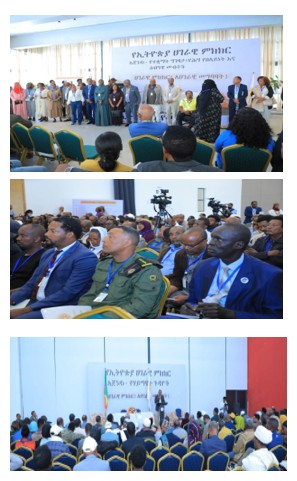
Today was yet another remarkable day at the Ethiopian National Dialogue Conference, a day that vividly demonstrated the seriousness, discipline, and historic significance of this national undertaking. Delegates representing the groups of fifty, through their designated spokespeople, reported to the larger assembly of 250 delegates across the eight agenda areas.
Their presentations reflected not only the majority and minority positions that had emerged from deep deliberation, but also the careful SWOT analysis—strengths, weaknesses, opportunities, and threats—that had been used to test and support those positions.
What unfolded was more than a procedural exercise; it was a powerful display of analytical rigor, critical thinking, balanced representation, and genuine openness to better ideas.
The quality of the presentations revealed a process grounded in reason rather than rhetoric, substance rather than slogans. Delegates did not simply repeat fixed positions; they engaged with the complexities of each issue, acknowledged areas of disagreement, and presented nuanced perspectives with fairness and respect.
The inclusion of minority views alongside majority positions was especially significant, because it showed a commitment to honesty, inclusivity, and intellectual integrity. This was not the language of victory over others, but the language of shared responsibility and national reflection.
𝐅𝐨𝐫 𝐦𝐞, 𝐰𝐡𝐚𝐭 𝐈 𝐰𝐢𝐭𝐧𝐞𝐬𝐬𝐞𝐝 𝐭𝐨𝐝𝐚𝐲 𝐜𝐨𝐧𝐟𝐢𝐫𝐦𝐞𝐝 𝐚 𝐝𝐞𝐞𝐩𝐥𝐲 𝐡𝐞𝐥𝐝 𝐜𝐨𝐧𝐯𝐢𝐜𝐭𝐢𝐨𝐧: 𝐄𝐭𝐡𝐢𝐨𝐩𝐢𝐚 𝐡𝐚𝐬 𝐭𝐫𝐮𝐥𝐲 𝐞𝐦𝐛𝐚𝐫𝐤𝐞𝐝 𝐨𝐧 𝐚 𝐧𝐞𝐰 𝐩𝐨𝐥𝐢𝐭𝐢𝐜𝐚𝐥 𝐣𝐨𝐮𝐫𝐧𝐞𝐲. 𝐈𝐭 𝐢𝐬 𝐚 𝐣𝐨𝐮𝐫𝐧𝐞𝐲 𝐚𝐰𝐚𝐲 𝐟𝐫𝐨𝐦 𝐭𝐡𝐞 𝐝𝐞𝐬𝐭𝐫𝐮𝐜𝐭𝐢𝐯𝐞 𝐡𝐚𝐛𝐢𝐭𝐬 𝐨𝐟 𝐜𝐨𝐧𝐟𝐥𝐢𝐜𝐭, 𝐝𝐢𝐯𝐢𝐬𝐢𝐨𝐧, 𝐚𝐧𝐝 𝐦𝐢𝐬𝐭𝐫𝐮𝐬𝐭, 𝐚𝐧𝐝 𝐭𝐨𝐰𝐚𝐫𝐝 𝐭𝐡𝐞 𝐦𝐨𝐫𝐞 𝐝𝐢𝐟𝐟𝐢𝐜𝐮𝐥𝐭 𝐛𝐮𝐭 𝐮𝐥𝐭𝐢𝐦𝐚𝐭𝐞𝐥𝐲 𝐦𝐨𝐫𝐞 𝐫𝐞𝐰𝐚𝐫𝐝𝐢𝐧𝐠 𝐩𝐚𝐭𝐡 𝐨𝐟 𝐝𝐢𝐚𝐥𝐨𝐠𝐮𝐞, 𝐫𝐞𝐜𝐢𝐩𝐫𝐨𝐜𝐢𝐭𝐲, 𝐜𝐨𝐦𝐩𝐫𝐨𝐦𝐢𝐬𝐞, 𝐚𝐧𝐝 𝐜𝐨𝐥𝐥𝐚𝐛𝐨𝐫𝐚𝐭𝐢𝐨𝐧. 𝐈𝐭 𝐢𝐬 𝐭𝐡𝐞 𝐫𝐨𝐚𝐝 𝐥𝐞𝐬𝐬 𝐭𝐫𝐚𝐯𝐞𝐥𝐞𝐝, 𝐛𝐮𝐭 𝐢𝐭 𝐢𝐬 𝐭𝐡𝐞 𝐫𝐨𝐚𝐝 𝐭𝐡𝐚𝐭 𝐥𝐞𝐚𝐝𝐬 𝐭𝐨 𝐩𝐞𝐚𝐜𝐞, 𝐣𝐮𝐬𝐭𝐢𝐜𝐞, 𝐚𝐧𝐝 𝐧𝐚𝐭𝐢𝐨𝐧𝐚𝐥 𝐫𝐞𝐧𝐞𝐰𝐚𝐥.
What is emerging before our eyes is not merely a conference process, but a solemn commitment to a shared destiny—a collective determination to build a stronger, more united, prosperous and more hopeful Ethiopia.
In that sense, the National Dialogue Conference is doing more than discussing and debating the country’s problems. It is helping to redefine the political culture of the nation itself. It is teaching that difference need not mean division, that disagreement need not lead to destruction, and that a people committed to one another can still choose to rise together, to live peacefully as brothers and sisters in the Land of Origins, the Cradle of Humanity.
That is the spirit of a new Ethiopia: one shaped not by endless confrontation, but by the courage to listen, the wisdom to compromise, and the will to build a common future.
In a nation marked by historical grievances, competing narratives, and deep questions about identity and governance, the emergence of convergence on the eight agenda issues is both significant and encouraging. It shows that despite differences in background, ideology, and political experience, Ethiopians can still find common ground when they are given the space to speak, listen, and reason together in good faith.
The eight agenda issues brought before the conference are not ordinary topics. They touch the core of Ethiopia’s national life: the structure of the state, citizenship, historical grievances, transitional justice, federalism, power-sharing, electoral systems, and the relationship between religion and the state, among others.
These issues have long-shaped public debate and, in many cases, intensified division. For that reason, reaching convergence on them requires more than political compromise. It requires patience, honesty, mutual respect, and a sincere commitment to the national interest.
What makes the current dialogue remarkable is the gradual movement from scattered views toward shared understanding. The current dialogue is showing a striking transformation, moving dynamically from fragmented perspectives into a cohesive shared framework through organic convergence. Delegates begin with different experiences and often different interpretations of Ethiopia’s problems. Some speak from the pain of exclusion; others from concern over national unity; still others from legal, institutional, or historical perspectives.
Yet through structured discussion, careful listening, and expert guidance, these separate perspectives begin to overlap. As delegates hear one another more fully, they discover not only disagreement, but also many shared concerns: peace, dignity, justice, equality, stability, and a better future for the next generation.
Convergence does not mean that all differences disappear. Rather, it means that people identify enough common purpose to move forward together. In the Ethiopian National Dialogue Conference, convergence is emerging through the recognition that Ethiopia’s problems cannot be solved by force, denial, or exclusion. They require dialogue, consensus, and the willingness to place the national good above narrow advantage.
This shift in thinking is one of the most important outcomes of the conference. It signals that Ethiopians are beginning to move from confrontation toward cooperation.
To me, the eight agenda issues also reveal how deeply interconnected Ethiopia’s challenges are. Questions of governance cannot be separated from questions of justice. Debates over federalism cannot be detached from questions of identity and representation. Electoral systems are tied to trust in institutions, and transitional justice is linked to healing historical wounds.
𝐁𝐞𝐜𝐚𝐮𝐬𝐞 𝐭𝐡𝐞𝐬𝐞 𝐦𝐚𝐭𝐭𝐞𝐫𝐬 𝐚𝐫𝐞 𝐬𝐨 𝐜𝐥𝐨𝐬𝐞𝐥𝐲 𝐜𝐨𝐧𝐧𝐞𝐜𝐭𝐞𝐝, 𝐜𝐨𝐧𝐯𝐞𝐫𝐠𝐞𝐧𝐜𝐞 𝐨𝐧 𝐨𝐧𝐞 𝐢𝐬𝐬𝐮𝐞 𝐨𝐟𝐭𝐞𝐧 𝐡𝐞𝐥𝐩𝐬 𝐜𝐫𝐞𝐚𝐭𝐞 𝐩𝐫𝐨𝐠𝐫𝐞𝐬𝐬 𝐨𝐧 𝐚𝐧𝐨𝐭𝐡𝐞𝐫. 𝐀 𝐝𝐞𝐥𝐞𝐠𝐚𝐭𝐞 𝐰𝐡𝐨 𝐛𝐞𝐠𝐢𝐧𝐬 𝐰𝐢𝐭𝐡 𝐬𝐮𝐬𝐩𝐢𝐜𝐢𝐨𝐧 𝐦𝐚𝐲, 𝐚𝐟𝐭𝐞𝐫 𝐡𝐞𝐚𝐫𝐢𝐧𝐠 𝐨𝐭𝐡𝐞𝐫𝐬, 𝐫𝐞𝐜𝐨𝐠𝐧𝐢𝐳𝐞 𝐭𝐡𝐚𝐭 𝐜𝐨𝐦𝐩𝐫𝐨𝐦𝐢𝐬𝐞 𝐢𝐬 𝐩𝐨𝐬𝐬𝐢𝐛𝐥𝐞 𝐰𝐢𝐭𝐡𝐨𝐮𝐭 𝐬𝐮𝐫𝐫𝐞𝐧𝐝𝐞𝐫𝐢𝐧𝐠 𝐜𝐨𝐫𝐞 𝐩𝐫𝐢𝐧𝐜𝐢𝐩𝐥𝐞𝐬. 𝐈𝐧 𝐭𝐡𝐢𝐬 𝐰𝐚𝐲, 𝐝𝐢𝐚𝐥𝐨𝐠𝐮𝐞 𝐛𝐞𝐜𝐨𝐦𝐞𝐬 𝐧𝐨𝐭 𝐣𝐮𝐬𝐭 𝐚 𝐟𝐨𝐫𝐮𝐦 𝐟𝐨𝐫 𝐝𝐢𝐬𝐜𝐮𝐬𝐬𝐢𝐨𝐧, 𝐛𝐮𝐭 𝐚 𝐩𝐚𝐭𝐡 𝐭𝐨𝐰𝐚𝐫𝐝 𝐢𝐧𝐭𝐞𝐥𝐥𝐞𝐜𝐭𝐮𝐚𝐥 𝐚𝐧𝐝 𝐦𝐨𝐫𝐚𝐥 𝐭𝐫𝐚𝐧𝐬𝐟𝐨𝐫𝐦𝐚𝐭𝐢𝐨𝐧.
Another important aspect of convergence is the role of expert input. I am privileged to be designated a subject matter expert in various areas. The role of experts is to help clarify technical matters, correct misunderstandings, and provide context that broadens the delegates’ thinking. Their contribution allows the conference to move beyond slogans and toward practical solutions.
When delegates are better informed, they are more capable of finding durable agreements. This is especially important in a national dialogue, where the issues are complex and the consequences of poor decisions are serious. It is not the job of experts to shape opinions, present preferred solutions or try to influence the delegates directly or indirectly in one or more directions or outcomes.
The emergence of convergence at the conference also reflects a deeper civic lesson. It shows that democracy is not only about winning arguments. It is also about listening carefully, adjusting one’s position, and building collective purpose.
In this sense, the dialogue conference is helping to cultivate a political culture based on reason, humility, and shared responsibility. Such a culture is essential for Ethiopia’s future. Without it, divisions may persist. With it, the country can begin to heal and rebuild.
Ultimately, convergence on the eight agenda issues is not merely a procedural achievement. It is a symbol of national possibility. It demonstrates that Ethiopians, despite years of mistrust and conflict, are capable of reaching across differences and working toward a common future.
If this spirit continues, the National Dialogue Conference may become one of the most important turning points in Ethiopia’s modern history. It can help lay the foundation for peace, justice, and a more inclusive political order.
𝐄𝐭𝐡𝐢𝐨𝐩𝐢𝐚’𝐬 𝐟𝐮𝐭𝐮𝐫𝐞 𝐰𝐢𝐥𝐥 𝐧𝐨𝐭 𝐛𝐞 𝐬𝐡𝐚𝐩𝐞𝐝 𝐛𝐲 𝐝𝐢𝐯𝐢𝐬𝐢𝐨𝐧 𝐚𝐥𝐨𝐧𝐞, 𝐛𝐮𝐭 𝐛𝐲 𝐭𝐡𝐞 𝐜𝐨𝐮𝐫𝐚𝐠𝐞 𝐭𝐨 𝐜𝐨𝐧𝐯𝐞𝐫𝐠𝐞. 𝐓𝐡𝐞 𝐍𝐚𝐭𝐢𝐨𝐧𝐚𝐥 𝐃𝐢𝐚𝐥𝐨𝐠𝐮𝐞 𝐂𝐨𝐧𝐟𝐞𝐫𝐞𝐧𝐜𝐞 𝐢𝐬 𝐭𝐫𝐚𝐧𝐬𝐟𝐨𝐫𝐦𝐢𝐧𝐠 𝐛𝐞𝐟𝐨𝐫𝐞 𝐦𝐲 𝐞𝐲𝐞𝐬 𝐢𝐧𝐭𝐨 𝐚 𝐫𝐚𝐫𝐞 𝐨𝐩𝐩𝐨𝐫𝐭𝐮𝐧𝐢𝐭𝐲 𝐭𝐨 𝐭𝐮𝐫𝐧 𝐝𝐢𝐬𝐚𝐠𝐫𝐞𝐞𝐦𝐞𝐧𝐭 𝐢𝐧𝐭𝐨 𝐮𝐧𝐝𝐞𝐫𝐬𝐭𝐚𝐧𝐝𝐢𝐧𝐠 𝐚𝐧𝐝 𝐮𝐧𝐝𝐞𝐫𝐬𝐭𝐚𝐧𝐝𝐢𝐧𝐠 𝐢𝐧𝐭𝐨 𝐚𝐜𝐭𝐢𝐨𝐧.
𝐓𝐡𝐚𝐭 𝐢𝐬 𝐰𝐡𝐲 𝐭𝐡𝐞 𝐜𝐨𝐧𝐯𝐞𝐫𝐠𝐞𝐧𝐜𝐞 𝐞𝐦𝐞𝐫𝐠𝐢𝐧𝐠 𝐨𝐧 𝐭𝐡𝐞 𝐞𝐢𝐠𝐡𝐭 𝐚𝐠𝐞𝐧𝐝𝐚 𝐢𝐬𝐬𝐮𝐞𝐬 𝐦𝐚𝐭𝐭𝐞𝐫𝐬 𝐬𝐨 𝐝𝐞𝐞𝐩𝐥𝐲: 𝐢𝐭 𝐢𝐬 𝐧𝐨𝐭 𝐣𝐮𝐬𝐭 𝐚𝐛𝐨𝐮𝐭 𝐫𝐞𝐬𝐨𝐥𝐯𝐢𝐧𝐠 𝐭𝐨𝐝𝐚𝐲’𝐬 𝐝𝐢𝐬𝐩𝐮𝐭𝐞𝐬, 𝐛𝐮𝐭 𝐚𝐛𝐨𝐮𝐭 𝐛𝐮𝐢𝐥𝐝𝐢𝐧𝐠 𝐭𝐨𝐦𝐨𝐫𝐫𝐨𝐰’𝐬 𝐄𝐭𝐡𝐢𝐨𝐩𝐢𝐚.
𝐈 𝐚𝐦 𝐬𝐨 𝐩𝐫𝐨𝐮𝐝 𝐨𝐟 𝐭𝐡𝐞 𝐝𝐞𝐥𝐞𝐠𝐚𝐭𝐞𝐬 𝐭𝐨 𝐭𝐡𝐞 𝐄𝐭𝐡𝐢𝐨𝐩𝐢𝐚𝐧 𝐧𝐚𝐭𝐢𝐨𝐧𝐚𝐥 𝐃𝐢𝐚𝐥𝐨𝐠𝐮𝐞 𝐭𝐡𝐚𝐭 𝐦𝐲 𝐜𝐮𝐩 𝐨𝐟 𝐣𝐨𝐲, 𝐩𝐫𝐨𝐦𝐢𝐬𝐞, 𝐜𝐨𝐧𝐟𝐢𝐝𝐞𝐧𝐜𝐞 𝐚𝐧𝐝 𝐡𝐨𝐩𝐞 𝐫𝐮𝐧𝐧𝐞𝐭𝐡 𝐨𝐯𝐞𝐫.
Posted originally on X (Twitter):
https://x.com/AlMariam1/status/2081944459789418658


𝐃𝐚𝐲 𝟏𝟏- 𝐌𝐨𝐧𝐝𝐚𝐲, 𝐉𝐮𝐥𝐲 𝟐𝟕, 𝟐𝟎𝟐𝟔
Today was yet another remarkable day at the Ethiopian National Dialogue Conference, a day that vividly demonstrated the seriousness, discipline, and historic significance of this national undertaking. Delegates representing the groups of fifty, through their designated spokespeople, reported to the larger assembly of 250 delegates across the eight agenda areas.
Their presentations reflected not only the majority and minority positions that had emerged from deep deliberation, but also the careful SWOT analysis—strengths, weaknesses, opportunities, and threats—that had been used to test and support those positions.
What unfolded was more than a procedural exercise; it was a powerful display of analytical rigor, critical thinking, balanced representation, and genuine openness to better ideas.
The quality of the presentations revealed a process grounded in reason rather than rhetoric, substance rather than slogans. Delegates did not simply repeat fixed positions; they engaged with the complexities of each issue, acknowledged areas of disagreement, and presented nuanced perspectives with fairness and respect.
The inclusion of minority views alongside majority positions was especially significant, because it showed a commitment to honesty, inclusivity, and intellectual integrity. This was not the language of victory over others, but the language of shared responsibility and national reflection.
𝐅𝐨𝐫 𝐦𝐞, 𝐰𝐡𝐚𝐭 𝐈 𝐰𝐢𝐭𝐧𝐞𝐬𝐬𝐞𝐝 𝐭𝐨𝐝𝐚𝐲 𝐜𝐨𝐧𝐟𝐢𝐫𝐦𝐞𝐝 𝐚 𝐝𝐞𝐞𝐩𝐥𝐲 𝐡𝐞𝐥𝐝 𝐜𝐨𝐧𝐯𝐢𝐜𝐭𝐢𝐨𝐧: 𝐄𝐭𝐡𝐢𝐨𝐩𝐢𝐚 𝐡𝐚𝐬 𝐭𝐫𝐮𝐥𝐲 𝐞𝐦𝐛𝐚𝐫𝐤𝐞𝐝 𝐨𝐧 𝐚 𝐧𝐞𝐰 𝐩𝐨𝐥𝐢𝐭𝐢𝐜𝐚𝐥 𝐣𝐨𝐮𝐫𝐧𝐞𝐲. 𝐈𝐭 𝐢𝐬 𝐚 𝐣𝐨𝐮𝐫𝐧𝐞𝐲 𝐚𝐰𝐚𝐲 𝐟𝐫𝐨𝐦 𝐭𝐡𝐞 𝐝𝐞𝐬𝐭𝐫𝐮𝐜𝐭𝐢𝐯𝐞 𝐡𝐚𝐛𝐢𝐭𝐬 𝐨𝐟 𝐜𝐨𝐧𝐟𝐥𝐢𝐜𝐭, 𝐝𝐢𝐯𝐢𝐬𝐢𝐨𝐧, 𝐚𝐧𝐝 𝐦𝐢𝐬𝐭𝐫𝐮𝐬𝐭, 𝐚𝐧𝐝 𝐭𝐨𝐰𝐚𝐫𝐝 𝐭𝐡𝐞 𝐦𝐨𝐫𝐞 𝐝𝐢𝐟𝐟𝐢𝐜𝐮𝐥𝐭 𝐛𝐮𝐭 𝐮𝐥𝐭𝐢𝐦𝐚𝐭𝐞𝐥𝐲 𝐦𝐨𝐫𝐞 𝐫𝐞𝐰𝐚𝐫𝐝𝐢𝐧𝐠 𝐩𝐚𝐭𝐡 𝐨𝐟 𝐝𝐢𝐚𝐥𝐨𝐠𝐮𝐞, 𝐫𝐞𝐜𝐢𝐩𝐫𝐨𝐜𝐢𝐭𝐲, 𝐜𝐨𝐦𝐩𝐫𝐨𝐦𝐢𝐬𝐞, 𝐚𝐧𝐝 𝐜𝐨𝐥𝐥𝐚𝐛𝐨𝐫𝐚𝐭𝐢𝐨𝐧. 𝐈𝐭 𝐢𝐬 𝐭𝐡𝐞 𝐫𝐨𝐚𝐝 𝐥𝐞𝐬𝐬 𝐭𝐫𝐚𝐯𝐞𝐥𝐞𝐝, 𝐛𝐮𝐭 𝐢𝐭 𝐢𝐬 𝐭𝐡𝐞 𝐫𝐨𝐚𝐝 𝐭𝐡𝐚𝐭 𝐥𝐞𝐚𝐝𝐬 𝐭𝐨 𝐩𝐞𝐚𝐜𝐞, 𝐣𝐮𝐬𝐭𝐢𝐜𝐞, 𝐚𝐧𝐝 𝐧𝐚𝐭𝐢𝐨𝐧𝐚𝐥 𝐫𝐞𝐧𝐞𝐰𝐚𝐥.
What is emerging before our eyes is not merely a conference process, but a solemn commitment to a shared destiny—a collective determination to build a stronger, more united, prosperous and more hopeful Ethiopia.
In that sense, the National Dialogue Conference is doing more than discussing and debating the country’s problems. It is helping to redefine the political culture of the nation itself. It is teaching that difference need not mean division, that disagreement need not lead to destruction, and that a people committed to one another can still choose to rise together, to live peacefully as brothers and sisters in the Land of Origins, the Cradle of Humanity.
That is the spirit of a new Ethiopia: one shaped not by endless confrontation, but by the courage to listen, the wisdom to compromise, and the will to build a common future.
In a nation marked by historical grievances, competing narratives, and deep questions about identity and governance, the emergence of convergence on the eight agenda issues is both significant and encouraging. It shows that despite differences in background, ideology, and political experience, Ethiopians can still find common ground when they are given the space to speak, listen, and reason together in good faith.
The eight agenda issues brought before the conference are not ordinary topics. They touch the core of Ethiopia’s national life: the structure of the state, citizenship, historical grievances, transitional justice, federalism, power-sharing, electoral systems, and the relationship between religion and the state, among others.
These issues have long-shaped public debate and, in many cases, intensified division. For that reason, reaching convergence on them requires more than political compromise. It requires patience, honesty, mutual respect, and a sincere commitment to the national interest.
What makes the current dialogue remarkable is the gradual movement from scattered views toward shared understanding. The current dialogue is showing a striking transformation, moving dynamically from fragmented perspectives into a cohesive shared framework through organic convergence. Delegates begin with different experiences and often different interpretations of Ethiopia’s problems. Some speak from the pain of exclusion; others from concern over national unity; still others from legal, institutional, or historical perspectives.
Yet through structured discussion, careful listening, and expert guidance, these separate perspectives begin to overlap. As delegates hear one another more fully, they discover not only disagreement, but also many shared concerns: peace, dignity, justice, equality, stability, and a better future for the next generation.
Convergence does not mean that all differences disappear. Rather, it means that people identify enough common purpose to move forward together. In the Ethiopian National Dialogue Conference, convergence is emerging through the recognition that Ethiopia’s problems cannot be solved by force, denial, or exclusion. They require dialogue, consensus, and the willingness to place the national good above narrow advantage.
This shift in thinking is one of the most important outcomes of the conference. It signals that Ethiopians are beginning to move from confrontation toward cooperation.
To me, the eight agenda issues also reveal how deeply interconnected Ethiopia’s challenges are. Questions of governance cannot be separated from questions of justice. Debates over federalism cannot be detached from questions of identity and representation. Electoral systems are tied to trust in institutions, and transitional justice is linked to healing historical wounds.
𝐁𝐞𝐜𝐚𝐮𝐬𝐞 𝐭𝐡𝐞𝐬𝐞 𝐦𝐚𝐭𝐭𝐞𝐫𝐬 𝐚𝐫𝐞 𝐬𝐨 𝐜𝐥𝐨𝐬𝐞𝐥𝐲 𝐜𝐨𝐧𝐧𝐞𝐜𝐭𝐞𝐝, 𝐜𝐨𝐧𝐯𝐞𝐫𝐠𝐞𝐧𝐜𝐞 𝐨𝐧 𝐨𝐧𝐞 𝐢𝐬𝐬𝐮𝐞 𝐨𝐟𝐭𝐞𝐧 𝐡𝐞𝐥𝐩𝐬 𝐜𝐫𝐞𝐚𝐭𝐞 𝐩𝐫𝐨𝐠𝐫𝐞𝐬𝐬 𝐨𝐧 𝐚𝐧𝐨𝐭𝐡𝐞𝐫. 𝐀 𝐝𝐞𝐥𝐞𝐠𝐚𝐭𝐞 𝐰𝐡𝐨 𝐛𝐞𝐠𝐢𝐧𝐬 𝐰𝐢𝐭𝐡 𝐬𝐮𝐬𝐩𝐢𝐜𝐢𝐨𝐧 𝐦𝐚𝐲, 𝐚𝐟𝐭𝐞𝐫 𝐡𝐞𝐚𝐫𝐢𝐧𝐠 𝐨𝐭𝐡𝐞𝐫𝐬, 𝐫𝐞𝐜𝐨𝐠𝐧𝐢𝐳𝐞 𝐭𝐡𝐚𝐭 𝐜𝐨𝐦𝐩𝐫𝐨𝐦𝐢𝐬𝐞 𝐢𝐬 𝐩𝐨𝐬𝐬𝐢𝐛𝐥𝐞 𝐰𝐢𝐭𝐡𝐨𝐮𝐭 𝐬𝐮𝐫𝐫𝐞𝐧𝐝𝐞𝐫𝐢𝐧𝐠 𝐜𝐨𝐫𝐞 𝐩𝐫𝐢𝐧𝐜𝐢𝐩𝐥𝐞𝐬. 𝐈𝐧 𝐭𝐡𝐢𝐬 𝐰𝐚𝐲, 𝐝𝐢𝐚𝐥𝐨𝐠𝐮𝐞 𝐛𝐞𝐜𝐨𝐦𝐞𝐬 𝐧𝐨𝐭 𝐣𝐮𝐬𝐭 𝐚 𝐟𝐨𝐫𝐮𝐦 𝐟𝐨𝐫 𝐝𝐢𝐬𝐜𝐮𝐬𝐬𝐢𝐨𝐧, 𝐛𝐮𝐭 𝐚 𝐩𝐚𝐭𝐡 𝐭𝐨𝐰𝐚𝐫𝐝 𝐢𝐧𝐭𝐞𝐥𝐥𝐞𝐜𝐭𝐮𝐚𝐥 𝐚𝐧𝐝 𝐦𝐨𝐫𝐚𝐥 𝐭𝐫𝐚𝐧𝐬𝐟𝐨𝐫𝐦𝐚𝐭𝐢𝐨𝐧.
Another important aspect of convergence is the role of expert input. I am privileged to be designated a subject matter expert in various areas. The role of experts is to help clarify technical matters, correct misunderstandings, and provide context that broadens the delegates’ thinking. Their contribution allows the conference to move beyond slogans and toward practical solutions.
When delegates are better informed, they are more capable of finding durable agreements. This is especially important in a national dialogue, where the issues are complex and the consequences of poor decisions are serious. It is not the job of experts to shape opinions, present preferred solutions or try to influence the delegates directly or indirectly in one or more directions or outcomes.
The emergence of convergence at the conference also reflects a deeper civic lesson. It shows that democracy is not only about winning arguments. It is also about listening carefully, adjusting one’s position, and building collective purpose.
In this sense, the dialogue conference is helping to cultivate a political culture based on reason, humility, and shared responsibility. Such a culture is essential for Ethiopia’s future. Without it, divisions may persist. With it, the country can begin to heal and rebuild.
Ultimately, convergence on the eight agenda issues is not merely a procedural achievement. It is a symbol of national possibility. It demonstrates that Ethiopians, despite years of mistrust and conflict, are capable of reaching across differences and working toward a common future.
If this spirit continues, the National Dialogue Conference may become one of the most important turning points in Ethiopia’s modern history. It can help lay the foundation for peace, justice, and a more inclusive political order.
𝐄𝐭𝐡𝐢𝐨𝐩𝐢𝐚’𝐬 𝐟𝐮𝐭𝐮𝐫𝐞 𝐰𝐢𝐥𝐥 𝐧𝐨𝐭 𝐛𝐞 𝐬𝐡𝐚𝐩𝐞𝐝 𝐛𝐲 𝐝𝐢𝐯𝐢𝐬𝐢𝐨𝐧 𝐚𝐥𝐨𝐧𝐞, 𝐛𝐮𝐭 𝐛𝐲 𝐭𝐡𝐞 𝐜𝐨𝐮𝐫𝐚𝐠𝐞 𝐭𝐨 𝐜𝐨𝐧𝐯𝐞𝐫𝐠𝐞. 𝐓𝐡𝐞 𝐍𝐚𝐭𝐢𝐨𝐧𝐚𝐥 𝐃𝐢𝐚𝐥𝐨𝐠𝐮𝐞 𝐂𝐨𝐧𝐟𝐞𝐫𝐞𝐧𝐜𝐞 𝐢𝐬 𝐭𝐫𝐚𝐧𝐬𝐟𝐨𝐫𝐦𝐢𝐧𝐠 𝐛𝐞𝐟𝐨𝐫𝐞 𝐦𝐲 𝐞𝐲𝐞𝐬 𝐢𝐧𝐭𝐨 𝐚 𝐫𝐚𝐫𝐞 𝐨𝐩𝐩𝐨𝐫𝐭𝐮𝐧𝐢𝐭𝐲 𝐭𝐨 𝐭𝐮𝐫𝐧 𝐝𝐢𝐬𝐚𝐠𝐫𝐞𝐞𝐦𝐞𝐧𝐭 𝐢𝐧𝐭𝐨 𝐮𝐧𝐝𝐞𝐫𝐬𝐭𝐚𝐧𝐝𝐢𝐧𝐠 𝐚𝐧𝐝 𝐮𝐧𝐝𝐞𝐫𝐬𝐭𝐚𝐧𝐝𝐢𝐧𝐠 𝐢𝐧𝐭𝐨 𝐚𝐜𝐭𝐢𝐨𝐧.
𝐓𝐡𝐚𝐭 𝐢𝐬 𝐰𝐡𝐲 𝐭𝐡𝐞 𝐜𝐨𝐧𝐯𝐞𝐫𝐠𝐞𝐧𝐜𝐞 𝐞𝐦𝐞𝐫𝐠𝐢𝐧𝐠 𝐨𝐧 𝐭𝐡𝐞 𝐞𝐢𝐠𝐡𝐭 𝐚𝐠𝐞𝐧𝐝𝐚 𝐢𝐬𝐬𝐮𝐞𝐬 𝐦𝐚𝐭𝐭𝐞𝐫𝐬 𝐬𝐨 𝐝𝐞𝐞𝐩𝐥𝐲: 𝐢𝐭 𝐢𝐬 𝐧𝐨𝐭 𝐣𝐮𝐬𝐭 𝐚𝐛𝐨𝐮𝐭 𝐫𝐞𝐬𝐨𝐥𝐯𝐢𝐧𝐠 𝐭𝐨𝐝𝐚𝐲’𝐬 𝐝𝐢𝐬𝐩𝐮𝐭𝐞𝐬, 𝐛𝐮𝐭 𝐚𝐛𝐨𝐮𝐭 𝐛𝐮𝐢𝐥𝐝𝐢𝐧𝐠 𝐭𝐨𝐦𝐨𝐫𝐫𝐨𝐰’𝐬 𝐄𝐭𝐡𝐢𝐨𝐩𝐢𝐚.
𝐈 𝐚𝐦 𝐬𝐨 𝐩𝐫𝐨𝐮𝐝 𝐨𝐟 𝐭𝐡𝐞 𝐝𝐞𝐥𝐞𝐠𝐚𝐭𝐞𝐬 𝐭𝐨 𝐭𝐡𝐞 𝐄𝐭𝐡𝐢𝐨𝐩𝐢𝐚𝐧 𝐧𝐚𝐭𝐢𝐨𝐧𝐚𝐥 𝐃𝐢𝐚𝐥𝐨𝐠𝐮𝐞 𝐭𝐡𝐚𝐭 𝐦𝐲 𝐜𝐮𝐩 𝐨𝐟 𝐣𝐨𝐲, 𝐩𝐫𝐨𝐦𝐢𝐬𝐞, 𝐜𝐨𝐧𝐟𝐢𝐝𝐞𝐧𝐜𝐞 𝐚𝐧𝐝 𝐡𝐨𝐩𝐞 𝐫𝐮𝐧𝐧𝐞𝐭𝐡 𝐨𝐯𝐞𝐫.
Posted originally on X (Twitter):
https://x.com/AlMariam1/status/2081944459789418658
Share this: