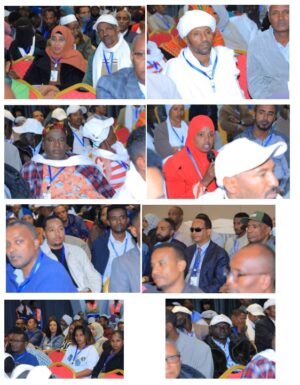
𝐃𝐚𝐲 𝟔 – 𝟏𝟎-𝐃𝐞𝐥𝐞𝐠𝐚𝐭𝐞 𝐆𝐫𝐨𝐮𝐩𝐬 𝐁𝐞𝐠𝐢𝐧 𝐃𝐞𝐥𝐢𝐛𝐞𝐫𝐚𝐭𝐢𝐨𝐧𝐬
We are “off to the races,” at the Ethiopian National Dialogue Conference. Today, we started discussions on the 8 agenda items culminating from four years of grassroots inquiry and consultations undertaken by the Ethiopian National Dialogue Commission. The overall mood of the four thousand participants could best be described as high energy, enthusiastic and infused with excitement and great expectation.
The dialogue is conducted at four tiers culminating in a National Plenary session of 4,000 delegates. There is a primary 500 delegate working group (x 8=4,000), one group per agenda item (e.g., state structure, rule of law, socio-economic affairs). This group sets thematic direction and synthesizes subgroup outputs.
Each 500-delegate group is subdivided into two 250-delegate groups with the task of generating options. This group conducts detailed, structured discussions on specific sub-topics within each agenda item and presents SWOT analysis (strengths, weaknesses, opportunities and threats). Each 250-delegate group is subdivided into five 50-delegate groups tasked with idea organization and consolidation.
Each 50-delegate group is subdivided into 10-delegate groups for small discussion clusters with the task of idea formation. This group enables inclusive, round-table style dialogue where individual views are aired before being consolidated at the 50- 250- and 500-delegate levels.
To support this structure, the Commission has deployed hundreds of facilitators and rapporteurs to moderate discussions and accurately record outcomes at each level. The work of the delegates is supported by dozens of experts in the eight thematic areas.
In today’s discussions, delegates felt free to speak candidly and ask all sorts of questions and asked for expert clarifications. Delegates asked each other questions and offered comments with respect and civility and built on each other’s ideas. That spirit of mutual respect encouraged open and free discussions from delegates across regions, sectors, and generations.
Discussions were more than exchange opinions. They asked a variety of technical questions and sought expert clarifications on legal, constitutional, economic, and administrative matters. Subject-matter experts are expected to be made available after the first day of deliberations. The Commission wanted individuals to take a first crack at the issues before engaging experts whose task is to provide knowledge-based, evidence-based information, analysis and data without taking sides.
Overall, the first day of deliberations showed a well-organized process, and open and respectful dialogue. The tone set was constructive and inclusive providing strong momentum for the conference going forward.
Working groups convened across thematic areas and worked late into the evening, some until 6:00 p.m. I expect today’s spirit of mutual respect, rigorous inquiry, and collaborative problem-solving going forward. With the momentum gained on the first day of deliberations, I am confident we will produce meaningful, implementable recommendations that will benefit all Ethiopians.
𝐋𝐄𝐓’𝐒 𝐒𝐔𝐏𝐏𝐎𝐑𝐓 𝐓𝐇𝐄 𝐄𝐓𝐇𝐈𝐎𝐏𝐈𝐀𝐍 𝐍𝐀𝐓𝐈𝐎𝐍𝐀𝐋 𝐃𝐈𝐀𝐋𝐎𝐆𝐔𝐄 𝐂𝐎𝐍𝐅𝐄𝐑𝐄𝐍𝐂𝐄 𝐀𝐍𝐃 𝐌𝐀𝐊𝐄 𝐄𝐓𝐇𝐈𝐎𝐏𝐈𝐀 𝐆𝐑𝐄𝐀𝐓 𝐀𝐆𝐀𝐈𝐍!
Originally posted on X:
https://x.com/AlMariam1/status/2079297197703680038


𝐃𝐚𝐲 𝟔 – 𝟏𝟎-𝐃𝐞𝐥𝐞𝐠𝐚𝐭𝐞 𝐆𝐫𝐨𝐮𝐩𝐬 𝐁𝐞𝐠𝐢𝐧 𝐃𝐞𝐥𝐢𝐛𝐞𝐫𝐚𝐭𝐢𝐨𝐧𝐬
We are “off to the races,” at the Ethiopian National Dialogue Conference. Today, we started discussions on the 8 agenda items culminating from four years of grassroots inquiry and consultations undertaken by the Ethiopian National Dialogue Commission. The overall mood of the four thousand participants could best be described as high energy, enthusiastic and infused with excitement and great expectation.
The dialogue is conducted at four tiers culminating in a National Plenary session of 4,000 delegates. There is a primary 500 delegate working group (x 8=4,000), one group per agenda item (e.g., state structure, rule of law, socio-economic affairs). This group sets thematic direction and synthesizes subgroup outputs.
Each 500-delegate group is subdivided into two 250-delegate groups with the task of generating options. This group conducts detailed, structured discussions on specific sub-topics within each agenda item and presents SWOT analysis (strengths, weaknesses, opportunities and threats). Each 250-delegate group is subdivided into five 50-delegate groups tasked with idea organization and consolidation.
Each 50-delegate group is subdivided into 10-delegate groups for small discussion clusters with the task of idea formation. This group enables inclusive, round-table style dialogue where individual views are aired before being consolidated at the 50- 250- and 500-delegate levels.
To support this structure, the Commission has deployed hundreds of facilitators and rapporteurs to moderate discussions and accurately record outcomes at each level. The work of the delegates is supported by dozens of experts in the eight thematic areas.
In today’s discussions, delegates felt free to speak candidly and ask all sorts of questions and asked for expert clarifications. Delegates asked each other questions and offered comments with respect and civility and built on each other’s ideas. That spirit of mutual respect encouraged open and free discussions from delegates across regions, sectors, and generations.
Discussions were more than exchange opinions. They asked a variety of technical questions and sought expert clarifications on legal, constitutional, economic, and administrative matters. Subject-matter experts are expected to be made available after the first day of deliberations. The Commission wanted individuals to take a first crack at the issues before engaging experts whose task is to provide knowledge-based, evidence-based information, analysis and data without taking sides.
Overall, the first day of deliberations showed a well-organized process, and open and respectful dialogue. The tone set was constructive and inclusive providing strong momentum for the conference going forward.
Working groups convened across thematic areas and worked late into the evening, some until 6:00 p.m. I expect today’s spirit of mutual respect, rigorous inquiry, and collaborative problem-solving going forward. With the momentum gained on the first day of deliberations, I am confident we will produce meaningful, implementable recommendations that will benefit all Ethiopians.
𝐋𝐄𝐓’𝐒 𝐒𝐔𝐏𝐏𝐎𝐑𝐓 𝐓𝐇𝐄 𝐄𝐓𝐇𝐈𝐎𝐏𝐈𝐀𝐍 𝐍𝐀𝐓𝐈𝐎𝐍𝐀𝐋 𝐃𝐈𝐀𝐋𝐎𝐆𝐔𝐄 𝐂𝐎𝐍𝐅𝐄𝐑𝐄𝐍𝐂𝐄 𝐀𝐍𝐃 𝐌𝐀𝐊𝐄 𝐄𝐓𝐇𝐈𝐎𝐏𝐈𝐀 𝐆𝐑𝐄𝐀𝐓 𝐀𝐆𝐀𝐈𝐍!
Originally posted on X:
https://x.com/AlMariam1/status/2079297197703680038
Share this: