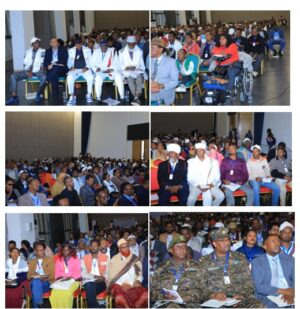
𝐃𝐚𝐲 𝟖- 𝐖𝐞𝐝𝐧𝐞𝐬𝐝𝐚𝐲, 𝐉𝐮𝐥𝐲 𝟐𝟐, 𝟐𝟎𝟐𝟔
The Ethiopian National Dialogue Conference is progressing in a constructive and very encouraging manner. Delegates are engaging seriously with one another, posing thoughtful questions, and carefully taking notes.
Most importantly, they are listening—listening not only to respond, but to understand. That spirit of attentive engagement is essential to any national dialogue that seeks to move a country beyond division and toward shared purpose.
A particularly important moment in the Conference has been the opportunity for delegates to interact with supporting expert panel members. The Ethiopian National Dialogue Commission has brought together dozens of subject matter experts to contribute across the eight agenda areas. This is both wise, practical and necessary.
A national dialogue of this scale cannot rely on political will alone; it must also draw on technical knowledge, historical understanding, legal insight, and comparative experience. Experts help delegates clarify difficult questions, distinguish between competing claims, and make sense of issues that are complex, deeply layered, and often emotionally charged.
The matters under discussion are among the most consequential in Ethiopia’s modern political life. They go to the heart of identity, power, governance, justice, and national cohesion.
Delegates are grappling with sensitive questions about the structure of the state, transitional justice, power sharing, electoral systems, federalism, revenue allocation and sharing, and resource management. They are also confronting broader themes such as historical injustice, past human rights violations, inter-communal violence, nation building, citizenship rights, religion and the state, the rule of law, judicial independence, peacebuilding, and the role of federal cities. These are not abstract discussions. They are the foundations upon which Ethiopia’s future political settlement may rest.
In such a setting, expert facilitation is not a decorative feature or a procedural convenience. It is a fundamental requirement. Expert facilitators help create a space where disagreement can be expressed constructively, where technical issues can be explained clearly, and where sensitive subjects can be handled with discipline and fairness. They bring structure to difficult conversations, reduce the risk of misunderstanding, and ensure that all delegates—regardless of background, status, or political position—can participate meaningfully in the process.
Just as importantly, expert facilitation helps transform discussion into direction. Dialogue alone does not guarantee progress. For dialogue to produce lasting value, it must generate clarity, build trust, and lead toward practical and balanced consensus. This requires neutral process design, sensitivity to power imbalances, and the ability to synthesize many voices into coherent recommendations. It also requires a commitment to inclusion, so that vulnerable groups are not silenced and so that the final outcome reflects the breadth of Ethiopia’s national experience.
Ethiopia’s path from insight to impact depends on a national dialogue that is inclusive, credible, and firmly connected to institutions capable of carrying reform forward. When expert facilitation is done well, it does more than manage conversation. It helps convert competing perspectives into a shared national roadmap. It strengthens legitimacy, protects the vulnerable, and anchors recommendations in legal and institutional pathways that can support implementation.
In that way, the national dialogue conference can become more than a meeting of minds; it can become a turning point toward durable peace, national renewal, and shared development for Ethiopia.
𝐋𝐄𝐓’𝐒 𝐒𝐔𝐏𝐏𝐎𝐑𝐓 𝐓𝐇𝐄 𝐄𝐓𝐇𝐈𝐎𝐏𝐈𝐀𝐍 𝐍𝐀𝐓𝐈𝐎𝐍𝐀𝐋 𝐃𝐈𝐀𝐋𝐎𝐆𝐔𝐄 𝐀𝐍𝐃 𝐌𝐀𝐊𝐄 𝐄𝐓𝐇𝐈𝐎𝐏𝐈𝐀 𝐆𝐑𝐄𝐀𝐓 𝐀𝐆𝐀𝐈𝐍!
Originally posted on X:
https://x.com/AlMariam1/status/2080509431888937369


𝐃𝐚𝐲 𝟖- 𝐖𝐞𝐝𝐧𝐞𝐬𝐝𝐚𝐲, 𝐉𝐮𝐥𝐲 𝟐𝟐, 𝟐𝟎𝟐𝟔
The Ethiopian National Dialogue Conference is progressing in a constructive and very encouraging manner. Delegates are engaging seriously with one another, posing thoughtful questions, and carefully taking notes.
Most importantly, they are listening—listening not only to respond, but to understand. That spirit of attentive engagement is essential to any national dialogue that seeks to move a country beyond division and toward shared purpose.
A particularly important moment in the Conference has been the opportunity for delegates to interact with supporting expert panel members. The Ethiopian National Dialogue Commission has brought together dozens of subject matter experts to contribute across the eight agenda areas. This is both wise, practical and necessary.
A national dialogue of this scale cannot rely on political will alone; it must also draw on technical knowledge, historical understanding, legal insight, and comparative experience. Experts help delegates clarify difficult questions, distinguish between competing claims, and make sense of issues that are complex, deeply layered, and often emotionally charged.
The matters under discussion are among the most consequential in Ethiopia’s modern political life. They go to the heart of identity, power, governance, justice, and national cohesion.
Delegates are grappling with sensitive questions about the structure of the state, transitional justice, power sharing, electoral systems, federalism, revenue allocation and sharing, and resource management. They are also confronting broader themes such as historical injustice, past human rights violations, inter-communal violence, nation building, citizenship rights, religion and the state, the rule of law, judicial independence, peacebuilding, and the role of federal cities. These are not abstract discussions. They are the foundations upon which Ethiopia’s future political settlement may rest.
In such a setting, expert facilitation is not a decorative feature or a procedural convenience. It is a fundamental requirement. Expert facilitators help create a space where disagreement can be expressed constructively, where technical issues can be explained clearly, and where sensitive subjects can be handled with discipline and fairness. They bring structure to difficult conversations, reduce the risk of misunderstanding, and ensure that all delegates—regardless of background, status, or political position—can participate meaningfully in the process.
Just as importantly, expert facilitation helps transform discussion into direction. Dialogue alone does not guarantee progress. For dialogue to produce lasting value, it must generate clarity, build trust, and lead toward practical and balanced consensus. This requires neutral process design, sensitivity to power imbalances, and the ability to synthesize many voices into coherent recommendations. It also requires a commitment to inclusion, so that vulnerable groups are not silenced and so that the final outcome reflects the breadth of Ethiopia’s national experience.
Ethiopia’s path from insight to impact depends on a national dialogue that is inclusive, credible, and firmly connected to institutions capable of carrying reform forward. When expert facilitation is done well, it does more than manage conversation. It helps convert competing perspectives into a shared national roadmap. It strengthens legitimacy, protects the vulnerable, and anchors recommendations in legal and institutional pathways that can support implementation.
In that way, the national dialogue conference can become more than a meeting of minds; it can become a turning point toward durable peace, national renewal, and shared development for Ethiopia.
𝐋𝐄𝐓’𝐒 𝐒𝐔𝐏𝐏𝐎𝐑𝐓 𝐓𝐇𝐄 𝐄𝐓𝐇𝐈𝐎𝐏𝐈𝐀𝐍 𝐍𝐀𝐓𝐈𝐎𝐍𝐀𝐋 𝐃𝐈𝐀𝐋𝐎𝐆𝐔𝐄 𝐀𝐍𝐃 𝐌𝐀𝐊𝐄 𝐄𝐓𝐇𝐈𝐎𝐏𝐈𝐀 𝐆𝐑𝐄𝐀𝐓 𝐀𝐆𝐀𝐈𝐍!
Originally posted on X:
https://x.com/AlMariam1/status/2080509431888937369
Share this: