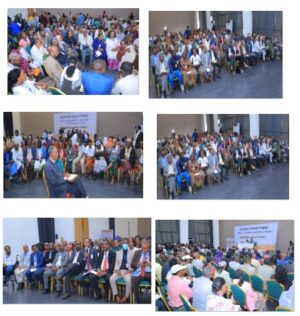
𝐃𝐚𝐲 𝟏𝟖— 𝐓𝐡𝐮𝐫𝐬𝐝𝐚𝐲, 𝐀𝐮𝐠𝐮𝐬𝐭 𝟓, 𝟐𝟎𝟐𝟔
The Ethiopian National Dialogue Conference is approaching its decisive final phase. Launched on July 15, 2026, the Conference brought together approximately 4,000 delegates drawn from nearly every part of Ethiopia, with the exception of a few security-challenged areas in the north. For three weeks, Ethiopians from diverse political, social, cultural, and regional backgrounds have sat together, listened to one another, debated difficult questions, and searched for common ground.
𝐖𝐡𝐞𝐧 𝐭𝐡𝐞 𝐂𝐨𝐧𝐟𝐞𝐫𝐞𝐧𝐜𝐞 𝐜𝐨𝐧𝐜𝐥𝐮𝐝𝐞𝐬, 𝐢𝐭𝐬 𝐝𝐞𝐥𝐞𝐠𝐚𝐭𝐞𝐬 𝐰𝐢𝐥𝐥 𝐡𝐚𝐯𝐞 𝐝𝐨𝐧𝐞 𝐦𝐨𝐫𝐞 𝐭𝐡𝐚𝐧 𝐜𝐨𝐦𝐩𝐥𝐞𝐭𝐞 𝐚𝐧 𝐚𝐠𝐞𝐧𝐝𝐚. 𝐓𝐡𝐞𝐲 𝐰𝐢𝐥𝐥 𝐡𝐚𝐯𝐞 𝐡𝐞𝐥𝐩𝐞𝐝 𝐰𝐫𝐢𝐭𝐞 𝐚 𝐧𝐞𝐰 𝐜𝐡𝐚𝐩𝐭𝐞𝐫 𝐢𝐧 𝐄𝐭𝐡𝐢𝐨𝐩𝐢𝐚’𝐬 𝐜𝐨𝐥𝐥𝐞𝐜𝐭𝐢𝐯𝐞 𝐡𝐢𝐬𝐭𝐨𝐫𝐲—𝐚 𝐜𝐡𝐚𝐩𝐭𝐞𝐫 𝐰𝐡𝐨𝐬𝐞 𝐢𝐧𝐟𝐥𝐮𝐞𝐧𝐜𝐞 𝐦𝐚𝐲 𝐞𝐱𝐭𝐞𝐧𝐝 𝐟𝐚𝐫 𝐛𝐞𝐲𝐨𝐧𝐝 𝐭𝐡𝐞 𝐩𝐫𝐞𝐬𝐞𝐧𝐭 𝐠𝐞𝐧𝐞𝐫𝐚𝐭𝐢𝐨𝐧 𝐚𝐧𝐝 𝐬𝐡𝐚𝐩𝐞 𝐭𝐡𝐞 𝐜𝐨𝐮𝐧𝐭𝐫𝐲 𝐟𝐨𝐫 𝐭𝐡𝐞 𝐧𝐞𝐱𝐭 𝐭𝐡𝐫𝐞𝐞 𝐡𝐮𝐧𝐝𝐫𝐞𝐝 𝐲𝐞𝐚𝐫𝐬.
An Architecture of Inclusive Dialogue
The Conference delegates were organized into eight thematic groups, each composed of approximately 500 members. Every group was assigned one of the principal agenda areas, including government structures and political processes, nation-building, constitutional questions, the rule of law and human rights, social and economic affairs, peace and security, and other issues of fundamental national importance.
The purpose of these groups has not been merely to exchange opinions. Their central responsibility has been to examine proposals, confront disagreements honestly, identify areas of convergence, and work toward a national consensus.
The discussions and deliberations began at the grassroots level and continued for four long and arduous years! At the Conference, the four thousand-strong delegates were divided into groups of 500 along eight agenda items designated by the Dialogue Commission. Each group of 500 was divided into smaller working units: micro-groups of 10, sub-groups of 50, and strategic groups of 250. These smaller forums enabled delegates to engage more closely with proposals collected and thematically organized by the Ethiopian National Dialogue Commission.
Ideas were first discussed in intimate settings, where participants could speak openly and listen carefully. They were then synthesized by strategic groups and submitted to the larger 500-member plenary sessions for further consideration and integration. In this way, the process has sought to ensure that national recommendations emerge from the bottom up rather than being imposed from above.
At every level, delegates also received specialized briefings from academic experts and practitioners. These presentations, followed by questions and answers, helped clarify complex concepts, provide historical and comparative perspectives, and encourage informed discussion across political and ideological differences.
The final stage involves consolidating the minutes, proposals, and recommendations produced by the various working groups. The outcomes of the micro-groups, sub-groups, and strategic groups are being carefully reviewed and presented to the thematic groups of 500. These plenary bodies will undertake the final drafting of comprehensive texts before the recommendations proceed to the concluding phases of the national dialogue.
This carefully structured process reflects an important principle: durable national decisions are strongest when they are informed by broad participation, patient deliberation, and a genuine effort to understand competing perspectives.
Ethiopia at the Crossroads of History
Throughout its long and remarkable history, Ethiopia has travelled through difficult terrain. It has endured political upheavals, internal conflicts, external wars, institutional crises, and periods of profound social uncertainty. At the same time, it has demonstrated a remarkable capacity for survival, resilience, renewal, and transformation—from ancient state formation to modern constitutional and institutional development.
Today, Ethiopia stands at another historic crossroads.
𝐓𝐡𝐫𝐨𝐮𝐠𝐡 𝐭𝐡𝐞 𝐍𝐚𝐭𝐢𝐨𝐧𝐚𝐥 𝐃𝐢𝐚𝐥𝐨𝐠𝐮𝐞, 𝐄𝐭𝐡𝐢𝐨𝐩𝐢𝐚𝐧𝐬 𝐚𝐫𝐞 𝐦𝐚𝐤𝐢𝐧𝐠 𝐚 𝐝𝐞𝐥𝐢𝐛𝐞𝐫𝐚𝐭𝐞 𝐚𝐧𝐝 𝐜𝐨𝐥𝐥𝐞𝐜𝐭𝐢𝐯𝐞 𝐞𝐟𝐟𝐨𝐫𝐭 𝐭𝐨 𝐦𝐨𝐯𝐞 𝐚𝐰𝐚𝐲 𝐟𝐫𝐨𝐦 𝐫𝐞𝐜𝐮𝐫𝐫𝐢𝐧𝐠 𝐜𝐲𝐜𝐥𝐞𝐬 𝐨𝐟 𝐩𝐨𝐥𝐢𝐭𝐢𝐜𝐚𝐥 𝐢𝐧𝐬𝐭𝐚𝐛𝐢𝐥𝐢𝐭𝐲 𝐚𝐧𝐝 𝐭𝐨𝐰𝐚𝐫𝐝 𝐚 𝐟𝐮𝐭𝐮𝐫𝐞 𝐟𝐨𝐮𝐧𝐝𝐞𝐝 𝐨𝐧 𝐜𝐨𝐧𝐬𝐞𝐧𝐬𝐮𝐬, 𝐜𝐨𝐧𝐬𝐭𝐢𝐭𝐮𝐭𝐢𝐨𝐧𝐚𝐥𝐢𝐬𝐦, 𝐚𝐜𝐜𝐨𝐮𝐧𝐭𝐚𝐛𝐥𝐞 𝐠𝐨𝐯𝐞𝐫𝐧𝐚𝐧𝐜𝐞, 𝐚𝐧𝐝 𝐩𝐞𝐚𝐜𝐞𝐟𝐮𝐥 𝐩𝐨𝐥𝐢𝐭𝐢𝐜𝐚𝐥 𝐜𝐨𝐦𝐩𝐞𝐭𝐢𝐭𝐢𝐨𝐧. 𝐓𝐡𝐢𝐬 𝐢𝐬 𝐧𝐨𝐭 𝐚 𝐫𝐞𝐣𝐞𝐜𝐭𝐢𝐨𝐧 𝐨𝐟 𝐄𝐭𝐡𝐢𝐨𝐩𝐢𝐚’𝐬 𝐡𝐢𝐬𝐭𝐨𝐫𝐲. 𝐈𝐭 𝐢𝐬 𝐚𝐧 𝐚𝐭𝐭𝐞𝐦𝐩𝐭 𝐭𝐨 𝐥𝐞𝐚𝐫𝐧 𝐟𝐫𝐨𝐦 𝐭𝐡𝐚𝐭 𝐡𝐢𝐬𝐭𝐨𝐫𝐲 𝐚𝐧𝐝 𝐭𝐫𝐚𝐧𝐬𝐟𝐨𝐫𝐦 𝐢𝐭𝐬 𝐩𝐚𝐢𝐧𝐟𝐮𝐥 𝐥𝐞𝐬𝐬𝐨𝐧𝐬 𝐢𝐧𝐭𝐨 𝐭𝐡𝐞 𝐟𝐨𝐮𝐧𝐝𝐚𝐭𝐢𝐨𝐧𝐬 𝐨𝐟 𝐚 𝐦𝐨𝐫𝐞 𝐬𝐭𝐚𝐛𝐥𝐞 𝐟𝐮𝐭𝐮𝐫𝐞.
A national dialogue cannot erase the past. Nor can it resolve every disagreement in a single conference. Its deeper promise lies elsewhere: in creating a national framework through which difficult questions can be addressed without violence, exclusion, or permanent political rupture.
From an Old Vision to a New Horizon
In 1776, Edward Gibbon, one of the most influential historians of the Enlightenment, described the Abyssinians (Ethiopians) as a people seeking protection from external threats while aspiring to import the skills and knowledge necessary for national development. He wrote that their representatives sought the assistance of European craftsmen and professionals—including smiths, carpenters, masons, printers, surgeons, and physicians—in the service of their country.
In 2026, two hundred and fifty years later, Gibbon’s observation offers an opportunity for reflection. Ethiopia’s aspiration for peace, progress, prosperity, and knowledge remains alive, but the scale and character of its ambitions have changed dramatically.
Ethiopia today seeks not only builders, physicians, educators, and engineers, but also software and cloud architects, data scientists, information-security specialists, machine-learning engineers, artificial-intelligence researchers, renewable-energy experts, and sustainability professionals. The country is working to expand its digital economy, modernize public services, strengthen technological capacity, and build a greener and more sustainable future.
𝐓𝐡𝐞 𝐄𝐭𝐡𝐢𝐨𝐩𝐢𝐚 𝐨𝐟 𝐭𝐡𝐞 𝐭𝐰𝐞𝐧𝐭𝐲-𝐟𝐢𝐫𝐬𝐭 𝐜𝐞𝐧𝐭𝐮𝐫𝐲 𝐢𝐬 𝐧𝐨𝐭 𝐬𝐢𝐦𝐩𝐥𝐲 𝐬𝐞𝐞𝐤𝐢𝐧𝐠 𝐚𝐬𝐬𝐢𝐬𝐭𝐚𝐧𝐜𝐞 𝐟𝐫𝐨𝐦 𝐭𝐡𝐞 𝐨𝐮𝐭𝐬𝐢𝐝𝐞 𝐰𝐨𝐫𝐥𝐝. 𝐈𝐭 𝐢𝐬 𝐬𝐞𝐞𝐤𝐢𝐧𝐠 𝐩𝐚𝐫𝐭𝐧𝐞𝐫𝐬𝐡𝐢𝐩, 𝐢𝐧𝐯𝐞𝐬𝐭𝐦𝐞𝐧𝐭, 𝐤𝐧𝐨𝐰𝐥𝐞𝐝𝐠𝐞 𝐞𝐱𝐜𝐡𝐚𝐧𝐠𝐞, 𝐢𝐧𝐧𝐨𝐯𝐚𝐭𝐢𝐨𝐧, 𝐚𝐧𝐝 𝐦𝐮𝐭𝐮𝐚𝐥𝐥𝐲 𝐛𝐞𝐧𝐞𝐟𝐢𝐜𝐢𝐚𝐥 𝐜𝐨𝐨𝐩𝐞𝐫𝐚𝐭𝐢𝐨𝐧. 𝐈𝐭 𝐢𝐬 𝐩𝐫𝐞𝐩𝐚𝐫𝐢𝐧𝐠 𝐭𝐨 𝐛𝐞𝐜𝐨𝐦𝐞 𝐧𝐨𝐭 𝐦𝐞𝐫𝐞𝐥𝐲 𝐚 𝐫𝐞𝐜𝐢𝐩𝐢𝐞𝐧𝐭 𝐨𝐟 𝐢𝐝𝐞𝐚𝐬, 𝐛𝐮𝐭 𝐚𝐥𝐬𝐨 𝐚 𝐩𝐫𝐨𝐝𝐮𝐜𝐞𝐫 𝐨𝐟 𝐤𝐧𝐨𝐰𝐥𝐞𝐝𝐠𝐞, 𝐭𝐞𝐜𝐡𝐧𝐨𝐥𝐨𝐠𝐲, 𝐚𝐧𝐝 𝐬𝐨𝐥𝐮𝐭𝐢𝐨𝐧𝐬 𝐟𝐨𝐫 𝐀𝐟𝐫𝐢𝐜𝐚 𝐚𝐧𝐝 𝐭𝐡𝐞 𝐰𝐢𝐝𝐞𝐫 𝐰𝐨𝐫𝐥𝐝.
The foundation for this transformation is peace. Without peace, development remains fragile. Without justice, prosperity cannot be shared. Without trust, institutions cannot command lasting legitimacy. The National Dialogue therefore comes at a crucial moment: it is an effort to create the political and social conditions in which Ethiopia’s immense human and economic potential can flourish.
Ethiopia’s Commitment to Peace
Ethiopia’s commitment to peace is not limited to its domestic affairs or immediate neighborhood. For decades, Ethiopian men and women have contributed to international peace and security.
The United Nations has documented Ethiopia’s long history of participation in international peacekeeping, beginning with its involvement in the Korean War in 1951 and continuing through its contributions to peace operations in places such as the Democratic Republic of the Congo, Darfur, Abyei, and South Sudan.
This record reflects a deeply rooted national conviction: peace is not merely the absence of war. It is the presence of dignity, justice, security, cooperation, and hope.
Ethiopia has consistently sought peace at home and abroad, in moments of friendship and in times of disagreement. Its people have repeatedly demonstrated a willingness to pursue peaceful solutions across borders, regions, communities, and political divides. They have searched for peace from the mountaintops to the valleys, from north to south and east to west, from Cairo to Pretoria, and through regional and international institutions, including the African Union and the United Nations.
Peace, however, must never require the surrender of humanity, unity, sovereignty, dignity, or territorial integrity. The Ethiopian pursuit of peace is strongest when it is rooted in mutual respect and the recognition that every community deserves security, justice, and a meaningful place in the national future.
Peace is not weakness. It is the highest expression of national wisdom and collective strength.
Pax Ethiopiana: Building an Ethiopian Culture of Peace
I regard the 4,000 delegates of the National Dialogue Conference as architects of Pax Ethiopiana—an Ethiopian peace founded on dialogue, inclusion, justice, and shared responsibility.
𝐅𝐨𝐫 𝐦𝐚𝐧𝐲 𝐲𝐞𝐚𝐫𝐬, 𝐈 𝐡𝐚𝐯𝐞 𝐚𝐫𝐠𝐮𝐞𝐝 𝐭𝐡𝐚𝐭 𝐄𝐭𝐡𝐢𝐨𝐩𝐢𝐚 𝐜𝐚𝐧 𝐜𝐮𝐥𝐭𝐢𝐯𝐚𝐭𝐞 𝐚𝐧 𝐞𝐧𝐝𝐮𝐫𝐢𝐧𝐠, 𝐡𝐨𝐦𝐞𝐠𝐫𝐨𝐰𝐧 𝐜𝐮𝐥𝐭𝐮𝐫𝐞 𝐨𝐟 𝐩𝐞𝐚𝐜𝐞 𝐛𝐲 𝐝𝐫𝐚𝐰𝐢𝐧𝐠 𝐮𝐩𝐨𝐧 𝐢𝐭𝐬 𝐨𝐰𝐧 𝐡𝐢𝐬𝐭𝐨𝐫𝐢𝐜𝐚𝐥 𝐞𝐱𝐩𝐞𝐫𝐢𝐞𝐧𝐜𝐞𝐬, 𝐬𝐨𝐜𝐢𝐚𝐥 𝐭𝐫𝐚𝐝𝐢𝐭𝐢𝐨𝐧𝐬, 𝐦𝐨𝐫𝐚𝐥 𝐯𝐚𝐥𝐮𝐞𝐬, 𝐚𝐧𝐝 𝐢𝐧𝐝𝐢𝐠𝐞𝐧𝐨𝐮𝐬 𝐦𝐞𝐜𝐡𝐚𝐧𝐢𝐬𝐦𝐬 𝐨𝐟 𝐫𝐞𝐜𝐨𝐧𝐜𝐢𝐥𝐢𝐚𝐭𝐢𝐨𝐧. 𝐒𝐮𝐜𝐡 𝐚 𝐜𝐮𝐥𝐭𝐮𝐫𝐞 𝐦𝐮𝐬𝐭 𝐚𝐥𝐬𝐨 𝐫𝐞𝐦𝐚𝐢𝐧 𝐨𝐩𝐞𝐧 𝐭𝐨 𝐜𝐨𝐧𝐬𝐭𝐢𝐭𝐮𝐭𝐢𝐨𝐧𝐚𝐥 𝐩𝐫𝐢𝐧𝐜𝐢𝐩𝐥𝐞𝐬, 𝐝𝐞𝐦𝐨𝐜𝐫𝐚𝐭𝐢𝐜 𝐩𝐫𝐚𝐜𝐭𝐢𝐜𝐞𝐬, 𝐡𝐮𝐦𝐚𝐧 𝐫𝐢𝐠𝐡𝐭𝐬, 𝐚𝐧𝐝 𝐥𝐞𝐬𝐬𝐨𝐧𝐬 𝐟𝐫𝐨𝐦 𝐨𝐭𝐡𝐞𝐫 𝐬𝐨𝐜𝐢𝐞𝐭𝐢𝐞𝐬.
UNESCO defines a culture of peace as a set of values, attitudes, forms of behavior, and ways of life that reject violence, address the root causes of conflict, and resolve disputes through dialogue and negotiation among individuals, groups, and nations. This vision is deeply relevant to Ethiopia’s present circumstances.
UNESCO reminds us that “since wars begin in the minds of men, it is in the minds of men that the defenses of peace must be constructed.” Peace, therefore, must begin not only in institutions and agreements, but also in the human heart and imagination. It requires citizens and leaders who are willing to replace suspicion with understanding, revenge with justice, and fear with cooperation.
Ethiopians have always aspired to the three great national goals of peace, prosperity, and progress. Yet decades of internal strife, cross-border conflict, political exclusion, terrorism, and institutional weakness have repeatedly obstructed those aspirations.
The National Dialogue offers an opportunity to change that pattern. It can help Ethiopia move from a politics defined by confrontation to a politics shaped by deliberation; from temporary settlements to durable institutions; and from cycles of grievance to a culture of accountability and reconciliation.
A Constitutional Path to Consensus
Ethiopia’s National Dialogue Commission was established through Proclamation No. 1265/2014, enacted by the House of Peoples’ Representatives on December 29, 2021. The Commission was created to help build national understanding and consensus by bringing together diverse views and opinions from political actors, civic organizations, communities, and other sectors of society.
The Proclamation emphasizes public accountability, transparency, institutional independence, and broad legitimacy. It seeks to promote dialogue on fundamental national questions, build trust among competing stakeholders, encourage cooperation among diverse groups, and help restore social values weakened by prolonged conflict and political division.
𝐓𝐡𝐢𝐬 𝐥𝐞𝐠𝐚𝐥 𝐟𝐨𝐮𝐧𝐝𝐚𝐭𝐢𝐨𝐧 𝐢𝐬 𝐬𝐢𝐠𝐧𝐢𝐟𝐢𝐜𝐚𝐧𝐭 𝐛𝐞𝐜𝐚𝐮𝐬𝐞 𝐢𝐭 𝐩𝐥𝐚𝐜𝐞𝐬 𝐧𝐚𝐭𝐢𝐨𝐧𝐚𝐥 𝐫𝐞𝐜𝐨𝐧𝐜𝐢𝐥𝐢𝐚𝐭𝐢𝐨𝐧 𝐰𝐢𝐭𝐡𝐢𝐧 𝐚𝐧 𝐢𝐧𝐬𝐭𝐢𝐭𝐮𝐭𝐢𝐨𝐧𝐚𝐥 𝐟𝐫𝐚𝐦𝐞𝐰𝐨𝐫𝐤. 𝐈𝐭 𝐫𝐞𝐜𝐨𝐠𝐧𝐢𝐳𝐞𝐬 𝐭𝐡𝐚𝐭 𝐝𝐢𝐚𝐥𝐨𝐠𝐮𝐞 𝐦𝐮𝐬𝐭 𝐧𝐨𝐭 𝐝𝐞𝐩𝐞𝐧𝐝 𝐬𝐨𝐥𝐞𝐥𝐲 𝐨𝐧 𝐩𝐞𝐫𝐬𝐨𝐧𝐚𝐥𝐢𝐭𝐢𝐞𝐬 𝐨𝐫 𝐭𝐞𝐦𝐩𝐨𝐫𝐚𝐫𝐲 𝐩𝐨𝐥𝐢𝐭𝐢𝐜𝐚𝐥 𝐜𝐢𝐫𝐜𝐮𝐦𝐬𝐭𝐚𝐧𝐜𝐞𝐬. 𝐈𝐭 𝐦𝐮𝐬𝐭 𝐛𝐞 𝐨𝐫𝐠𝐚𝐧𝐢𝐳𝐞𝐝 𝐭𝐫𝐚𝐧𝐬𝐩𝐚𝐫𝐞𝐧𝐭𝐥𝐲, 𝐜𝐨𝐧𝐝𝐮𝐜𝐭𝐞𝐝 𝐫𝐞𝐬𝐩𝐨𝐧𝐬𝐢𝐛𝐥𝐲, 𝐚𝐧𝐝 𝐜𝐨𝐧𝐧𝐞𝐜𝐭𝐞𝐝 𝐭𝐨 𝐚 𝐜𝐫𝐞𝐝𝐢𝐛𝐥𝐞 𝐩𝐫𝐨𝐜𝐞𝐬𝐬 𝐨𝐟 𝐢𝐦𝐩𝐥𝐞𝐦𝐞𝐧𝐭𝐚𝐭𝐢𝐨𝐧.
For more than half a century, major political realignments in Ethiopia were often shaped by conflict, abrupt decrees, political exclusion, or systemic upheaval. A comprehensive national dialogue offers a different path.
By bringing political parties, civic leaders, regional representatives, community voices, scholars, and other stakeholders to the same table, the process creates space for collective problem-solving. It allows constitutional, institutional, structural, and identity-related questions to be discussed openly rather than settled through force.
𝐌𝐨𝐬𝐭 𝐢𝐦𝐩𝐨𝐫𝐭𝐚𝐧𝐭𝐥𝐲, 𝐭𝐡𝐞 𝐝𝐢𝐚𝐥𝐨𝐠𝐮𝐞 𝐜𝐚𝐧 𝐡𝐞𝐥𝐩 𝐫𝐞𝐩𝐚𝐢𝐫 𝐡𝐢𝐬𝐭𝐨𝐫𝐢𝐜𝐚𝐥 𝐟𝐫𝐚𝐜𝐭𝐮𝐫𝐞𝐬. 𝐁𝐲 𝐚𝐜𝐤𝐧𝐨𝐰𝐥𝐞𝐝𝐠𝐢𝐧𝐠 𝐠𝐫𝐢𝐞𝐯𝐚𝐧𝐜𝐞𝐬, 𝐫𝐞𝐜𝐨𝐠𝐧𝐢𝐳𝐢𝐧𝐠 𝐬𝐮𝐟𝐟𝐞𝐫𝐢𝐧𝐠, 𝐚𝐧𝐝 𝐜𝐫𝐞𝐚𝐭𝐢𝐧𝐠 𝐚 𝐬𝐡𝐚𝐫𝐞𝐝 𝐥𝐚𝐧𝐠𝐮𝐚𝐠𝐞 𝐟𝐨𝐫 𝐭𝐡𝐞 𝐟𝐮𝐭𝐮𝐫𝐞, 𝐄𝐭𝐡𝐢𝐨𝐩𝐢𝐚𝐧𝐬 𝐜𝐚𝐧 𝐛𝐞𝐠𝐢𝐧 𝐭𝐨 𝐫𝐞𝐩𝐥𝐚𝐜𝐞 𝐢𝐧𝐡𝐞𝐫𝐢𝐭𝐞𝐝 𝐦𝐢𝐬𝐭𝐫𝐮𝐬𝐭 𝐰𝐢𝐭𝐡 𝐚 𝐧𝐞𝐰 𝐟𝐨𝐮𝐧𝐝𝐚𝐭𝐢𝐨𝐧 𝐨𝐟 𝐦𝐮𝐭𝐮𝐚𝐥 𝐜𝐨𝐧𝐟𝐢𝐝𝐞𝐧𝐜𝐞.
Building the Framework for the Next Three Centuries
Three hundred years is longer than the lifetime of any individual. It encompasses generations yet unborn. The decisions made today will influence the character of Ethiopia’s institutions, citizenship, political culture, and national identity long after the present delegates have passed from the stage of history.
That is why the responsibility before the Conference is both extraordinary and hopeful.
A nation built on broad public participation and genuine political inclusion is better prepared to withstand economic shocks, political transitions, social change, and regional challenges. A stable, united, and democratically grounded Ethiopia can serve as an anchor for peace, cooperation, and economic integration throughout the Horn of Africa.
𝐓𝐡𝐞 𝐮𝐥𝐭𝐢𝐦𝐚𝐭𝐞 𝐬𝐮𝐜𝐜𝐞𝐬𝐬 𝐨𝐟 𝐭𝐡𝐞 𝐍𝐚𝐭𝐢𝐨𝐧𝐚𝐥 𝐃𝐢𝐚𝐥𝐨𝐠𝐮𝐞 𝐰𝐢𝐥𝐥 𝐧𝐨𝐭 𝐛𝐞 𝐦𝐞𝐚𝐬𝐮𝐫𝐞𝐝 𝐨𝐧𝐥𝐲 𝐛𝐲 𝐭𝐡𝐞 𝐪𝐮𝐚𝐥𝐢𝐭𝐲 𝐨𝐟 𝐢𝐭𝐬 𝐝𝐞𝐛𝐚𝐭𝐞𝐬 𝐨𝐫 𝐭𝐡𝐞 𝐞𝐥𝐨𝐪𝐮𝐞𝐧𝐜𝐞 𝐨𝐟 𝐢𝐭𝐬 𝐟𝐢𝐧𝐚𝐥 𝐝𝐨𝐜𝐮𝐦𝐞𝐧𝐭. 𝐈𝐭 𝐰𝐢𝐥𝐥 𝐛𝐞 𝐦𝐞𝐚𝐬𝐮𝐫𝐞𝐝 𝐛𝐲 𝐰𝐡𝐚𝐭 𝐟𝐨𝐥𝐥𝐨𝐰𝐬: 𝐰𝐡𝐞𝐭𝐡𝐞𝐫 𝐚𝐠𝐫𝐞𝐞𝐦𝐞𝐧𝐭𝐬 𝐚𝐫𝐞 𝐢𝐦𝐩𝐥𝐞𝐦𝐞𝐧𝐭𝐞𝐝, 𝐢𝐧𝐬𝐭𝐢𝐭𝐮𝐭𝐢𝐨𝐧𝐬 𝐚𝐫𝐞 𝐬𝐭𝐫𝐞𝐧𝐠𝐭𝐡𝐞𝐧𝐞𝐝, 𝐫𝐢𝐠𝐡𝐭𝐬 𝐚𝐫𝐞 𝐩𝐫𝐨𝐭𝐞𝐜𝐭𝐞𝐝, 𝐜𝐨𝐦𝐦𝐮𝐧𝐢𝐭𝐢𝐞𝐬 𝐟𝐞𝐞𝐥 𝐢𝐧𝐜𝐥𝐮𝐝𝐞𝐝, 𝐚𝐧𝐝 𝐩𝐨𝐥𝐢𝐭𝐢𝐜𝐚𝐥 𝐝𝐢𝐬𝐚𝐠𝐫𝐞𝐞𝐦𝐞𝐧𝐭𝐬 𝐚𝐫𝐞 𝐫𝐞𝐬𝐨𝐥𝐯𝐞𝐝 𝐭𝐡𝐫𝐨𝐮𝐠𝐡 𝐥𝐚𝐰 𝐫𝐚𝐭𝐡𝐞𝐫 𝐭𝐡𝐚𝐧 𝐯𝐢𝐨𝐥𝐞𝐧𝐜𝐞.
𝐓𝐡𝐞 𝐭𝐫𝐮𝐞 𝐥𝐞𝐠𝐚𝐜𝐲 𝐨𝐟 𝐭𝐡𝐞 𝐂𝐨𝐧𝐟𝐞𝐫𝐞𝐧𝐜𝐞 𝐰𝐢𝐥𝐥 𝐛𝐞 𝐝𝐞𝐭𝐞𝐫𝐦𝐢𝐧𝐞𝐝 𝐛𝐲 𝐭𝐡𝐞 𝐜𝐨𝐮𝐫𝐚𝐠𝐞 𝐭𝐨 𝐭𝐫𝐚𝐧𝐬𝐟𝐨𝐫𝐦 𝐫𝐞𝐜𝐨𝐦𝐦𝐞𝐧𝐝𝐚𝐭𝐢𝐨𝐧𝐬 𝐢𝐧𝐭𝐨 𝐚𝐜𝐭𝐢𝐨𝐧.
Ethiopia’s diversity—its peoples, languages, cultures, histories, faiths, and regional identities—need not be a source of fragmentation. Properly recognized and governed, it can become one of the country’s greatest sources of strength. Unity need not mean uniformity. National identity need not erase local identity. Federalism, democracy, and citizenship can be woven together into a political order in which every community sees itself as a valued participant in the national project.
The delegates therefore carry both a profound opportunity and a historic responsibility. They are not merely discussing Ethiopia’s past. They are designing the conditions under which Ethiopia’s future will unfold.
The Promise of a New Beginning
𝐓𝐡𝐞 𝐄𝐭𝐡𝐢𝐨𝐩𝐢𝐚𝐧 𝐍𝐚𝐭𝐢𝐨𝐧𝐚𝐥 𝐃𝐢𝐚𝐥𝐨𝐠𝐮𝐞 𝐢𝐬 𝐚𝐧 𝐚𝐜𝐭 𝐨𝐟 𝐧𝐚𝐭𝐢𝐨𝐧𝐚𝐥 𝐜𝐨𝐧𝐟𝐢𝐝𝐞𝐧𝐜𝐞, 𝐚𝐧 𝐚𝐜𝐭 𝐨𝐟 𝐟𝐚𝐢𝐭𝐡 𝐭𝐡𝐞 𝐠𝐫𝐞𝐚𝐭𝐧𝐞𝐬𝐬 𝐨𝐟 𝐭𝐡𝐞 𝐄𝐭𝐡𝐢𝐨𝐩𝐢𝐚𝐧 𝐍𝐚𝐭𝐢𝐨𝐧. 𝐈𝐭 𝐝𝐞𝐜𝐥𝐚𝐫𝐞𝐬 𝐭𝐡𝐚𝐭 𝐄𝐭𝐡𝐢𝐨𝐩𝐢𝐚’𝐬 𝐜𝐡𝐚𝐥𝐥𝐞𝐧𝐠𝐞𝐬, 𝐡𝐨𝐰𝐞𝐯𝐞𝐫 𝐬𝐞𝐫𝐢𝐨𝐮𝐬, 𝐚𝐫𝐞 𝐧𝐨𝐭 𝐛𝐞𝐲𝐨𝐧𝐝 𝐭𝐡𝐞 𝐜𝐚𝐩𝐚𝐜𝐢𝐭𝐲 𝐨𝐟 𝐄𝐭𝐡𝐢𝐨𝐩𝐢𝐚𝐧𝐬 𝐭𝐨 𝐚𝐝𝐝𝐫𝐞𝐬𝐬. 𝐈𝐭 𝐢𝐬 𝐭𝐡𝐞 𝐭𝐡𝐞 𝐥𝐢𝐯𝐞𝐝 𝐞𝐱𝐩𝐞𝐫𝐢𝐞𝐧𝐜𝐞 𝐚𝐧𝐝 𝐩𝐫𝐚𝐱𝐢𝐬 (𝐩𝐫𝐚𝐜𝐭𝐢𝐜𝐞) 𝐨𝐟 𝐭𝐡𝐞 𝐩𝐫𝐢𝐧𝐜𝐢𝐩𝐥𝐞, “𝐄𝐭𝐡𝐢𝐨𝐩𝐢𝐚𝐧 𝐬𝐨𝐥𝐮𝐭𝐢𝐨𝐧𝐬 𝐟𝐨𝐫 𝐄𝐭𝐡𝐢𝐨𝐩𝐢𝐚𝐧 𝐩𝐫𝐨𝐛𝐥𝐞𝐦𝐬.” 𝐈𝐭 𝐚𝐟𝐟𝐢𝐫𝐦𝐬 𝐭𝐡𝐚𝐭 𝐝𝐢𝐬𝐚𝐠𝐫𝐞𝐞𝐦𝐞𝐧𝐭 𝐝𝐨𝐞𝐬 𝐧𝐨𝐭 𝐡𝐚𝐯𝐞 𝐭𝐨 𝐛𝐞𝐜𝐨𝐦𝐞 𝐝𝐢𝐯𝐢𝐬𝐢𝐨𝐧, 𝐭𝐡𝐚𝐭 𝐝𝐢𝐯𝐞𝐫𝐬𝐢𝐭𝐲 𝐝𝐨𝐞𝐬 𝐧𝐨𝐭 𝐡𝐚𝐯𝐞 𝐭𝐨 𝐛𝐞𝐜𝐨𝐦𝐞 𝐜𝐨𝐧𝐟𝐥𝐢𝐜𝐭, 𝐚𝐧𝐝 𝐭𝐡𝐚𝐭 𝐚 𝐩𝐚𝐢𝐧𝐟𝐮𝐥 𝐡𝐢𝐬𝐭𝐨𝐫𝐲 𝐝𝐨𝐞𝐬 𝐧𝐨𝐭 𝐡𝐚𝐯𝐞 𝐭𝐨 𝐝𝐞𝐭𝐞𝐫𝐦𝐢𝐧𝐞 𝐭𝐡𝐞 𝐟𝐮𝐭𝐮𝐫𝐞 𝐟𝐨𝐫𝐞𝐯𝐞𝐫.
𝐄𝐭𝐡𝐢𝐨𝐩𝐢𝐚𝐧𝐬 𝐚𝐫𝐞 𝐦𝐚𝐤𝐢𝐧𝐠 𝐡𝐢𝐬𝐭𝐨𝐫𝐲—𝐄𝐭𝐡𝐢𝐨𝐩𝐢𝐚𝐧 𝐡𝐢𝐬𝐭𝐨𝐫𝐲—𝐭𝐡𝐫𝐨𝐮𝐠𝐡 𝐩𝐞𝐚𝐜𝐞, 𝐝𝐢𝐚𝐥𝐨𝐠𝐮𝐞, 𝐚𝐧𝐝 𝐥𝐚𝐰. 𝐈𝐟 𝐭𝐡𝐞 𝐮𝐧𝐝𝐞𝐫𝐬𝐭𝐚𝐧𝐝𝐢𝐧𝐠𝐬 𝐫𝐞𝐚𝐜𝐡𝐞𝐝 𝐢𝐧 𝐭𝐡𝐞𝐬𝐞 𝐡𝐚𝐥𝐥𝐬 𝐚𝐫𝐞 𝐭𝐫𝐚𝐧𝐬𝐥𝐚𝐭𝐞𝐝 𝐢𝐧𝐭𝐨 𝐚𝐜𝐜𝐨𝐮𝐧𝐭𝐚𝐛𝐥𝐞 𝐢𝐧𝐬𝐭𝐢𝐭𝐮𝐭𝐢𝐨𝐧𝐬, 𝐢𝐧𝐜𝐥𝐮𝐬𝐢𝐯𝐞 𝐠𝐨𝐯𝐞𝐫𝐧𝐚𝐧𝐜𝐞, 𝐥𝐚𝐬𝐭𝐢𝐧𝐠 𝐩𝐞𝐚𝐜𝐞, 𝐚𝐧𝐝 𝐬𝐡𝐚𝐫𝐞𝐝 𝐩𝐫𝐨𝐬𝐩𝐞𝐫𝐢𝐭𝐲, 𝐭𝐡𝐢𝐬 𝐦𝐨𝐦𝐞𝐧𝐭 𝐰𝐢𝐥𝐥 𝐛𝐞 𝐫𝐞𝐦𝐞𝐦𝐛𝐞𝐫𝐞𝐝 𝐚𝐬 𝐭𝐡𝐞 𝐟𝐨𝐮𝐧𝐝𝐚𝐭𝐢𝐨𝐧 𝐨𝐟 𝐄𝐭𝐡𝐢𝐨𝐩𝐢𝐚’𝐬 𝐧𝐞𝐱𝐭 𝐭𝐡𝐫𝐞𝐞 𝐡𝐮𝐧𝐝𝐫𝐞𝐝 𝐲𝐞𝐚𝐫𝐬.
The road ahead will not be easy. Implementation will require patience, humility, political courage, public participation, and sustained commitment from leaders and citizens alike. But the possibility of success is real, because the desire for peace is real, the capacity for renewal is real, and the future remains open.
To me, dialogue is not a surrender of conviction. It is the courageous decision to move beyond old grievances, forward toward shared understanding, and upward toward a peace greater than any temporary victory.
It is my hope, dream and prayer that the Ethiopian National Dialogue Conference can become the birthplace of that peace. It can help build an Ethiopia in which justice strengthens unity, diversity enriches citizenship, development serves all communities, and the generations of tomorrow inherit not a legacy of division, but a durable architecture of peace, prosperity, and progress.
𝐈 𝐡𝐚𝐯𝐞 𝐧𝐨𝐭 𝐡𝐚𝐯𝐞 𝐚 𝐬𝐡𝐫𝐞𝐝 𝐨𝐟 𝐝𝐨𝐮𝐛𝐭 𝐰𝐡𝐚𝐭𝐬𝐨𝐞𝐯𝐞𝐫 በእግዚአብሔር ፈቃድ 𝐆𝐨𝐝 𝐰𝐢𝐥𝐥𝐢𝐧𝐠, 𝐈𝐧𝐬𝐡𝐚𝐥𝐥𝐚𝐡, 𝐄𝐭𝐡𝐢𝐨𝐩𝐢𝐚 𝐬𝐡𝐚𝐥𝐥 𝐬𝐨𝐨𝐧 𝐛𝐞 𝐭𝐡𝐞 𝐂𝐢𝐭𝐚𝐝𝐞𝐥 𝐨𝐟 𝐀𝐟𝐫𝐢𝐜𝐚𝐧 𝐏𝐞𝐚𝐜𝐞 𝐚𝐧𝐝 𝐭𝐡𝐞 𝐂𝐢𝐭𝐲 𝐔𝐩𝐨𝐧 𝐚 𝐇𝐢𝐥𝐥 𝐟𝐨𝐫 𝐚𝐥𝐥 𝐢𝐭𝐬 𝐛𝐞𝐚𝐮𝐭𝐢𝐟𝐮𝐥 𝐩𝐞𝐨𝐩𝐥𝐞𝐬.
𝐌𝐲 𝐡𝐢𝐠𝐡𝐞𝐬𝐭 𝐫𝐞𝐬𝐩𝐞𝐜𝐭 𝐚𝐧𝐝 𝐚𝐩𝐩𝐫𝐞𝐜𝐢𝐚𝐭𝐢𝐨𝐧 𝐭𝐨 𝐚𝐥𝐥 𝐭𝐡𝐞 𝐝𝐞𝐥𝐞𝐠𝐚𝐭𝐞𝐬 𝐚𝐭 𝐭𝐡𝐞 𝐄𝐭𝐡𝐢𝐨𝐩𝐢𝐚𝐧 𝐍𝐚𝐭𝐢𝐨𝐧𝐚𝐥 𝐃𝐢𝐚𝐥𝐨𝐠𝐮𝐞 𝐂𝐨𝐧𝐟𝐞𝐫𝐞𝐧𝐜𝐞.
𝐒𝐮𝐩𝐩𝐨𝐫𝐭 𝐭𝐡𝐞 𝐄𝐭𝐡𝐢𝐨𝐩𝐢𝐚𝐧 𝐍𝐚𝐭𝐢𝐨𝐧𝐚𝐥 𝐃𝐢𝐚𝐥𝐨𝐠𝐮𝐞 𝐂𝐨𝐧𝐟𝐞𝐫𝐞𝐧𝐜𝐞 𝐚𝐧𝐝 𝐌𝐀𝐊𝐄 𝐄𝐓𝐇𝐈𝐎𝐏𝐈𝐀 𝐆𝐑𝐄𝐀𝐓 𝐀𝐆𝐀𝐈𝐍!
❤️ETHIOPIA
Originally appeared on X (Twitter)
https://x.com/AlMariam1/status/2085629768649617835


𝐃𝐚𝐲 𝟏𝟖— 𝐓𝐡𝐮𝐫𝐬𝐝𝐚𝐲, 𝐀𝐮𝐠𝐮𝐬𝐭 𝟓, 𝟐𝟎𝟐𝟔
The Ethiopian National Dialogue Conference is approaching its decisive final phase. Launched on July 15, 2026, the Conference brought together approximately 4,000 delegates drawn from nearly every part of Ethiopia, with the exception of a few security-challenged areas in the north. For three weeks, Ethiopians from diverse political, social, cultural, and regional backgrounds have sat together, listened to one another, debated difficult questions, and searched for common ground.
𝐖𝐡𝐞𝐧 𝐭𝐡𝐞 𝐂𝐨𝐧𝐟𝐞𝐫𝐞𝐧𝐜𝐞 𝐜𝐨𝐧𝐜𝐥𝐮𝐝𝐞𝐬, 𝐢𝐭𝐬 𝐝𝐞𝐥𝐞𝐠𝐚𝐭𝐞𝐬 𝐰𝐢𝐥𝐥 𝐡𝐚𝐯𝐞 𝐝𝐨𝐧𝐞 𝐦𝐨𝐫𝐞 𝐭𝐡𝐚𝐧 𝐜𝐨𝐦𝐩𝐥𝐞𝐭𝐞 𝐚𝐧 𝐚𝐠𝐞𝐧𝐝𝐚. 𝐓𝐡𝐞𝐲 𝐰𝐢𝐥𝐥 𝐡𝐚𝐯𝐞 𝐡𝐞𝐥𝐩𝐞𝐝 𝐰𝐫𝐢𝐭𝐞 𝐚 𝐧𝐞𝐰 𝐜𝐡𝐚𝐩𝐭𝐞𝐫 𝐢𝐧 𝐄𝐭𝐡𝐢𝐨𝐩𝐢𝐚’𝐬 𝐜𝐨𝐥𝐥𝐞𝐜𝐭𝐢𝐯𝐞 𝐡𝐢𝐬𝐭𝐨𝐫𝐲—𝐚 𝐜𝐡𝐚𝐩𝐭𝐞𝐫 𝐰𝐡𝐨𝐬𝐞 𝐢𝐧𝐟𝐥𝐮𝐞𝐧𝐜𝐞 𝐦𝐚𝐲 𝐞𝐱𝐭𝐞𝐧𝐝 𝐟𝐚𝐫 𝐛𝐞𝐲𝐨𝐧𝐝 𝐭𝐡𝐞 𝐩𝐫𝐞𝐬𝐞𝐧𝐭 𝐠𝐞𝐧𝐞𝐫𝐚𝐭𝐢𝐨𝐧 𝐚𝐧𝐝 𝐬𝐡𝐚𝐩𝐞 𝐭𝐡𝐞 𝐜𝐨𝐮𝐧𝐭𝐫𝐲 𝐟𝐨𝐫 𝐭𝐡𝐞 𝐧𝐞𝐱𝐭 𝐭𝐡𝐫𝐞𝐞 𝐡𝐮𝐧𝐝𝐫𝐞𝐝 𝐲𝐞𝐚𝐫𝐬.
An Architecture of Inclusive Dialogue
The Conference delegates were organized into eight thematic groups, each composed of approximately 500 members. Every group was assigned one of the principal agenda areas, including government structures and political processes, nation-building, constitutional questions, the rule of law and human rights, social and economic affairs, peace and security, and other issues of fundamental national importance.
The purpose of these groups has not been merely to exchange opinions. Their central responsibility has been to examine proposals, confront disagreements honestly, identify areas of convergence, and work toward a national consensus.
The discussions and deliberations began at the grassroots level and continued for four long and arduous years! At the Conference, the four thousand-strong delegates were divided into groups of 500 along eight agenda items designated by the Dialogue Commission. Each group of 500 was divided into smaller working units: micro-groups of 10, sub-groups of 50, and strategic groups of 250. These smaller forums enabled delegates to engage more closely with proposals collected and thematically organized by the Ethiopian National Dialogue Commission.
Ideas were first discussed in intimate settings, where participants could speak openly and listen carefully. They were then synthesized by strategic groups and submitted to the larger 500-member plenary sessions for further consideration and integration. In this way, the process has sought to ensure that national recommendations emerge from the bottom up rather than being imposed from above.
At every level, delegates also received specialized briefings from academic experts and practitioners. These presentations, followed by questions and answers, helped clarify complex concepts, provide historical and comparative perspectives, and encourage informed discussion across political and ideological differences.
The final stage involves consolidating the minutes, proposals, and recommendations produced by the various working groups. The outcomes of the micro-groups, sub-groups, and strategic groups are being carefully reviewed and presented to the thematic groups of 500. These plenary bodies will undertake the final drafting of comprehensive texts before the recommendations proceed to the concluding phases of the national dialogue.
This carefully structured process reflects an important principle: durable national decisions are strongest when they are informed by broad participation, patient deliberation, and a genuine effort to understand competing perspectives.
Ethiopia at the Crossroads of History
Throughout its long and remarkable history, Ethiopia has travelled through difficult terrain. It has endured political upheavals, internal conflicts, external wars, institutional crises, and periods of profound social uncertainty. At the same time, it has demonstrated a remarkable capacity for survival, resilience, renewal, and transformation—from ancient state formation to modern constitutional and institutional development.
Today, Ethiopia stands at another historic crossroads.
𝐓𝐡𝐫𝐨𝐮𝐠𝐡 𝐭𝐡𝐞 𝐍𝐚𝐭𝐢𝐨𝐧𝐚𝐥 𝐃𝐢𝐚𝐥𝐨𝐠𝐮𝐞, 𝐄𝐭𝐡𝐢𝐨𝐩𝐢𝐚𝐧𝐬 𝐚𝐫𝐞 𝐦𝐚𝐤𝐢𝐧𝐠 𝐚 𝐝𝐞𝐥𝐢𝐛𝐞𝐫𝐚𝐭𝐞 𝐚𝐧𝐝 𝐜𝐨𝐥𝐥𝐞𝐜𝐭𝐢𝐯𝐞 𝐞𝐟𝐟𝐨𝐫𝐭 𝐭𝐨 𝐦𝐨𝐯𝐞 𝐚𝐰𝐚𝐲 𝐟𝐫𝐨𝐦 𝐫𝐞𝐜𝐮𝐫𝐫𝐢𝐧𝐠 𝐜𝐲𝐜𝐥𝐞𝐬 𝐨𝐟 𝐩𝐨𝐥𝐢𝐭𝐢𝐜𝐚𝐥 𝐢𝐧𝐬𝐭𝐚𝐛𝐢𝐥𝐢𝐭𝐲 𝐚𝐧𝐝 𝐭𝐨𝐰𝐚𝐫𝐝 𝐚 𝐟𝐮𝐭𝐮𝐫𝐞 𝐟𝐨𝐮𝐧𝐝𝐞𝐝 𝐨𝐧 𝐜𝐨𝐧𝐬𝐞𝐧𝐬𝐮𝐬, 𝐜𝐨𝐧𝐬𝐭𝐢𝐭𝐮𝐭𝐢𝐨𝐧𝐚𝐥𝐢𝐬𝐦, 𝐚𝐜𝐜𝐨𝐮𝐧𝐭𝐚𝐛𝐥𝐞 𝐠𝐨𝐯𝐞𝐫𝐧𝐚𝐧𝐜𝐞, 𝐚𝐧𝐝 𝐩𝐞𝐚𝐜𝐞𝐟𝐮𝐥 𝐩𝐨𝐥𝐢𝐭𝐢𝐜𝐚𝐥 𝐜𝐨𝐦𝐩𝐞𝐭𝐢𝐭𝐢𝐨𝐧. 𝐓𝐡𝐢𝐬 𝐢𝐬 𝐧𝐨𝐭 𝐚 𝐫𝐞𝐣𝐞𝐜𝐭𝐢𝐨𝐧 𝐨𝐟 𝐄𝐭𝐡𝐢𝐨𝐩𝐢𝐚’𝐬 𝐡𝐢𝐬𝐭𝐨𝐫𝐲. 𝐈𝐭 𝐢𝐬 𝐚𝐧 𝐚𝐭𝐭𝐞𝐦𝐩𝐭 𝐭𝐨 𝐥𝐞𝐚𝐫𝐧 𝐟𝐫𝐨𝐦 𝐭𝐡𝐚𝐭 𝐡𝐢𝐬𝐭𝐨𝐫𝐲 𝐚𝐧𝐝 𝐭𝐫𝐚𝐧𝐬𝐟𝐨𝐫𝐦 𝐢𝐭𝐬 𝐩𝐚𝐢𝐧𝐟𝐮𝐥 𝐥𝐞𝐬𝐬𝐨𝐧𝐬 𝐢𝐧𝐭𝐨 𝐭𝐡𝐞 𝐟𝐨𝐮𝐧𝐝𝐚𝐭𝐢𝐨𝐧𝐬 𝐨𝐟 𝐚 𝐦𝐨𝐫𝐞 𝐬𝐭𝐚𝐛𝐥𝐞 𝐟𝐮𝐭𝐮𝐫𝐞.
A national dialogue cannot erase the past. Nor can it resolve every disagreement in a single conference. Its deeper promise lies elsewhere: in creating a national framework through which difficult questions can be addressed without violence, exclusion, or permanent political rupture.
From an Old Vision to a New Horizon
In 1776, Edward Gibbon, one of the most influential historians of the Enlightenment, described the Abyssinians (Ethiopians) as a people seeking protection from external threats while aspiring to import the skills and knowledge necessary for national development. He wrote that their representatives sought the assistance of European craftsmen and professionals—including smiths, carpenters, masons, printers, surgeons, and physicians—in the service of their country.
In 2026, two hundred and fifty years later, Gibbon’s observation offers an opportunity for reflection. Ethiopia’s aspiration for peace, progress, prosperity, and knowledge remains alive, but the scale and character of its ambitions have changed dramatically.
Ethiopia today seeks not only builders, physicians, educators, and engineers, but also software and cloud architects, data scientists, information-security specialists, machine-learning engineers, artificial-intelligence researchers, renewable-energy experts, and sustainability professionals. The country is working to expand its digital economy, modernize public services, strengthen technological capacity, and build a greener and more sustainable future.
𝐓𝐡𝐞 𝐄𝐭𝐡𝐢𝐨𝐩𝐢𝐚 𝐨𝐟 𝐭𝐡𝐞 𝐭𝐰𝐞𝐧𝐭𝐲-𝐟𝐢𝐫𝐬𝐭 𝐜𝐞𝐧𝐭𝐮𝐫𝐲 𝐢𝐬 𝐧𝐨𝐭 𝐬𝐢𝐦𝐩𝐥𝐲 𝐬𝐞𝐞𝐤𝐢𝐧𝐠 𝐚𝐬𝐬𝐢𝐬𝐭𝐚𝐧𝐜𝐞 𝐟𝐫𝐨𝐦 𝐭𝐡𝐞 𝐨𝐮𝐭𝐬𝐢𝐝𝐞 𝐰𝐨𝐫𝐥𝐝. 𝐈𝐭 𝐢𝐬 𝐬𝐞𝐞𝐤𝐢𝐧𝐠 𝐩𝐚𝐫𝐭𝐧𝐞𝐫𝐬𝐡𝐢𝐩, 𝐢𝐧𝐯𝐞𝐬𝐭𝐦𝐞𝐧𝐭, 𝐤𝐧𝐨𝐰𝐥𝐞𝐝𝐠𝐞 𝐞𝐱𝐜𝐡𝐚𝐧𝐠𝐞, 𝐢𝐧𝐧𝐨𝐯𝐚𝐭𝐢𝐨𝐧, 𝐚𝐧𝐝 𝐦𝐮𝐭𝐮𝐚𝐥𝐥𝐲 𝐛𝐞𝐧𝐞𝐟𝐢𝐜𝐢𝐚𝐥 𝐜𝐨𝐨𝐩𝐞𝐫𝐚𝐭𝐢𝐨𝐧. 𝐈𝐭 𝐢𝐬 𝐩𝐫𝐞𝐩𝐚𝐫𝐢𝐧𝐠 𝐭𝐨 𝐛𝐞𝐜𝐨𝐦𝐞 𝐧𝐨𝐭 𝐦𝐞𝐫𝐞𝐥𝐲 𝐚 𝐫𝐞𝐜𝐢𝐩𝐢𝐞𝐧𝐭 𝐨𝐟 𝐢𝐝𝐞𝐚𝐬, 𝐛𝐮𝐭 𝐚𝐥𝐬𝐨 𝐚 𝐩𝐫𝐨𝐝𝐮𝐜𝐞𝐫 𝐨𝐟 𝐤𝐧𝐨𝐰𝐥𝐞𝐝𝐠𝐞, 𝐭𝐞𝐜𝐡𝐧𝐨𝐥𝐨𝐠𝐲, 𝐚𝐧𝐝 𝐬𝐨𝐥𝐮𝐭𝐢𝐨𝐧𝐬 𝐟𝐨𝐫 𝐀𝐟𝐫𝐢𝐜𝐚 𝐚𝐧𝐝 𝐭𝐡𝐞 𝐰𝐢𝐝𝐞𝐫 𝐰𝐨𝐫𝐥𝐝.
The foundation for this transformation is peace. Without peace, development remains fragile. Without justice, prosperity cannot be shared. Without trust, institutions cannot command lasting legitimacy. The National Dialogue therefore comes at a crucial moment: it is an effort to create the political and social conditions in which Ethiopia’s immense human and economic potential can flourish.
Ethiopia’s Commitment to Peace
Ethiopia’s commitment to peace is not limited to its domestic affairs or immediate neighborhood. For decades, Ethiopian men and women have contributed to international peace and security.
The United Nations has documented Ethiopia’s long history of participation in international peacekeeping, beginning with its involvement in the Korean War in 1951 and continuing through its contributions to peace operations in places such as the Democratic Republic of the Congo, Darfur, Abyei, and South Sudan.
This record reflects a deeply rooted national conviction: peace is not merely the absence of war. It is the presence of dignity, justice, security, cooperation, and hope.
Ethiopia has consistently sought peace at home and abroad, in moments of friendship and in times of disagreement. Its people have repeatedly demonstrated a willingness to pursue peaceful solutions across borders, regions, communities, and political divides. They have searched for peace from the mountaintops to the valleys, from north to south and east to west, from Cairo to Pretoria, and through regional and international institutions, including the African Union and the United Nations.
Peace, however, must never require the surrender of humanity, unity, sovereignty, dignity, or territorial integrity. The Ethiopian pursuit of peace is strongest when it is rooted in mutual respect and the recognition that every community deserves security, justice, and a meaningful place in the national future.
Peace is not weakness. It is the highest expression of national wisdom and collective strength.
Pax Ethiopiana: Building an Ethiopian Culture of Peace
I regard the 4,000 delegates of the National Dialogue Conference as architects of Pax Ethiopiana—an Ethiopian peace founded on dialogue, inclusion, justice, and shared responsibility.
𝐅𝐨𝐫 𝐦𝐚𝐧𝐲 𝐲𝐞𝐚𝐫𝐬, 𝐈 𝐡𝐚𝐯𝐞 𝐚𝐫𝐠𝐮𝐞𝐝 𝐭𝐡𝐚𝐭 𝐄𝐭𝐡𝐢𝐨𝐩𝐢𝐚 𝐜𝐚𝐧 𝐜𝐮𝐥𝐭𝐢𝐯𝐚𝐭𝐞 𝐚𝐧 𝐞𝐧𝐝𝐮𝐫𝐢𝐧𝐠, 𝐡𝐨𝐦𝐞𝐠𝐫𝐨𝐰𝐧 𝐜𝐮𝐥𝐭𝐮𝐫𝐞 𝐨𝐟 𝐩𝐞𝐚𝐜𝐞 𝐛𝐲 𝐝𝐫𝐚𝐰𝐢𝐧𝐠 𝐮𝐩𝐨𝐧 𝐢𝐭𝐬 𝐨𝐰𝐧 𝐡𝐢𝐬𝐭𝐨𝐫𝐢𝐜𝐚𝐥 𝐞𝐱𝐩𝐞𝐫𝐢𝐞𝐧𝐜𝐞𝐬, 𝐬𝐨𝐜𝐢𝐚𝐥 𝐭𝐫𝐚𝐝𝐢𝐭𝐢𝐨𝐧𝐬, 𝐦𝐨𝐫𝐚𝐥 𝐯𝐚𝐥𝐮𝐞𝐬, 𝐚𝐧𝐝 𝐢𝐧𝐝𝐢𝐠𝐞𝐧𝐨𝐮𝐬 𝐦𝐞𝐜𝐡𝐚𝐧𝐢𝐬𝐦𝐬 𝐨𝐟 𝐫𝐞𝐜𝐨𝐧𝐜𝐢𝐥𝐢𝐚𝐭𝐢𝐨𝐧. 𝐒𝐮𝐜𝐡 𝐚 𝐜𝐮𝐥𝐭𝐮𝐫𝐞 𝐦𝐮𝐬𝐭 𝐚𝐥𝐬𝐨 𝐫𝐞𝐦𝐚𝐢𝐧 𝐨𝐩𝐞𝐧 𝐭𝐨 𝐜𝐨𝐧𝐬𝐭𝐢𝐭𝐮𝐭𝐢𝐨𝐧𝐚𝐥 𝐩𝐫𝐢𝐧𝐜𝐢𝐩𝐥𝐞𝐬, 𝐝𝐞𝐦𝐨𝐜𝐫𝐚𝐭𝐢𝐜 𝐩𝐫𝐚𝐜𝐭𝐢𝐜𝐞𝐬, 𝐡𝐮𝐦𝐚𝐧 𝐫𝐢𝐠𝐡𝐭𝐬, 𝐚𝐧𝐝 𝐥𝐞𝐬𝐬𝐨𝐧𝐬 𝐟𝐫𝐨𝐦 𝐨𝐭𝐡𝐞𝐫 𝐬𝐨𝐜𝐢𝐞𝐭𝐢𝐞𝐬.
UNESCO defines a culture of peace as a set of values, attitudes, forms of behavior, and ways of life that reject violence, address the root causes of conflict, and resolve disputes through dialogue and negotiation among individuals, groups, and nations. This vision is deeply relevant to Ethiopia’s present circumstances.
UNESCO reminds us that “since wars begin in the minds of men, it is in the minds of men that the defenses of peace must be constructed.” Peace, therefore, must begin not only in institutions and agreements, but also in the human heart and imagination. It requires citizens and leaders who are willing to replace suspicion with understanding, revenge with justice, and fear with cooperation.
Ethiopians have always aspired to the three great national goals of peace, prosperity, and progress. Yet decades of internal strife, cross-border conflict, political exclusion, terrorism, and institutional weakness have repeatedly obstructed those aspirations.
The National Dialogue offers an opportunity to change that pattern. It can help Ethiopia move from a politics defined by confrontation to a politics shaped by deliberation; from temporary settlements to durable institutions; and from cycles of grievance to a culture of accountability and reconciliation.
A Constitutional Path to Consensus
Ethiopia’s National Dialogue Commission was established through Proclamation No. 1265/2014, enacted by the House of Peoples’ Representatives on December 29, 2021. The Commission was created to help build national understanding and consensus by bringing together diverse views and opinions from political actors, civic organizations, communities, and other sectors of society.
The Proclamation emphasizes public accountability, transparency, institutional independence, and broad legitimacy. It seeks to promote dialogue on fundamental national questions, build trust among competing stakeholders, encourage cooperation among diverse groups, and help restore social values weakened by prolonged conflict and political division.
𝐓𝐡𝐢𝐬 𝐥𝐞𝐠𝐚𝐥 𝐟𝐨𝐮𝐧𝐝𝐚𝐭𝐢𝐨𝐧 𝐢𝐬 𝐬𝐢𝐠𝐧𝐢𝐟𝐢𝐜𝐚𝐧𝐭 𝐛𝐞𝐜𝐚𝐮𝐬𝐞 𝐢𝐭 𝐩𝐥𝐚𝐜𝐞𝐬 𝐧𝐚𝐭𝐢𝐨𝐧𝐚𝐥 𝐫𝐞𝐜𝐨𝐧𝐜𝐢𝐥𝐢𝐚𝐭𝐢𝐨𝐧 𝐰𝐢𝐭𝐡𝐢𝐧 𝐚𝐧 𝐢𝐧𝐬𝐭𝐢𝐭𝐮𝐭𝐢𝐨𝐧𝐚𝐥 𝐟𝐫𝐚𝐦𝐞𝐰𝐨𝐫𝐤. 𝐈𝐭 𝐫𝐞𝐜𝐨𝐠𝐧𝐢𝐳𝐞𝐬 𝐭𝐡𝐚𝐭 𝐝𝐢𝐚𝐥𝐨𝐠𝐮𝐞 𝐦𝐮𝐬𝐭 𝐧𝐨𝐭 𝐝𝐞𝐩𝐞𝐧𝐝 𝐬𝐨𝐥𝐞𝐥𝐲 𝐨𝐧 𝐩𝐞𝐫𝐬𝐨𝐧𝐚𝐥𝐢𝐭𝐢𝐞𝐬 𝐨𝐫 𝐭𝐞𝐦𝐩𝐨𝐫𝐚𝐫𝐲 𝐩𝐨𝐥𝐢𝐭𝐢𝐜𝐚𝐥 𝐜𝐢𝐫𝐜𝐮𝐦𝐬𝐭𝐚𝐧𝐜𝐞𝐬. 𝐈𝐭 𝐦𝐮𝐬𝐭 𝐛𝐞 𝐨𝐫𝐠𝐚𝐧𝐢𝐳𝐞𝐝 𝐭𝐫𝐚𝐧𝐬𝐩𝐚𝐫𝐞𝐧𝐭𝐥𝐲, 𝐜𝐨𝐧𝐝𝐮𝐜𝐭𝐞𝐝 𝐫𝐞𝐬𝐩𝐨𝐧𝐬𝐢𝐛𝐥𝐲, 𝐚𝐧𝐝 𝐜𝐨𝐧𝐧𝐞𝐜𝐭𝐞𝐝 𝐭𝐨 𝐚 𝐜𝐫𝐞𝐝𝐢𝐛𝐥𝐞 𝐩𝐫𝐨𝐜𝐞𝐬𝐬 𝐨𝐟 𝐢𝐦𝐩𝐥𝐞𝐦𝐞𝐧𝐭𝐚𝐭𝐢𝐨𝐧.
For more than half a century, major political realignments in Ethiopia were often shaped by conflict, abrupt decrees, political exclusion, or systemic upheaval. A comprehensive national dialogue offers a different path.
By bringing political parties, civic leaders, regional representatives, community voices, scholars, and other stakeholders to the same table, the process creates space for collective problem-solving. It allows constitutional, institutional, structural, and identity-related questions to be discussed openly rather than settled through force.
𝐌𝐨𝐬𝐭 𝐢𝐦𝐩𝐨𝐫𝐭𝐚𝐧𝐭𝐥𝐲, 𝐭𝐡𝐞 𝐝𝐢𝐚𝐥𝐨𝐠𝐮𝐞 𝐜𝐚𝐧 𝐡𝐞𝐥𝐩 𝐫𝐞𝐩𝐚𝐢𝐫 𝐡𝐢𝐬𝐭𝐨𝐫𝐢𝐜𝐚𝐥 𝐟𝐫𝐚𝐜𝐭𝐮𝐫𝐞𝐬. 𝐁𝐲 𝐚𝐜𝐤𝐧𝐨𝐰𝐥𝐞𝐝𝐠𝐢𝐧𝐠 𝐠𝐫𝐢𝐞𝐯𝐚𝐧𝐜𝐞𝐬, 𝐫𝐞𝐜𝐨𝐠𝐧𝐢𝐳𝐢𝐧𝐠 𝐬𝐮𝐟𝐟𝐞𝐫𝐢𝐧𝐠, 𝐚𝐧𝐝 𝐜𝐫𝐞𝐚𝐭𝐢𝐧𝐠 𝐚 𝐬𝐡𝐚𝐫𝐞𝐝 𝐥𝐚𝐧𝐠𝐮𝐚𝐠𝐞 𝐟𝐨𝐫 𝐭𝐡𝐞 𝐟𝐮𝐭𝐮𝐫𝐞, 𝐄𝐭𝐡𝐢𝐨𝐩𝐢𝐚𝐧𝐬 𝐜𝐚𝐧 𝐛𝐞𝐠𝐢𝐧 𝐭𝐨 𝐫𝐞𝐩𝐥𝐚𝐜𝐞 𝐢𝐧𝐡𝐞𝐫𝐢𝐭𝐞𝐝 𝐦𝐢𝐬𝐭𝐫𝐮𝐬𝐭 𝐰𝐢𝐭𝐡 𝐚 𝐧𝐞𝐰 𝐟𝐨𝐮𝐧𝐝𝐚𝐭𝐢𝐨𝐧 𝐨𝐟 𝐦𝐮𝐭𝐮𝐚𝐥 𝐜𝐨𝐧𝐟𝐢𝐝𝐞𝐧𝐜𝐞.
Building the Framework for the Next Three Centuries
Three hundred years is longer than the lifetime of any individual. It encompasses generations yet unborn. The decisions made today will influence the character of Ethiopia’s institutions, citizenship, political culture, and national identity long after the present delegates have passed from the stage of history.
That is why the responsibility before the Conference is both extraordinary and hopeful.
A nation built on broad public participation and genuine political inclusion is better prepared to withstand economic shocks, political transitions, social change, and regional challenges. A stable, united, and democratically grounded Ethiopia can serve as an anchor for peace, cooperation, and economic integration throughout the Horn of Africa.
𝐓𝐡𝐞 𝐮𝐥𝐭𝐢𝐦𝐚𝐭𝐞 𝐬𝐮𝐜𝐜𝐞𝐬𝐬 𝐨𝐟 𝐭𝐡𝐞 𝐍𝐚𝐭𝐢𝐨𝐧𝐚𝐥 𝐃𝐢𝐚𝐥𝐨𝐠𝐮𝐞 𝐰𝐢𝐥𝐥 𝐧𝐨𝐭 𝐛𝐞 𝐦𝐞𝐚𝐬𝐮𝐫𝐞𝐝 𝐨𝐧𝐥𝐲 𝐛𝐲 𝐭𝐡𝐞 𝐪𝐮𝐚𝐥𝐢𝐭𝐲 𝐨𝐟 𝐢𝐭𝐬 𝐝𝐞𝐛𝐚𝐭𝐞𝐬 𝐨𝐫 𝐭𝐡𝐞 𝐞𝐥𝐨𝐪𝐮𝐞𝐧𝐜𝐞 𝐨𝐟 𝐢𝐭𝐬 𝐟𝐢𝐧𝐚𝐥 𝐝𝐨𝐜𝐮𝐦𝐞𝐧𝐭. 𝐈𝐭 𝐰𝐢𝐥𝐥 𝐛𝐞 𝐦𝐞𝐚𝐬𝐮𝐫𝐞𝐝 𝐛𝐲 𝐰𝐡𝐚𝐭 𝐟𝐨𝐥𝐥𝐨𝐰𝐬: 𝐰𝐡𝐞𝐭𝐡𝐞𝐫 𝐚𝐠𝐫𝐞𝐞𝐦𝐞𝐧𝐭𝐬 𝐚𝐫𝐞 𝐢𝐦𝐩𝐥𝐞𝐦𝐞𝐧𝐭𝐞𝐝, 𝐢𝐧𝐬𝐭𝐢𝐭𝐮𝐭𝐢𝐨𝐧𝐬 𝐚𝐫𝐞 𝐬𝐭𝐫𝐞𝐧𝐠𝐭𝐡𝐞𝐧𝐞𝐝, 𝐫𝐢𝐠𝐡𝐭𝐬 𝐚𝐫𝐞 𝐩𝐫𝐨𝐭𝐞𝐜𝐭𝐞𝐝, 𝐜𝐨𝐦𝐦𝐮𝐧𝐢𝐭𝐢𝐞𝐬 𝐟𝐞𝐞𝐥 𝐢𝐧𝐜𝐥𝐮𝐝𝐞𝐝, 𝐚𝐧𝐝 𝐩𝐨𝐥𝐢𝐭𝐢𝐜𝐚𝐥 𝐝𝐢𝐬𝐚𝐠𝐫𝐞𝐞𝐦𝐞𝐧𝐭𝐬 𝐚𝐫𝐞 𝐫𝐞𝐬𝐨𝐥𝐯𝐞𝐝 𝐭𝐡𝐫𝐨𝐮𝐠𝐡 𝐥𝐚𝐰 𝐫𝐚𝐭𝐡𝐞𝐫 𝐭𝐡𝐚𝐧 𝐯𝐢𝐨𝐥𝐞𝐧𝐜𝐞.
𝐓𝐡𝐞 𝐭𝐫𝐮𝐞 𝐥𝐞𝐠𝐚𝐜𝐲 𝐨𝐟 𝐭𝐡𝐞 𝐂𝐨𝐧𝐟𝐞𝐫𝐞𝐧𝐜𝐞 𝐰𝐢𝐥𝐥 𝐛𝐞 𝐝𝐞𝐭𝐞𝐫𝐦𝐢𝐧𝐞𝐝 𝐛𝐲 𝐭𝐡𝐞 𝐜𝐨𝐮𝐫𝐚𝐠𝐞 𝐭𝐨 𝐭𝐫𝐚𝐧𝐬𝐟𝐨𝐫𝐦 𝐫𝐞𝐜𝐨𝐦𝐦𝐞𝐧𝐝𝐚𝐭𝐢𝐨𝐧𝐬 𝐢𝐧𝐭𝐨 𝐚𝐜𝐭𝐢𝐨𝐧.
Ethiopia’s diversity—its peoples, languages, cultures, histories, faiths, and regional identities—need not be a source of fragmentation. Properly recognized and governed, it can become one of the country’s greatest sources of strength. Unity need not mean uniformity. National identity need not erase local identity. Federalism, democracy, and citizenship can be woven together into a political order in which every community sees itself as a valued participant in the national project.
The delegates therefore carry both a profound opportunity and a historic responsibility. They are not merely discussing Ethiopia’s past. They are designing the conditions under which Ethiopia’s future will unfold.
The Promise of a New Beginning
𝐓𝐡𝐞 𝐄𝐭𝐡𝐢𝐨𝐩𝐢𝐚𝐧 𝐍𝐚𝐭𝐢𝐨𝐧𝐚𝐥 𝐃𝐢𝐚𝐥𝐨𝐠𝐮𝐞 𝐢𝐬 𝐚𝐧 𝐚𝐜𝐭 𝐨𝐟 𝐧𝐚𝐭𝐢𝐨𝐧𝐚𝐥 𝐜𝐨𝐧𝐟𝐢𝐝𝐞𝐧𝐜𝐞, 𝐚𝐧 𝐚𝐜𝐭 𝐨𝐟 𝐟𝐚𝐢𝐭𝐡 𝐭𝐡𝐞 𝐠𝐫𝐞𝐚𝐭𝐧𝐞𝐬𝐬 𝐨𝐟 𝐭𝐡𝐞 𝐄𝐭𝐡𝐢𝐨𝐩𝐢𝐚𝐧 𝐍𝐚𝐭𝐢𝐨𝐧. 𝐈𝐭 𝐝𝐞𝐜𝐥𝐚𝐫𝐞𝐬 𝐭𝐡𝐚𝐭 𝐄𝐭𝐡𝐢𝐨𝐩𝐢𝐚’𝐬 𝐜𝐡𝐚𝐥𝐥𝐞𝐧𝐠𝐞𝐬, 𝐡𝐨𝐰𝐞𝐯𝐞𝐫 𝐬𝐞𝐫𝐢𝐨𝐮𝐬, 𝐚𝐫𝐞 𝐧𝐨𝐭 𝐛𝐞𝐲𝐨𝐧𝐝 𝐭𝐡𝐞 𝐜𝐚𝐩𝐚𝐜𝐢𝐭𝐲 𝐨𝐟 𝐄𝐭𝐡𝐢𝐨𝐩𝐢𝐚𝐧𝐬 𝐭𝐨 𝐚𝐝𝐝𝐫𝐞𝐬𝐬. 𝐈𝐭 𝐢𝐬 𝐭𝐡𝐞 𝐭𝐡𝐞 𝐥𝐢𝐯𝐞𝐝 𝐞𝐱𝐩𝐞𝐫𝐢𝐞𝐧𝐜𝐞 𝐚𝐧𝐝 𝐩𝐫𝐚𝐱𝐢𝐬 (𝐩𝐫𝐚𝐜𝐭𝐢𝐜𝐞) 𝐨𝐟 𝐭𝐡𝐞 𝐩𝐫𝐢𝐧𝐜𝐢𝐩𝐥𝐞, “𝐄𝐭𝐡𝐢𝐨𝐩𝐢𝐚𝐧 𝐬𝐨𝐥𝐮𝐭𝐢𝐨𝐧𝐬 𝐟𝐨𝐫 𝐄𝐭𝐡𝐢𝐨𝐩𝐢𝐚𝐧 𝐩𝐫𝐨𝐛𝐥𝐞𝐦𝐬.” 𝐈𝐭 𝐚𝐟𝐟𝐢𝐫𝐦𝐬 𝐭𝐡𝐚𝐭 𝐝𝐢𝐬𝐚𝐠𝐫𝐞𝐞𝐦𝐞𝐧𝐭 𝐝𝐨𝐞𝐬 𝐧𝐨𝐭 𝐡𝐚𝐯𝐞 𝐭𝐨 𝐛𝐞𝐜𝐨𝐦𝐞 𝐝𝐢𝐯𝐢𝐬𝐢𝐨𝐧, 𝐭𝐡𝐚𝐭 𝐝𝐢𝐯𝐞𝐫𝐬𝐢𝐭𝐲 𝐝𝐨𝐞𝐬 𝐧𝐨𝐭 𝐡𝐚𝐯𝐞 𝐭𝐨 𝐛𝐞𝐜𝐨𝐦𝐞 𝐜𝐨𝐧𝐟𝐥𝐢𝐜𝐭, 𝐚𝐧𝐝 𝐭𝐡𝐚𝐭 𝐚 𝐩𝐚𝐢𝐧𝐟𝐮𝐥 𝐡𝐢𝐬𝐭𝐨𝐫𝐲 𝐝𝐨𝐞𝐬 𝐧𝐨𝐭 𝐡𝐚𝐯𝐞 𝐭𝐨 𝐝𝐞𝐭𝐞𝐫𝐦𝐢𝐧𝐞 𝐭𝐡𝐞 𝐟𝐮𝐭𝐮𝐫𝐞 𝐟𝐨𝐫𝐞𝐯𝐞𝐫.
𝐄𝐭𝐡𝐢𝐨𝐩𝐢𝐚𝐧𝐬 𝐚𝐫𝐞 𝐦𝐚𝐤𝐢𝐧𝐠 𝐡𝐢𝐬𝐭𝐨𝐫𝐲—𝐄𝐭𝐡𝐢𝐨𝐩𝐢𝐚𝐧 𝐡𝐢𝐬𝐭𝐨𝐫𝐲—𝐭𝐡𝐫𝐨𝐮𝐠𝐡 𝐩𝐞𝐚𝐜𝐞, 𝐝𝐢𝐚𝐥𝐨𝐠𝐮𝐞, 𝐚𝐧𝐝 𝐥𝐚𝐰. 𝐈𝐟 𝐭𝐡𝐞 𝐮𝐧𝐝𝐞𝐫𝐬𝐭𝐚𝐧𝐝𝐢𝐧𝐠𝐬 𝐫𝐞𝐚𝐜𝐡𝐞𝐝 𝐢𝐧 𝐭𝐡𝐞𝐬𝐞 𝐡𝐚𝐥𝐥𝐬 𝐚𝐫𝐞 𝐭𝐫𝐚𝐧𝐬𝐥𝐚𝐭𝐞𝐝 𝐢𝐧𝐭𝐨 𝐚𝐜𝐜𝐨𝐮𝐧𝐭𝐚𝐛𝐥𝐞 𝐢𝐧𝐬𝐭𝐢𝐭𝐮𝐭𝐢𝐨𝐧𝐬, 𝐢𝐧𝐜𝐥𝐮𝐬𝐢𝐯𝐞 𝐠𝐨𝐯𝐞𝐫𝐧𝐚𝐧𝐜𝐞, 𝐥𝐚𝐬𝐭𝐢𝐧𝐠 𝐩𝐞𝐚𝐜𝐞, 𝐚𝐧𝐝 𝐬𝐡𝐚𝐫𝐞𝐝 𝐩𝐫𝐨𝐬𝐩𝐞𝐫𝐢𝐭𝐲, 𝐭𝐡𝐢𝐬 𝐦𝐨𝐦𝐞𝐧𝐭 𝐰𝐢𝐥𝐥 𝐛𝐞 𝐫𝐞𝐦𝐞𝐦𝐛𝐞𝐫𝐞𝐝 𝐚𝐬 𝐭𝐡𝐞 𝐟𝐨𝐮𝐧𝐝𝐚𝐭𝐢𝐨𝐧 𝐨𝐟 𝐄𝐭𝐡𝐢𝐨𝐩𝐢𝐚’𝐬 𝐧𝐞𝐱𝐭 𝐭𝐡𝐫𝐞𝐞 𝐡𝐮𝐧𝐝𝐫𝐞𝐝 𝐲𝐞𝐚𝐫𝐬.
The road ahead will not be easy. Implementation will require patience, humility, political courage, public participation, and sustained commitment from leaders and citizens alike. But the possibility of success is real, because the desire for peace is real, the capacity for renewal is real, and the future remains open.
To me, dialogue is not a surrender of conviction. It is the courageous decision to move beyond old grievances, forward toward shared understanding, and upward toward a peace greater than any temporary victory.
It is my hope, dream and prayer that the Ethiopian National Dialogue Conference can become the birthplace of that peace. It can help build an Ethiopia in which justice strengthens unity, diversity enriches citizenship, development serves all communities, and the generations of tomorrow inherit not a legacy of division, but a durable architecture of peace, prosperity, and progress.
𝐈 𝐡𝐚𝐯𝐞 𝐧𝐨𝐭 𝐡𝐚𝐯𝐞 𝐚 𝐬𝐡𝐫𝐞𝐝 𝐨𝐟 𝐝𝐨𝐮𝐛𝐭 𝐰𝐡𝐚𝐭𝐬𝐨𝐞𝐯𝐞𝐫 በእግዚአብሔር ፈቃድ 𝐆𝐨𝐝 𝐰𝐢𝐥𝐥𝐢𝐧𝐠, 𝐈𝐧𝐬𝐡𝐚𝐥𝐥𝐚𝐡, 𝐄𝐭𝐡𝐢𝐨𝐩𝐢𝐚 𝐬𝐡𝐚𝐥𝐥 𝐬𝐨𝐨𝐧 𝐛𝐞 𝐭𝐡𝐞 𝐂𝐢𝐭𝐚𝐝𝐞𝐥 𝐨𝐟 𝐀𝐟𝐫𝐢𝐜𝐚𝐧 𝐏𝐞𝐚𝐜𝐞 𝐚𝐧𝐝 𝐭𝐡𝐞 𝐂𝐢𝐭𝐲 𝐔𝐩𝐨𝐧 𝐚 𝐇𝐢𝐥𝐥 𝐟𝐨𝐫 𝐚𝐥𝐥 𝐢𝐭𝐬 𝐛𝐞𝐚𝐮𝐭𝐢𝐟𝐮𝐥 𝐩𝐞𝐨𝐩𝐥𝐞𝐬.
𝐌𝐲 𝐡𝐢𝐠𝐡𝐞𝐬𝐭 𝐫𝐞𝐬𝐩𝐞𝐜𝐭 𝐚𝐧𝐝 𝐚𝐩𝐩𝐫𝐞𝐜𝐢𝐚𝐭𝐢𝐨𝐧 𝐭𝐨 𝐚𝐥𝐥 𝐭𝐡𝐞 𝐝𝐞𝐥𝐞𝐠𝐚𝐭𝐞𝐬 𝐚𝐭 𝐭𝐡𝐞 𝐄𝐭𝐡𝐢𝐨𝐩𝐢𝐚𝐧 𝐍𝐚𝐭𝐢𝐨𝐧𝐚𝐥 𝐃𝐢𝐚𝐥𝐨𝐠𝐮𝐞 𝐂𝐨𝐧𝐟𝐞𝐫𝐞𝐧𝐜𝐞.
𝐒𝐮𝐩𝐩𝐨𝐫𝐭 𝐭𝐡𝐞 𝐄𝐭𝐡𝐢𝐨𝐩𝐢𝐚𝐧 𝐍𝐚𝐭𝐢𝐨𝐧𝐚𝐥 𝐃𝐢𝐚𝐥𝐨𝐠𝐮𝐞 𝐂𝐨𝐧𝐟𝐞𝐫𝐞𝐧𝐜𝐞 𝐚𝐧𝐝 𝐌𝐀𝐊𝐄 𝐄𝐓𝐇𝐈𝐎𝐏𝐈𝐀 𝐆𝐑𝐄𝐀𝐓 𝐀𝐆𝐀𝐈𝐍!
❤️ETHIOPIA
Originally appeared on X (Twitter)
https://x.com/AlMariam1/status/2085629768649617835
Share this: