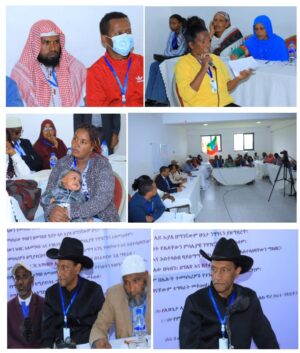
𝐃𝐚𝐲 𝟏𝟎- 𝐒𝐚𝐭𝐮𝐫𝐝𝐚𝐲, 𝐉𝐮𝐥𝐲 𝟐𝟓, 𝟐𝟎𝟐𝟔
Today, the Ethiopian National Dialogue Conference reached a significant turning point.
After a full week of dialogue, deliberation, and exchange of ideas, most of the small groups of ten, which had been aggregated into groups of fifty across the eight thematic areas, signed the formal documents of consensus. Other groups with larger or more complex agendas are expected to complete their work on Monday. This moment marks the point at which discussion begins to harden into shared position, and conversation begins to yield concrete national understanding.
In a remarkable demonstration of transparency, accountability, and procedural discipline, the notetakers from the five groups of ten were tasked with harmonizing the language of consensus so that the views of the delegates would be represented fully and accurately. The final consensus document was then read back to the group for additional comments and clarification.
This careful process ensured that no delegate’s position was lost, distorted, or overlooked. It also reflected the seriousness with which the participants approached the task of building a common national record.
Consensus in the small group of ten was not reached through coercion or simple majority vote. Rather, it emerged organically through a collaborative process of open dialogue, negotiation, and compromise aimed at producing a proposal that all participants could accept without formal objection.
Unlike majority voting, consensus-building demands patience, discipline, and a commitment to unity. It values collective agreement over numerical superiority and seeks to create outcomes that are broadly legitimate rather than merely procedurally decisive. That is what occurred in the small groups.
The mechanics of the process were meticulously organized. Delegates participated in small-group discussions while minute-takers recorded the substance of each intervention. These notes were then transformed into draft proposals and presented back to the groups for line-by-line review.
During this stage, delegates identified areas of agreement, refined language, corrected inaccuracies, and adjusted text to ensure that important concerns were not omitted. To bridge differences and narrow gaps, participants adopted inclusive language and explored creative formulations that could accommodate multiple viewpoints.
In each group of ten, a drafting team was designated to prepare a consolidated version that reflected the views of all parties before the final text was presented for approval. One member from the group of five then read the final draft aloud to all fifty members and invited comments on both substance and accuracy. In the absence of objection, all members signed the official document for submission to the Commission.
𝐋𝐞𝐬𝐬𝐨𝐧𝐬 𝐟𝐫𝐨𝐦 𝐭𝐡𝐞 𝟏𝟎𝐱𝟓 𝐆𝐫𝐨𝐮𝐩𝐬
The experience of the initial 10×5 groups revealed several important lessons about dialogue, trust-building, and collective responsibility. At the start, many delegates did not know one another. Each participant introduced himself or herself to the larger group of fifty by name and affiliation only, deliberately omitting titles. This helped reinforce the principle that every delegate had an equal right to speak and that every view carried equal moral weight.
The delegates were randomly assigned to breakout sessions by number, a method that helped reduce bias and encouraged interaction across lines of familiarity, status, and background. Each group of ten then selected a chairperson and a minute-taker, and the delegates sat around square or circular tables that supported direct engagement and equality of participation.
Every delegate in the group of ten was given the opportunity to speak freely and at length. Participants shared their perspectives, grievances, fears, hopes, and positions with seriousness and candor. The discussions included passionate and at times emotional reflections on Ethiopia’s historical and current condition.
Delegates spoke about past errors that have had severe consequences for society, weakened peace and harmony, and squandered opportunities to set the country on a better path. They also reflected on the stubbornness, lack of goodwill, and absence of good faith that have sometimes characterized leadership decisions in the past.
Despite the intensity of these reflections, all participants recognized the gravity of the task before them and the historic responsibility they carried in confronting Ethiopia’s longstanding challenges.
After the initial phase of emotional expression, the groups moved into a more analytical mode. They turned their attention to the issues listed in the Commission’s agenda and considered each topic and question in detail. Delegates offered comments, raised related concerns, and examined broader contextual issues they believed were relevant to the discussion. Throughout this stage, they interacted civilly, listened actively, and refrained from interrupting one another.
The conversation gradually shifted from individual grievances to collective analysis. Participants began to focus on how they could work together to create a foundation for addressing the major national questions before them, moving beyond isolated experiences to identify broader patterns, common interests, and shared goals.
What stood out most in the process was the strong tendency toward accommodation. Rather than remain fixed in narrow positions, delegates repeatedly sought ways to reconcile differing viewpoints and address concerns in a manner that could command broad support.
This spirit of accommodation was not weakness; it was a sign of maturity, seriousness, and national responsibility. It showed that the delegates understood that meaningful consensus requires more than simply stating one’s position. It requires listening, revising, and finding language that can hold multiple truths together without erasing legitimate differences.
Several factors helped accelerate the dialogue at the group-of-ten level. Open communication created space for honest expression. Mutual respect reduced defensiveness and made it easier for delegates to hear difficult truths. A willingness to engage constructively with differing viewpoints allowed participants to move beyond disagreement and toward joint problem-solving.
In this environment, delegates became more aware of the complicated nature of conflict in Ethiopia while also developing a more accurate understanding of Ethiopia’s diverse groups’ identity, history, and culture. That shift in perception is one of the most important achievements in our dialogue, because it transformed people holding opposing views to become explainers and interpreters for each other and grievances into material for shared reflection.
𝐓𝐡𝐞 𝐄𝐭𝐡𝐢𝐨𝐩𝐢𝐚𝐧 𝐍𝐚𝐭𝐢𝐨𝐧𝐚𝐥 𝐃𝐢𝐚𝐥𝐨𝐠𝐮𝐞 𝐂𝐨𝐧𝐟𝐞𝐫𝐞𝐧𝐜𝐞 𝐩𝐫𝐨𝐜𝐞𝐬𝐬 𝐚𝐭 𝐭𝐡𝐞 𝐦𝐢𝐜𝐫𝐨 𝐭𝐞𝐧-𝐝𝐞𝐥𝐞𝐠𝐚𝐭𝐞 𝐥𝐞𝐯𝐞𝐥 𝐝𝐞𝐦𝐨𝐧𝐬𝐭𝐫𝐚𝐭𝐞𝐝 𝐭𝐡𝐚𝐭 𝐜𝐨𝐧𝐬𝐞𝐧𝐬𝐮𝐬 𝐢𝐬 𝐧𝐨𝐭 𝐚𝐧 𝐚𝐛𝐬𝐭𝐫𝐚𝐜𝐭 𝐢𝐝𝐞𝐚𝐥 𝐛𝐮𝐭 𝐚 𝐩𝐫𝐚𝐜𝐭𝐢𝐜𝐚𝐥 𝐝𝐢𝐬𝐜𝐢𝐩𝐥𝐢𝐧𝐞. 𝐈𝐭 𝐢𝐬 𝐛𝐮𝐢𝐥𝐭 𝐬𝐥𝐨𝐰𝐥𝐲, 𝐭𝐡𝐫𝐨𝐮𝐠𝐡 𝐩𝐚𝐭𝐢𝐞𝐧𝐜𝐞, 𝐬𝐭𝐫𝐮𝐜𝐭𝐮𝐫𝐞, 𝐡𝐨𝐧𝐞𝐬𝐭𝐲, 𝐚𝐧𝐝 𝐫𝐞𝐬𝐩𝐞𝐜𝐭. 𝐓𝐡𝐞 𝐄𝐭𝐡𝐢𝐨𝐩𝐢𝐚𝐧 𝐍𝐚𝐭𝐢𝐨𝐧𝐚𝐥 𝐃𝐢𝐚𝐥𝐨𝐠𝐮𝐞 𝐂𝐨𝐧𝐟𝐞𝐫𝐞𝐧𝐜𝐞 𝐢𝐬 𝐬𝐡𝐨𝐰𝐢𝐧𝐠 𝐭𝐡𝐚𝐭 𝐞𝐯𝐞𝐧 𝐝𝐞𝐞𝐩𝐥𝐲 𝐝𝐢𝐯𝐢𝐝𝐞𝐝 𝐬𝐨𝐜𝐢𝐞𝐭𝐢𝐞𝐬 𝐜𝐚𝐧 𝐜𝐫𝐞𝐚𝐭𝐞 𝐚 𝐬𝐡𝐚𝐫𝐞𝐝 𝐥𝐚𝐧𝐠𝐮𝐚𝐠𝐞 𝐨𝐟 𝐫𝐞𝐬𝐩𝐨𝐧𝐬𝐢𝐛𝐢𝐥𝐢𝐭𝐲 𝐰𝐡𝐞𝐧 𝐭𝐡𝐞𝐲 𝐜𝐨𝐦𝐦𝐢𝐭 𝐭𝐡𝐞𝐦𝐬𝐞𝐥𝐯𝐞𝐬 𝐭𝐨 𝐥𝐢𝐬𝐭𝐞𝐧𝐢𝐧𝐠 𝐜𝐚𝐫𝐞𝐟𝐮𝐥𝐥𝐲, 𝐬𝐩𝐞𝐚𝐤𝐢𝐧𝐠 𝐭𝐫𝐮𝐭𝐡𝐟𝐮𝐥𝐥𝐲, 𝐚𝐧𝐝 𝐰𝐨𝐫𝐤𝐢𝐧𝐠 𝐭𝐨𝐠𝐞𝐭𝐡𝐞𝐫 𝐢𝐧 𝐠𝐨𝐨𝐝 𝐰𝐢𝐥𝐥 𝐚𝐧𝐝 𝐢𝐧 𝐠𝐨𝐨𝐝 𝐟𝐚𝐢𝐭𝐡.
𝐊𝐔𝐃𝐎𝐒 𝐭𝐨 𝐚𝐥𝐥 𝟒,𝟎𝟎𝟎 𝐝𝐞𝐥𝐞𝐠𝐚𝐭𝐞𝐬 𝐭𝐨 𝐭𝐡𝐞 𝐄𝐭𝐡𝐢𝐨𝐩𝐢𝐚𝐧 𝐍𝐚𝐭𝐢𝐨𝐧𝐚𝐥 𝐃𝐢𝐚𝐥𝐨𝐠𝐮𝐞 𝐂𝐨𝐧𝐟𝐞𝐫𝐞𝐧𝐜𝐞 𝐟𝐨𝐫 𝐬𝐮𝐜𝐜𝐞𝐬𝐬𝐟𝐮𝐥𝐥𝐲 𝐜𝐨𝐦𝐩𝐥𝐞𝐭𝐢𝐧𝐠 𝐭𝐡𝐞𝐢𝐫 𝐟𝐢𝐫𝐬𝐭 𝐦𝐚𝐣𝐨𝐫 𝐭𝐚𝐬𝐤!
𝐋𝐄𝐓’𝐒 𝐒𝐔𝐏𝐏𝐎𝐑𝐓 𝐓𝐇𝐄 𝐄𝐓𝐇𝐈𝐎𝐏𝐈𝐀𝐍 𝐃𝐈𝐀𝐋𝐎𝐆𝐔𝐄 𝐂𝐎𝐍𝐅𝐄𝐑𝐄𝐍𝐂𝐄 𝐀𝐍𝐃 𝐌𝐀𝐊𝐄 𝐄𝐓𝐇𝐈𝐎𝐏𝐈𝐀 𝐆𝐑𝐄𝐀𝐓 𝐀𝐆𝐀𝐈𝐍!
Originally posted on X:
https://x.com/AlMariam1/status/2081271510589698241


𝐃𝐚𝐲 𝟏𝟎- 𝐒𝐚𝐭𝐮𝐫𝐝𝐚𝐲, 𝐉𝐮𝐥𝐲 𝟐𝟓, 𝟐𝟎𝟐𝟔
Today, the Ethiopian National Dialogue Conference reached a significant turning point.
After a full week of dialogue, deliberation, and exchange of ideas, most of the small groups of ten, which had been aggregated into groups of fifty across the eight thematic areas, signed the formal documents of consensus. Other groups with larger or more complex agendas are expected to complete their work on Monday. This moment marks the point at which discussion begins to harden into shared position, and conversation begins to yield concrete national understanding.
In a remarkable demonstration of transparency, accountability, and procedural discipline, the notetakers from the five groups of ten were tasked with harmonizing the language of consensus so that the views of the delegates would be represented fully and accurately. The final consensus document was then read back to the group for additional comments and clarification.
This careful process ensured that no delegate’s position was lost, distorted, or overlooked. It also reflected the seriousness with which the participants approached the task of building a common national record.
Consensus in the small group of ten was not reached through coercion or simple majority vote. Rather, it emerged organically through a collaborative process of open dialogue, negotiation, and compromise aimed at producing a proposal that all participants could accept without formal objection.
Unlike majority voting, consensus-building demands patience, discipline, and a commitment to unity. It values collective agreement over numerical superiority and seeks to create outcomes that are broadly legitimate rather than merely procedurally decisive. That is what occurred in the small groups.
The mechanics of the process were meticulously organized. Delegates participated in small-group discussions while minute-takers recorded the substance of each intervention. These notes were then transformed into draft proposals and presented back to the groups for line-by-line review.
During this stage, delegates identified areas of agreement, refined language, corrected inaccuracies, and adjusted text to ensure that important concerns were not omitted. To bridge differences and narrow gaps, participants adopted inclusive language and explored creative formulations that could accommodate multiple viewpoints.
In each group of ten, a drafting team was designated to prepare a consolidated version that reflected the views of all parties before the final text was presented for approval. One member from the group of five then read the final draft aloud to all fifty members and invited comments on both substance and accuracy. In the absence of objection, all members signed the official document for submission to the Commission.
𝐋𝐞𝐬𝐬𝐨𝐧𝐬 𝐟𝐫𝐨𝐦 𝐭𝐡𝐞 𝟏𝟎𝐱𝟓 𝐆𝐫𝐨𝐮𝐩𝐬
The experience of the initial 10×5 groups revealed several important lessons about dialogue, trust-building, and collective responsibility. At the start, many delegates did not know one another. Each participant introduced himself or herself to the larger group of fifty by name and affiliation only, deliberately omitting titles. This helped reinforce the principle that every delegate had an equal right to speak and that every view carried equal moral weight.
The delegates were randomly assigned to breakout sessions by number, a method that helped reduce bias and encouraged interaction across lines of familiarity, status, and background. Each group of ten then selected a chairperson and a minute-taker, and the delegates sat around square or circular tables that supported direct engagement and equality of participation.
Every delegate in the group of ten was given the opportunity to speak freely and at length. Participants shared their perspectives, grievances, fears, hopes, and positions with seriousness and candor. The discussions included passionate and at times emotional reflections on Ethiopia’s historical and current condition.
Delegates spoke about past errors that have had severe consequences for society, weakened peace and harmony, and squandered opportunities to set the country on a better path. They also reflected on the stubbornness, lack of goodwill, and absence of good faith that have sometimes characterized leadership decisions in the past.
Despite the intensity of these reflections, all participants recognized the gravity of the task before them and the historic responsibility they carried in confronting Ethiopia’s longstanding challenges.
After the initial phase of emotional expression, the groups moved into a more analytical mode. They turned their attention to the issues listed in the Commission’s agenda and considered each topic and question in detail. Delegates offered comments, raised related concerns, and examined broader contextual issues they believed were relevant to the discussion. Throughout this stage, they interacted civilly, listened actively, and refrained from interrupting one another.
The conversation gradually shifted from individual grievances to collective analysis. Participants began to focus on how they could work together to create a foundation for addressing the major national questions before them, moving beyond isolated experiences to identify broader patterns, common interests, and shared goals.
What stood out most in the process was the strong tendency toward accommodation. Rather than remain fixed in narrow positions, delegates repeatedly sought ways to reconcile differing viewpoints and address concerns in a manner that could command broad support.
This spirit of accommodation was not weakness; it was a sign of maturity, seriousness, and national responsibility. It showed that the delegates understood that meaningful consensus requires more than simply stating one’s position. It requires listening, revising, and finding language that can hold multiple truths together without erasing legitimate differences.
Several factors helped accelerate the dialogue at the group-of-ten level. Open communication created space for honest expression. Mutual respect reduced defensiveness and made it easier for delegates to hear difficult truths. A willingness to engage constructively with differing viewpoints allowed participants to move beyond disagreement and toward joint problem-solving.
In this environment, delegates became more aware of the complicated nature of conflict in Ethiopia while also developing a more accurate understanding of Ethiopia’s diverse groups’ identity, history, and culture. That shift in perception is one of the most important achievements in our dialogue, because it transformed people holding opposing views to become explainers and interpreters for each other and grievances into material for shared reflection.
𝐓𝐡𝐞 𝐄𝐭𝐡𝐢𝐨𝐩𝐢𝐚𝐧 𝐍𝐚𝐭𝐢𝐨𝐧𝐚𝐥 𝐃𝐢𝐚𝐥𝐨𝐠𝐮𝐞 𝐂𝐨𝐧𝐟𝐞𝐫𝐞𝐧𝐜𝐞 𝐩𝐫𝐨𝐜𝐞𝐬𝐬 𝐚𝐭 𝐭𝐡𝐞 𝐦𝐢𝐜𝐫𝐨 𝐭𝐞𝐧-𝐝𝐞𝐥𝐞𝐠𝐚𝐭𝐞 𝐥𝐞𝐯𝐞𝐥 𝐝𝐞𝐦𝐨𝐧𝐬𝐭𝐫𝐚𝐭𝐞𝐝 𝐭𝐡𝐚𝐭 𝐜𝐨𝐧𝐬𝐞𝐧𝐬𝐮𝐬 𝐢𝐬 𝐧𝐨𝐭 𝐚𝐧 𝐚𝐛𝐬𝐭𝐫𝐚𝐜𝐭 𝐢𝐝𝐞𝐚𝐥 𝐛𝐮𝐭 𝐚 𝐩𝐫𝐚𝐜𝐭𝐢𝐜𝐚𝐥 𝐝𝐢𝐬𝐜𝐢𝐩𝐥𝐢𝐧𝐞. 𝐈𝐭 𝐢𝐬 𝐛𝐮𝐢𝐥𝐭 𝐬𝐥𝐨𝐰𝐥𝐲, 𝐭𝐡𝐫𝐨𝐮𝐠𝐡 𝐩𝐚𝐭𝐢𝐞𝐧𝐜𝐞, 𝐬𝐭𝐫𝐮𝐜𝐭𝐮𝐫𝐞, 𝐡𝐨𝐧𝐞𝐬𝐭𝐲, 𝐚𝐧𝐝 𝐫𝐞𝐬𝐩𝐞𝐜𝐭. 𝐓𝐡𝐞 𝐄𝐭𝐡𝐢𝐨𝐩𝐢𝐚𝐧 𝐍𝐚𝐭𝐢𝐨𝐧𝐚𝐥 𝐃𝐢𝐚𝐥𝐨𝐠𝐮𝐞 𝐂𝐨𝐧𝐟𝐞𝐫𝐞𝐧𝐜𝐞 𝐢𝐬 𝐬𝐡𝐨𝐰𝐢𝐧𝐠 𝐭𝐡𝐚𝐭 𝐞𝐯𝐞𝐧 𝐝𝐞𝐞𝐩𝐥𝐲 𝐝𝐢𝐯𝐢𝐝𝐞𝐝 𝐬𝐨𝐜𝐢𝐞𝐭𝐢𝐞𝐬 𝐜𝐚𝐧 𝐜𝐫𝐞𝐚𝐭𝐞 𝐚 𝐬𝐡𝐚𝐫𝐞𝐝 𝐥𝐚𝐧𝐠𝐮𝐚𝐠𝐞 𝐨𝐟 𝐫𝐞𝐬𝐩𝐨𝐧𝐬𝐢𝐛𝐢𝐥𝐢𝐭𝐲 𝐰𝐡𝐞𝐧 𝐭𝐡𝐞𝐲 𝐜𝐨𝐦𝐦𝐢𝐭 𝐭𝐡𝐞𝐦𝐬𝐞𝐥𝐯𝐞𝐬 𝐭𝐨 𝐥𝐢𝐬𝐭𝐞𝐧𝐢𝐧𝐠 𝐜𝐚𝐫𝐞𝐟𝐮𝐥𝐥𝐲, 𝐬𝐩𝐞𝐚𝐤𝐢𝐧𝐠 𝐭𝐫𝐮𝐭𝐡𝐟𝐮𝐥𝐥𝐲, 𝐚𝐧𝐝 𝐰𝐨𝐫𝐤𝐢𝐧𝐠 𝐭𝐨𝐠𝐞𝐭𝐡𝐞𝐫 𝐢𝐧 𝐠𝐨𝐨𝐝 𝐰𝐢𝐥𝐥 𝐚𝐧𝐝 𝐢𝐧 𝐠𝐨𝐨𝐝 𝐟𝐚𝐢𝐭𝐡.
𝐊𝐔𝐃𝐎𝐒 𝐭𝐨 𝐚𝐥𝐥 𝟒,𝟎𝟎𝟎 𝐝𝐞𝐥𝐞𝐠𝐚𝐭𝐞𝐬 𝐭𝐨 𝐭𝐡𝐞 𝐄𝐭𝐡𝐢𝐨𝐩𝐢𝐚𝐧 𝐍𝐚𝐭𝐢𝐨𝐧𝐚𝐥 𝐃𝐢𝐚𝐥𝐨𝐠𝐮𝐞 𝐂𝐨𝐧𝐟𝐞𝐫𝐞𝐧𝐜𝐞 𝐟𝐨𝐫 𝐬𝐮𝐜𝐜𝐞𝐬𝐬𝐟𝐮𝐥𝐥𝐲 𝐜𝐨𝐦𝐩𝐥𝐞𝐭𝐢𝐧𝐠 𝐭𝐡𝐞𝐢𝐫 𝐟𝐢𝐫𝐬𝐭 𝐦𝐚𝐣𝐨𝐫 𝐭𝐚𝐬𝐤!
𝐋𝐄𝐓’𝐒 𝐒𝐔𝐏𝐏𝐎𝐑𝐓 𝐓𝐇𝐄 𝐄𝐓𝐇𝐈𝐎𝐏𝐈𝐀𝐍 𝐃𝐈𝐀𝐋𝐎𝐆𝐔𝐄 𝐂𝐎𝐍𝐅𝐄𝐑𝐄𝐍𝐂𝐄 𝐀𝐍𝐃 𝐌𝐀𝐊𝐄 𝐄𝐓𝐇𝐈𝐎𝐏𝐈𝐀 𝐆𝐑𝐄𝐀𝐓 𝐀𝐆𝐀𝐈𝐍!
Originally posted on X:
https://x.com/AlMariam1/status/2081271510589698241
Share this: